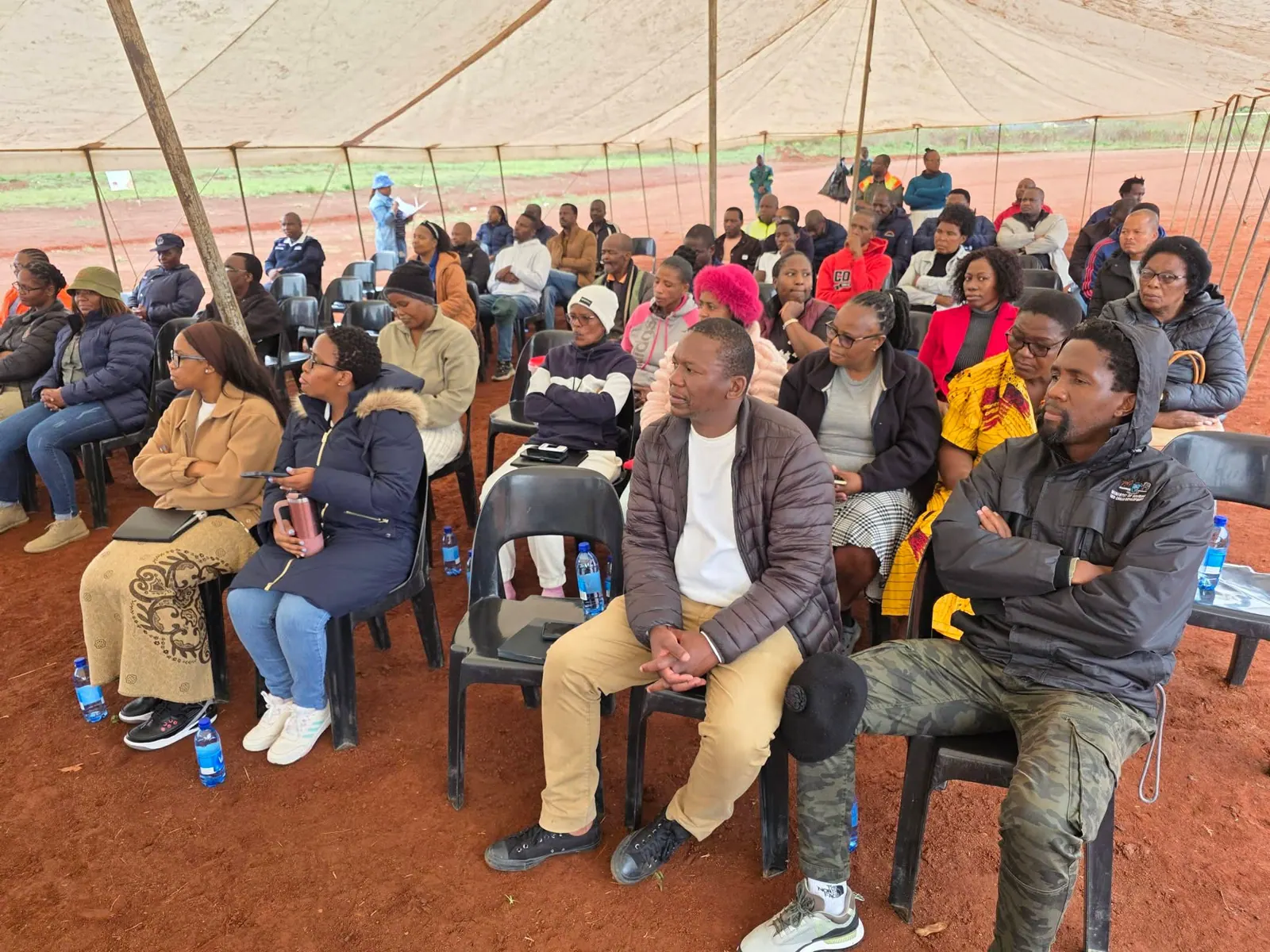
The Matsapha Town Council recently held a community engagement meeting with residents of Likhwane in Ward 1 to discuss the informal settlement upgrading process and land allocation procedures. The meeting, led by Mayor Councillor Lindiwe Dlamini, focused on unpacking the different stages involved in informal settlement upgrading while providing clarity on land allocation processes. The engagement was attended by officials from various ministries, including Housing and Urban Development, Commerce, Industry and Trade, as well as Council management.
The meeting was held under the theme ‘Leave No One Behind: Building Sustainable Settlements,’ in line with Sustainable Development Goal 11 on Sustainable Cities and Communities. Councillor Dlamini emphasized that the meeting forms part of Council’s ongoing efforts to promote inclusive and sustainable development in Matsapha, ensuring that all communities, including those in informal settlements, are part of the town’s development agenda. The Mayor recognized that informal settlements face unique challenges relating to land tenure, access to basic services, and long-term planning.
Councillor Dlamini stated that meaningful engagement with residents is critical in finding sustainable solutions to the challenges faced by informal settlements. She emphasized that Council is committed to ensuring that no one is left behind in its development programmes and that residents of Likhwane are included in processes that affect their daily lives and future. The upgrading of informal settlements is guided by national legislation, town planning standards, and government policy, and involves several regulated stages that must be followed to ensure orderly and sustainable development.
According to the Mayor, the process includes community consultations, planning and surveying, infrastructure assessments, and formal land allocation procedures undertaken in collaboration with relevant ministries. Council officials provided clarity on the roles of different stakeholders in the upgrading process and responded to questions raised by residents. The meeting provided a platform for open dialogue between Council and the community, allowing residents to raise concerns, ask questions, and share experiences regarding the realities of living in Likhwane.
Residents raised issues including land allocation procedures, security of tenure, access to water, sanitation, and roads, and timelines for the implementation of upgrading plans. Council officials addressed these concerns, providing clarity on the procedures and requirements involved in settlement upgrading. Councillor Dlamini emphasized that Council values open communication and will continue to provide information to communities to ensure that residents understand the procedures and requirements involved in settlement upgrading.
The Mayor urged residents to participate actively in Council programmes and to use established community structures to raise concerns and seek clarity on development issues. She emphasized that sustainable human settlements can only be achieved through collaboration between Council, central government, development partners, and the community. The engagement meeting was a step towards promoting inclusive and sustainable development in Matsapha, ensuring that all communities are part of the town’s development agenda.
The community engagement meeting was a significant step towards addressing the challenges faced by residents of Likhwane. Key issues discussed included the need for clarity on land allocation procedures, security of tenure, and access to basic services. The meeting demonstrated Council’s commitment to promoting sustainable development and ensuring that no one is left behind in its development programmes.
Key points
- The Matsapha Town Council held a community engagement meeting with Likhwane residents to discuss the informal settlement upgrading process and land allocation procedures.
- The meeting was attended by officials from various ministries and Council management, and focused on unpacking the different stages involved in informal settlement upgrading.
- Councillor Dlamini emphasized that Council values open communication and will continue to provide information to communities to ensure that residents understand the procedures and requirements involved in settlement upgrading.