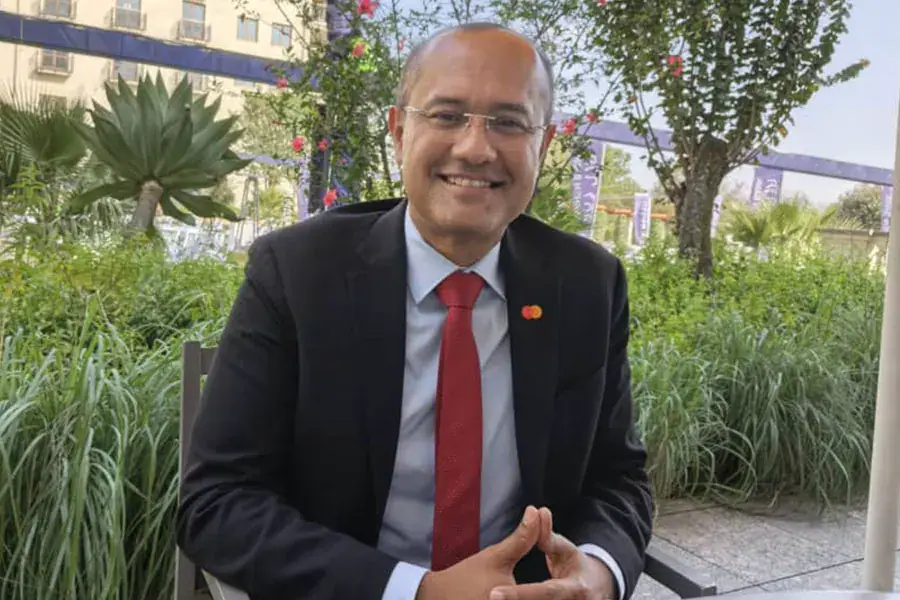
Mastercard, a global payments company, is seeking regulatory approval to enter the domestic payments market in Ethiopia. The company aims to move beyond cross-border transactions and bring digital payment technologies and services to farming communities. According to the World Bank's 2024 figure, only 21% of adults in Ethiopia made or received a digital payment in the preceding year.
Despite the low digital transaction rate, digital transactions in Ethiopia reached 9.7 trillion Br in 2023/24, overtaking cash for the first time, according to the National Bank of Ethiopia (NBE). Mastercard's vice president and country manager for East Africa & the Indian Ocean Islands, Shehryar Ali, disclosed that the company is in talks with financial regulators and local payment switches, including EthSwitch S.C.
Mastercard's operations in Ethiopia currently focus largely on cross-border payments into and out of the country. However, Ali stated that the company wants to work with existing domestic financial institutions rather than duplicate what the domestic companies built. The company is working with the regulator and local switches to enhance cybersecurity and tokenization.
The national payment system law allows foreign investment in the sector, paving the way for Safaricom's M-Pesa. Foreign banks may now also enter under the 2024 Banking Business Proclamation. The draft prioritizes interoperability between payment systems. EthSwitch runs the domestic card-switching infrastructure and the National Payment Gateway for e-commerce.
Technology expert Biruk Gebereyes understands Mastercard's approach to include contactless payments by smartphone and wearable devices, not only physical cards. Customers would tap a compatible device against a point-of-sale (POS) terminal. There were 14,030 POS terminals as of June 2024, 77% of them in Addis Abeba.
The draft strategy identifies limited merchant acceptance as a constraint on wider adoption. Biruk puts the number of licensed merchants at between two million and three million, with one terminal for every 140 to 210. Even 100,000 machines would reach only three to five percent. Mastercard's second target is the countryside, where financial inclusion is estimated at 55%.
Mastercard plans services tailored to rural communities, including its Community Pass platform, which lets underserved communities transact through unstructured supplementary service data (USSD). The company is also piloting its Farm Pass platform with the Cooperative Bank of Oromia (Coop Bank). Security is a key aspect, with Mastercard preparing to introduce tokenization, which swaps sensitive card details for a digital token.
Key points
- Mastercard seeks regulatory approval to enter Ethiopia's domestic payments market.
- The company aims to bring digital payment technologies to farming communities.
- Digital transactions in Ethiopia reached 9.7 trillion Br in 2023/24, overtaking cash for the first time.