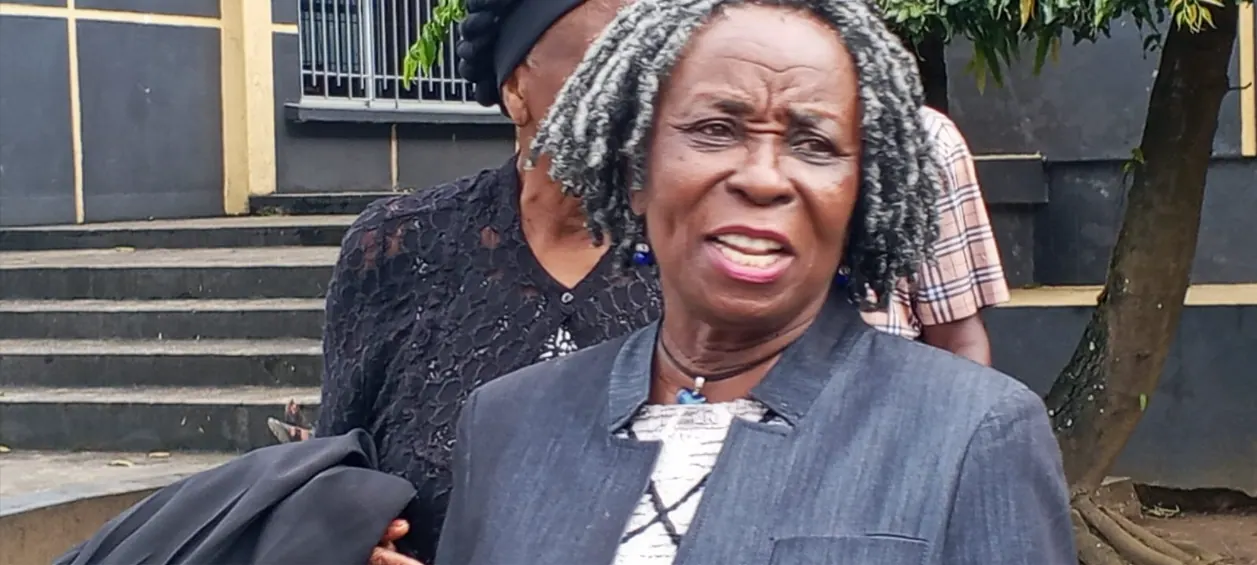
Former General Services Agency Director General Mary T. Broh took the stand in Liberia's ongoing Saudi-donated rice trial, delivering a strong defense for the government officials involved. She testified before Criminal Court "C" that the officials "did a fantastic job" in handling the donation and questioned how they could be accused of stealing rice that was subsequently distributed to communities and institutions. Broh's testimony provided a detailed account of how the GSA came to warehouse thousands of bags of the donation.
According to Broh, the movement of the Saudi-donated rice to the GSA was carried out through an inter-agency arrangement involving the Ministry of Foreign Affairs, the National Disaster Management Agency (NDMA), the Ministry of Internal Affairs, and the GSA. This arrangement was made to facilitate the warehousing and distribution of the rice. Broh's testimony sought to distance the accused officials from any suggestion that the movement of the rice was undertaken for personal benefit.
Broh confirmed that 11,200 bags of the Saudi-donated rice were stored at GSA, and an additional 13,895 bags were moved from NDMA to GSA, bringing the total quantity to approximately 25,195 bags. She also challenged the use of figures contained in the indictment, suggesting that the quantities should have been calculated from the gate passes and other actual movement records.
Broh further testified that she did not know of any decision halting the distribution of the Saudi rice, stating that "the general distribution was never halted under GSA." She acknowledged that portions of the rice were distributed to institutions, including the Liberia National Police, Ministry of Justice, and Ministry of National Defense. Broh explained that she was following instructions arising from an inter-agency meeting and was never provided a concept note explaining the broader project.
Broh revealed that she became involved in the process after receiving a call from then Foreign Affairs Minister Dee-Maxwell Saah Kemayah, who requested her assistance in warehousing the Saudi-donated rice at the GSA. She maintained that Kemayah was a government colleague and that when he called for assistance, she agreed. A meeting was subsequently held at the GSA involving the Ministry of Foreign Affairs, Ministry of Internal Affairs, NDMA, and GSA.
As Broh walked out of the courtroom after her testimony, she was reportedly heard making a direct statement about the accused, saying "The people are innocent, the people didn't do anything." This remark, although not made under oath, underscored her position that the officials involved were performing government duties and that the movement of the rice should not automatically be interpreted as theft.
Broh's testimony presented a different picture from the prosecution's case, one in which government officials were attempting to move, warehouse, and distribute a large humanitarian donation through several state institutions. Her defense of the officials involved in the handling of the Saudi rice donation highlights the complexities of the case and raises questions about the prosecution's allegations.
Key points
- Mary Broh defends government officials involved in handling the Saudi-donated rice, testifying that they "did a fantastic job".
- Broh's testimony highlights the inter-agency arrangement involved in the movement and distribution of the rice.
- The case raises questions about the prosecution's allegations and the distinction between accounting discrepancies, administrative decisions, and proof of criminal appropriation.