The French presidential election of 1913 was marked by a surprise candidacy from Marie Denizard, a woman who defied societal norms by running for the country's highest office. With President Armand Fallières' term set to end in February 1913, several candidates emerged, including Raymond Poincaré and Jules Pams. Denizard's candidacy was met with ridicule and criticism from the conservative press, who saw her as a "fantastical candidate" with unrealistic claims.
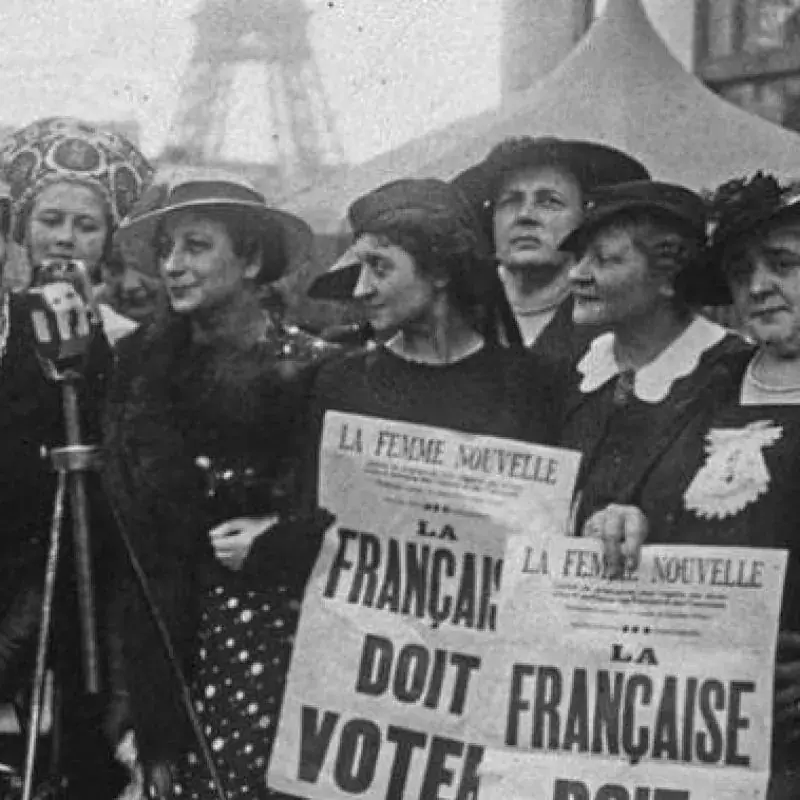
Denizard's campaign focused on women's rights, particularly the right to vote and hold public office. She argued that women should have an equal say in government, as they paid taxes and contributed to society. However, her message was dismissed by many, including Gil Blas, who wrote that her candidacy was a "compromitting pitrerie." Despite the backlash, Denizard's bid drew attention to the struggles faced by women in France, where they were barred from voting and holding public office.
Denizard was not a newcomer to politics, having previously run for office in the Somme department and advocating for women's rights. In 1910, she successfully lobbied Minister of Finance Klotz to submit a wish list to the Somme general council, calling for women's suffrage and eligibility for office. The wish list was adopted unanimously, but critics argued that it was a hollow victory. Denizard's determination and perseverance earned her recognition as a champion of women's rights.
The reaction to Denizard's candidacy highlighted the deep-seated misogyny in French society at the time. Critics portrayed her as a naive and attention-seeking woman, with some even questioning her sanity. The press ridiculed her bid, with one publication suggesting that she was more likely to cause trouble than effect change. Despite the criticism, Denizard remained committed to her cause, seeing her candidacy as a way to raise awareness about women's rights.
Denizard's campaign was part of a larger movement for women's rights in France, which had been gaining momentum for decades. Women had previously run for office, including a young woman who attempted to represent Montmartre on the Paris City Council. However, Denizard's bid for the presidency marked a significant escalation of the movement, drawing national attention to the issue of women's suffrage.
The comparison to the UK's suffragette movement was noted by some, who argued that French feminism was seen as more moderate and less effective. In contrast, British suffragettes had used more radical tactics, including vandalism and civil disobedience, to draw attention to their cause. Denizard's approach was seen as more measured, but her critics argued that it was insufficient to effect meaningful change.
Denizard's legacy as a pioneering feminist has endured, with her candidacy marking an important milestone in the struggle for women's rights in France. While her bid was ultimately unsuccessful, it helped raise awareness about the need for women's suffrage and paved the way for future generations of female politicians. Today, Denizard is remembered as a trailblazer who challenged societal norms and pushed for greater equality.
Key points
- Marie Denizard was the first woman to run for President of France in 1913.
- Her candidacy highlighted the country's misogynistic society and sparked controversy.
- Denizard's bid was part of a larger movement for women's rights in France, which had been gaining momentum for decades.