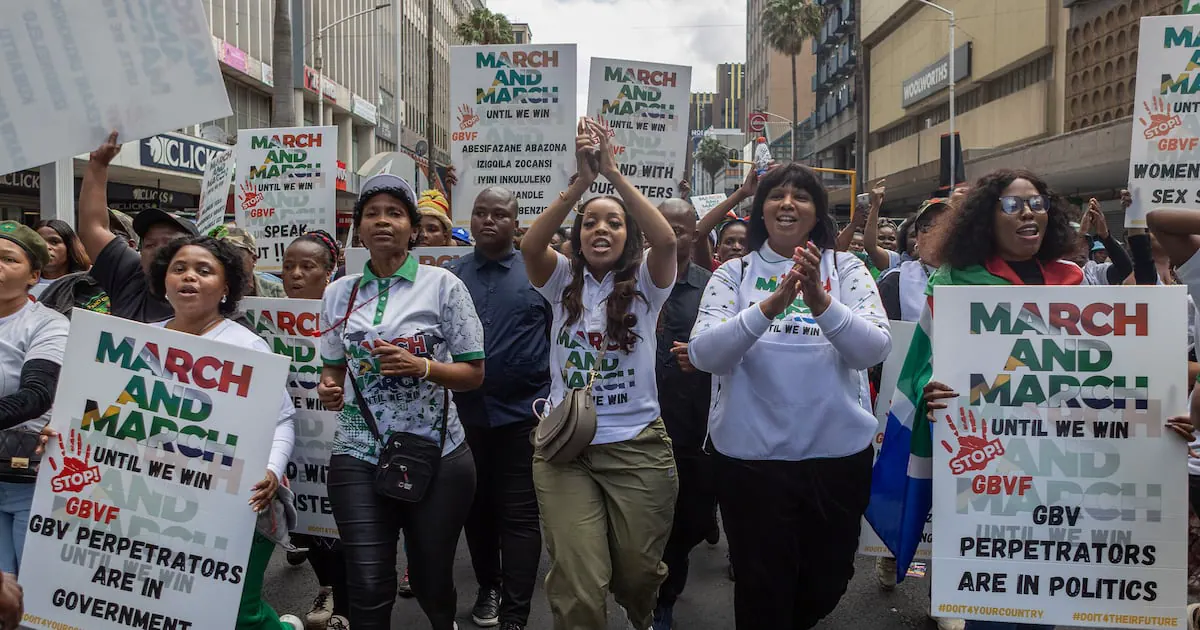
A public Facebook feud between March and March leader Jacinta Ngobese-Zuma, her husband Xolani Zuma, and Nkosikhona “Phakel’umthakathi” Ndabandaba has raised questions about the leadership and transparency of the South African political movement. The controversy began after a June 30 mobilisation and a subsequent meeting in Umhlanga, which has sparked a heated debate on social media. The movement, known for using social media to mobilise people and bypass traditional media, has struggled to control the narrative.
March and March has built its influence on social media platforms, with Jacinta Ngobese-Zuma establishing a recognisable public profile by speaking directly to her followers. However, the current Facebook war has exposed a bigger political and communications story underneath. The movement's use of social media has created a situation where the fight itself becomes the story, overshadowing the movement's original goals.
Xolani Zuma's Facebook posts responding to the controversy indicate that March and March would issue a formal statement explaining what was discussed at the post-June 30 Umhlanga meeting. However, the explanation did not appear before the controversy, allowing speculation and suspicion to spread. The movement's secrecy has created uncertainty, particularly since it has built its identity around demanding transparency and accountability from the government.
The Facebook exchanges between Ngobese-Zuma, Xolani Zuma, and Phakel’umthakathi have moved beyond political disagreement into deeply personal territory, involving culturally loaded language and insults. The use of personal attacks has made it difficult to pull the conversation back to the original issue, with the focus shifting to who insulted whom and who disrespected whose family.
The controversy has raised questions about the kind of political culture developing inside March and March. The movement's leadership has been criticised for allowing personalities, personal loyalties, and public feuds to overshadow the political programme. A movement cannot become so consumed by the personalities at its centre that ordinary supporters are left trying to decode internal politics through Facebook.
From a communications perspective, the first rule of a crisis is to tell your story before someone else does. March and March should have proactively dealt with the Umhlanga meeting, providing context and explanation to avoid speculation. Instead, the public is now watching people connected to the movement fight publicly while waiting for a formal explanation.
The bigger reputational risk for March and March is that the public is left wondering what is going on. Journalists, political opponents, supporters, and ordinary South Africans are asking questions about who is speaking for the movement, what the Umhlanga meeting was about, and what was discussed. The movement's leadership must address these questions to restore transparency and trust.
Key points
- March and March's Facebook war has raised questions about the movement's leadership and transparency.
- The controversy has exposed a bigger political and communications story underneath the movement's social media presence.
- The movement's secrecy has created uncertainty and speculation, particularly since it has built its identity around demanding transparency and accountability from the government.