The March and March movement, a grassroots anti-illegal immigration group founded in March 2024, has resumed protests in Durban following a court-ordered suspension during the 2026 local government elections. The movement, led by Jacinta Ngobese-Zuma, is calling for the deportation of undocumented immigrants, tighter border controls, and stricter regulation of the e-hailing and delivery industries. The protests have raised questions about whether the escalating dispute between protesters and police will be resolved through the courts or continue on Durban's streets.
The movement suspended its demonstrations during the election period after an interim court order restricting protests until November 6 was granted by Judge Peter Olsen. The order was imposed following an urgent application by acting Police Minister Firoz Cachalia and KwaZulu-Natal police commissioner Lt. Gen. Nhlanhla Mkhwanazi. The order also imposed restrictions on subsequent marches, including limiting demonstrations to designated routes and specified daylight hours. Protesters were prohibited from carrying weapons, concealing their faces with masks, and engaging in violence, looting, or arson.
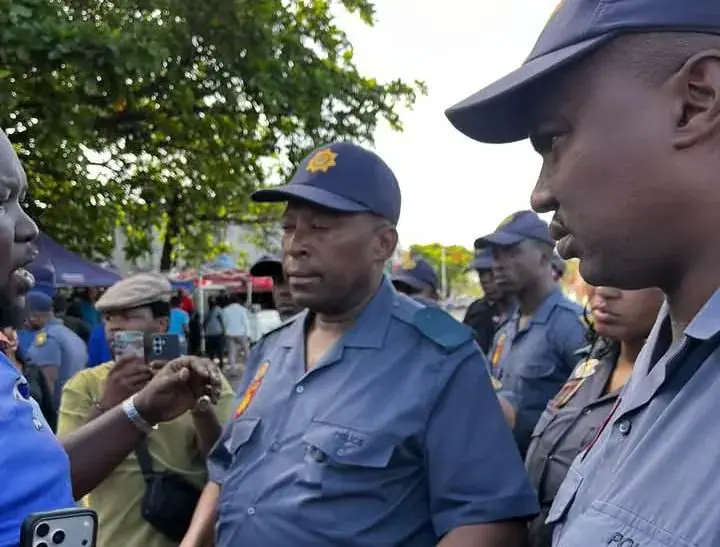
Tensions escalated on November 10 when police and protesters clashed on Che Guevara Road in Umbilo. The circumstances surrounding the confrontation remain disputed, with police and March and March presenting conflicting accounts. KwaZulu-Natal police spokesperson Col. Robert Netshiunda said Public Order Police officers used minimum proportional force to disperse a group marching along Che Guevara Road shortly after 3 p.m., when demonstrations were required to end under the court order.
March and March spokesperson Sandile Dube denied that the movement had organised a march that day, saying about 20 members of the public were walking towards traffic lights when police ordered them to return to their tents. He alleged that an officer subsequently fired rubber bullets at the group. Police rejected the movement's account, saying that most participants were carrying dangerous weapons, including sticks, while others had concealed their faces with masks or other items.
The conflicting accounts have intensified tensions over the limits of police authority and the right to peaceful protest. March and March accuses police of using excessive force against South African protesters while prioritising the protection of foreign nationals. Authorities maintain that their actions were necessary to enforce the court order, prevent violence, and protect businesses and members of the public, regardless of nationality.
A separate legal dispute involving foreign-owned businesses is unfolding in Nongoma, northern KwaZulu-Natal. A group of foreign national business owners has approached the Pietermaritzburg High Court, seeking protection against alleged trespassing and intimidation, as well as the restoration of access to their premises. The application identifies 22 applicant businesses and names cultural activist Nkosikhona "Phakel'umthakathi" Ndabandaba as the first respondent.
The matter is scheduled to return to court on January 18, 2027. Critics have described the March and March movement as xenophobic, citing protests associated with violence, including the torching of vehicles, attacks on foreign nationals, and intimidation of traders. The movement rejects the accusations, maintaining that its campaign is aimed at ensuring immigration laws are enforced.
Key points
- The March and March movement has resumed protests in Durban after a court-ordered suspension expired.
- The protests have raised questions about the escalating dispute between protesters and police.
- A separate legal dispute involving foreign-owned businesses is unfolding in Nongoma, northern KwaZulu-Natal.
Reporting sources
- March and March protests resume in Durban after court suspension expires · The Independent on Saturday