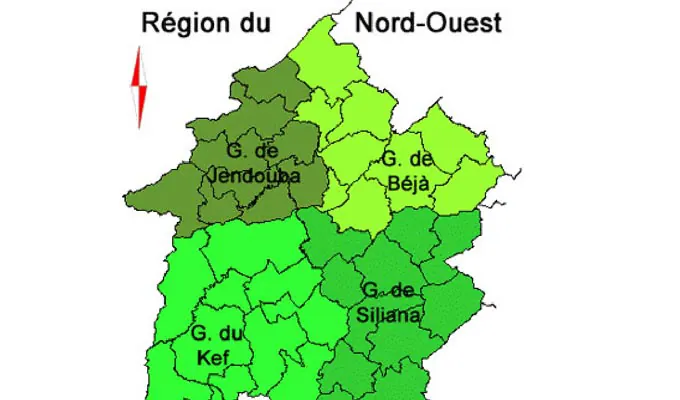
As winter approaches, Tunisia is facing a recurring vulnerability where snowfall and poor road conditions can lead to social and geographical isolation. The country's northern-western regions, particularly Siliana, are preparing for the potential consequences. However, the government does not have a consolidated count of families at risk of isolation. This lack of data raises concerns about the country's ability to respond effectively to climate-related challenges.
In Siliana, areas such as Makthar, Kesra, and Rouhia are particularly vulnerable. During the 2024-2025 winter, 1,350 families were targeted by a regional program to combat cold weather. The program included 27 tons of food supplies. The following winter, over 1,000 families were announced as beneficiaries of the regional program. However, the 2026-2027 volume is not yet available in public sources.
The risk of road closures due to snow and rain is well-documented. In February 2019, snow accumulation interrupted traffic on the RN4 between Makthar and Rouhia and on the RN12 connecting Makthar, Kesra, and Kairouan. In some areas, no detours were possible. This highlights the need for effective measures to mitigate the impact of climate-related events on rural communities.
Siliana is not an isolated case, as other regions such as Kasserine, Jendouba, and Le Kef have also experienced operations to clear snow and provide assistance to rural areas. The Ministry of Social Affairs has implemented national programs to support vulnerable families, with over 22,000 families benefiting from a cold-weather program as of December 23, 2025.
To effectively address the challenges posed by climate change, there is a need to develop a common indicator for regions such as Siliana, Kasserine, Le Kef, Jendouba, and Béja. This indicator should include the number of exposed families, vulnerable roads, available stocks, and the average time required to reach isolated areas.
The lack of consolidated data on families at risk of isolation makes it difficult to assess the country's ability to respond to climate-related challenges. While social assistance programs provide some measure of support, they do not necessarily address the specific needs of families cut off from the road network.
In 2022, the national program mobilized 3 million dinars to support 15,000 families, according to the Ministry of Social Affairs. As the country prepares for the upcoming winter, there is a growing need for accurate data and effective strategies to mitigate the impact of climate change on vulnerable communities.
Key points
- Over 22,000 Tunisian families benefited from a national cold-weather program as of December 23, 2025.
- Siliana's vulnerable areas, including Makthar, Kesra, and Rouhia, received 27 tons of food supplies during the 2024-2025 winter.
- The country lacks a consolidated count of families at risk of isolation due to snow and poor road access.