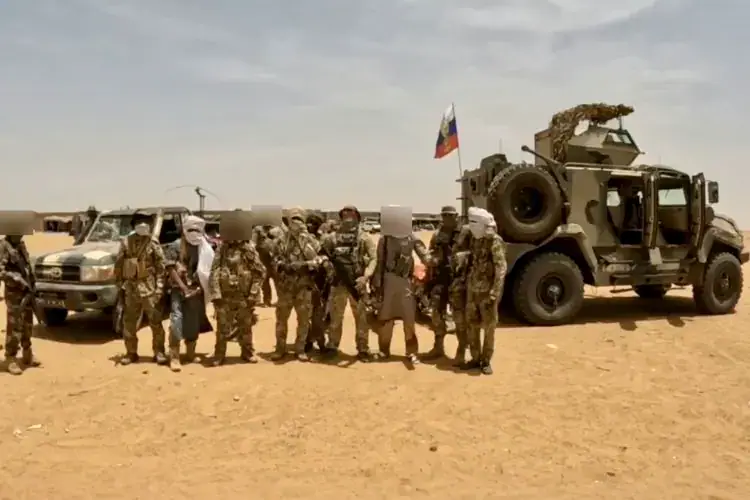
The security landscape in Mali is undergoing a significant shift as the country moves away from its reliance on Russian military cooperation. The partnership with Russia, once hailed as a vital component of Mali's security strategy, has shown signs of strain. A recent data leak attributed to the Africa Corps, the successor to the Wagner group in Africa, revealed that at least 349 Russian fighters have been killed in Mali between September 2023 and September 2026.
The effectiveness of Russia's military cooperation with Mali has been questioned, with several high-profile incidents highlighting the limitations of the partnership. The country's armed forces have suffered significant losses, and the government has faced criticism for its reliance on Russian mercenaries. In response, Mali has begun to strengthen its ties with Turkey, with a focus on counter-terrorism and military cooperation. Turkish experts will provide training on techniques such as marksmanship, ambush response, and tactical communications.
The new partnership with Turkey marks a significant departure from Mali's previous security strategy, which had relied heavily on Russian support. The shift is seen as a pragmatic response to the country's ongoing security challenges, including the threat posed by jihadist groups. Mali's decision to diversify its security partnerships reflects a growing recognition of the need for a more effective and sustainable approach to counter-terrorism.
The Africa Corps, which was established as a successor to the Wagner group, has struggled to deliver on its promises of security and stability in Mali. The leak of sensitive data has raised questions about the group's capabilities and its commitment to transparency. In contrast, Turkey has emerged as a key player in the region, with a growing presence in the Sahel and a reputation for effective counter-terrorism strategies.
Mali's shift towards Turkey reflects a broader trend in the region, with several countries seeking to diversify their security partnerships and reduce their reliance on traditional Western allies. The country's experience highlights the challenges of building effective security partnerships in a region marked by instability and competition for influence.
The implications of Mali's shift towards Turkey are significant, with potential consequences for regional security and global geopolitics. As the country navigates its new security partnership with Turkey, it will need to balance its relationships with other key players, including Russia and Western countries. The success of the new partnership will depend on Turkey's ability to deliver on its promises of security and stability.
The development also raises questions about the future of Russia's influence in the region, as the country faces growing criticism for its military cooperation with African states. As Mali and other countries in the region reassess their security partnerships, Russia will need to adapt to a changing landscape and demonstrate its commitment to delivering effective security solutions.
Key points
- Mali has turned to Turkey for military cooperation amid waning Russian support.
Reporting sources
- Du parapluie russe au pari turc : le grand virage sécuritaire du Mali · Le Pays (Tchad)