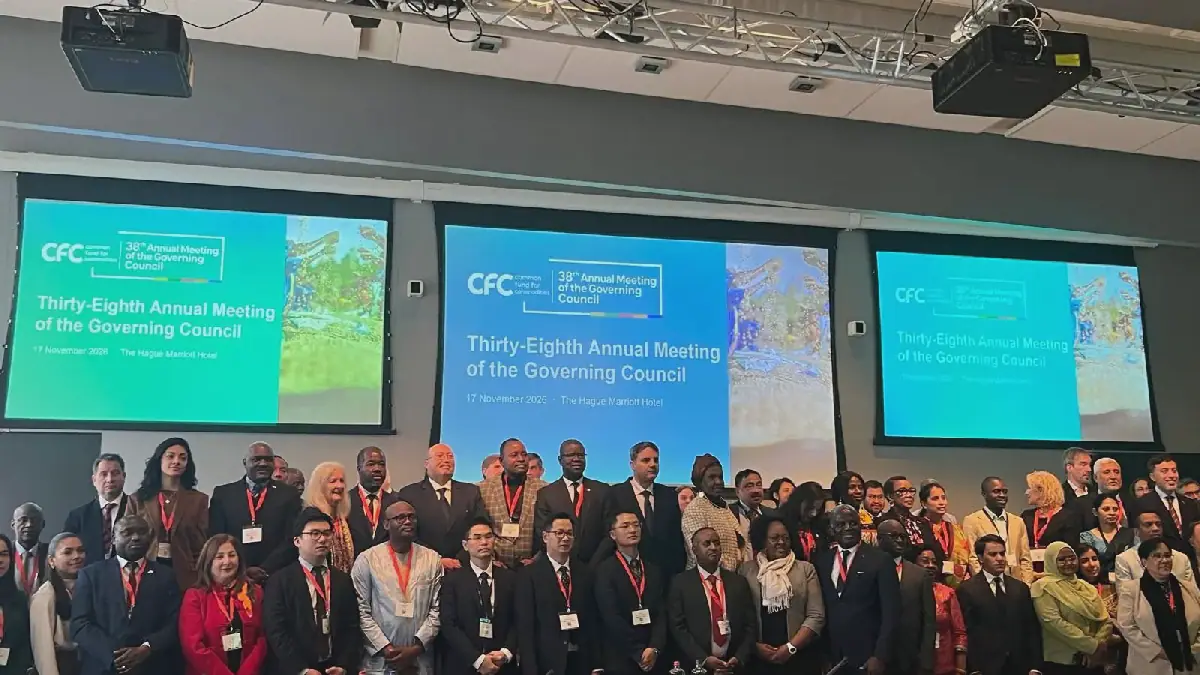
The Malian government has urged the Common Fund for Commodities (CFC) to provide more support to the country's agricultural sector. At the 38th annual session of the CFC's Council of Governors, held on November 16-17, 2026, Mali's Ambassador to Belgium, ElHadji Alhousseini TRAORÉ, emphasized the importance of the agricultural sector to the country's economy. The sector is a significant contributor to Mali's GDP, with products such as cotton, mangoes, gum arabic, shea butter, and livestock products playing a crucial role.
The CFC's 38th annual session was attended by governors from various countries, including Mali, which was represented by Ambassador TRAORÉ and Mme DEMBÉLÉ Mama Mininian BORÉ, Alternate Governor. The session was chaired by Caroline Kira CHIPETA, Ambassador of Tanzania to the Netherlands, and Mohamed BELAL, Executive Director of the CFC. During the session, governors reviewed the CFC's activity report and budget for 2027 and worked on its strategy for 2025-2035.
Ambassador TRAORÉ called for more justice in the allocation of funding, with a focus on small-scale farmers, particularly in landlocked countries like Mali. He stressed that the country's economy relies heavily on agriculture, livestock, and forestry, with cotton, mangoes, gum arabic, shea butter, and livestock products supporting the livelihoods of many rural communities. To improve their living conditions, TRAORÉ emphasized the need for better valorization of these value chains.
The CFC, an international financial institution established by the UNCTAD, was created by an agreement signed in 1980 and entered into force in 1989. Based in Amsterdam, the CFC finances sustainable projects in commodity sectors in developing countries, benefiting small producers and SMEs. Ambassador TRAORÉ requested that the CFC increase its funding and technical assistance to Mali, making its procedures more accessible and taking into account language barriers.
The CFC's Executive Director, Ambassador BELAL, and Chairperson CHIPETA highlighted the organization's role in addressing the global food crisis and climate change. They emphasized that the CFC helps communities build resilience to these shocks, enabling millions of small producers to earn a decent living from their work. Several member countries, including Mali, used the session to express their expectations and concerns.
The Malian delegation's requests align with the CFC's goals of supporting small-scale farmers and promoting sustainable development in commodity sectors. By increasing its support to Mali, the CFC can help improve the livelihoods of rural communities and contribute to the country's economic growth. The CFC's strategy for 2025-2035 aims to enhance its impact and effectiveness in addressing the challenges faced by developing countries.
The outcome of the 38th annual session of the CFC's Council of Governors will be crucial in determining the future of the organization's support to Mali and other developing countries. As the CFC continues to play a vital role in promoting sustainable development in commodity sectors, its efforts to address the needs of small-scale farmers and landlocked countries like Mali will be closely watched.
Key points
- Mali requests increased funding and technical assistance from the CFC to support its agricultural sector.