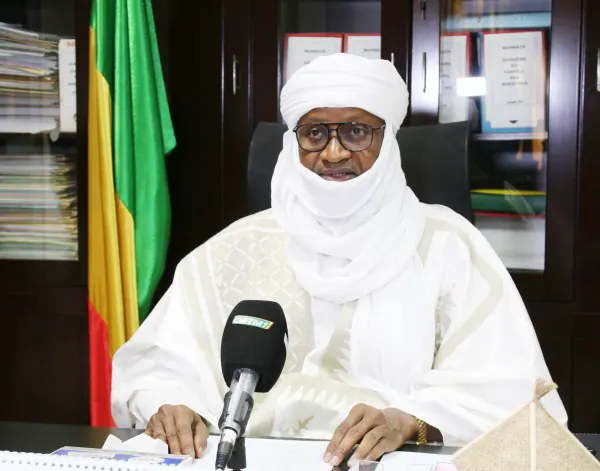
The Malian government has initiated Octobre Urbain 2026, a month-long event focused on addressing the country's rapid urbanization and housing crisis. Minister of Urbanism, Housing, Domains, Territorial Planning, and Population, Imirane Abdoulaye Touré, emphasized the need for decent housing in cities facing rapid growth. The event, inspired by ONU-Habitat, aims to spark reflection on the future of cities and the living conditions of their inhabitants. This year's theme, "A decent home for all," will be extended to the World Cities Day on October 31, with a focus on regenerating cities.
Minister Touré highlighted that decent housing goes beyond just four walls, requiring safety, affordability, access to essential services, and a dignified environment. He stressed that constructing new homes is not enough; renovation of existing neighborhoods, improved sanitation, access to water, and development of local infrastructure are also crucial. The current situation in Malian cities is concerning, with rapid population growth and urban expansion putting pressure on land and housing. Many households build homes outside of norms, often in risk-prone areas, leading to consequences such as collapses and floods.
To address the housing crisis, the government is relying on social housing programs, which have delivered 19,312 homes since 2002, including 16,009 in Bamako and Kati, and 3,303 in other regions. Partnerships with the private sector have also yielded 8,928 homes, with 5,001 more under construction. However, the challenge extends beyond just producing homes; better planning is essential to manage urban expansion. The government is revising urban planning schemes for several cities, including Ménaka, Koutiala, Kéniéba, Bougouni, and Dioïla.
In Bamako and its agglomeration, the Urban Resilience Project, funded by the World Bank, is another key initiative. As of June 30, 2026, 42.1% of the project's activities were completed, and 34.1% were underway. The project focuses on waste management, access to water, and sanitation. Octobre Urbain 2026 will also showcase concrete solutions, including the distribution of sanitation equipment, a conference-debate, exhibition stands, and the launch of a project on forced displacement in Sikasso and Ségou.
The minister has called for mobilization from all stakeholders, including territorial collectivities, promoters, universities, and citizens. He urged citizens to respect urban planning rules and reserved spaces for collective security. The goal is to turn urban growth into an opportunity rather than a vulnerability. The Malian government aims to make decent housing a reality, balancing the number of homes built with the quality of neighborhoods.
As part of Octobre Urbain 2026, stakeholders will visit a local material production unit and a housing promotion construction site. The event seeks to bring together various actors to find solutions to the urban housing crisis. With the World Habitat Day and World Cities Day approaching, Mali is emphasizing the need for decent housing and sustainable urban development.
Ultimately, the success of Octobre Urbain 2026 depends on the collaboration and commitment of all stakeholders. By working together, Mali can address its urban housing crisis and create a more sustainable and equitable future for its cities and citizens. The government's efforts to improve housing and urban planning will be crucial in achieving this goal.
Key points
- The Malian government has launched Octobre Urbain 2026 to address the country's rapid urbanization and housing shortages.
- The event aims to spark reflection on the future of cities and the living conditions of their inhabitants.
- Minister Touré emphasizes that decent housing requires safety, affordability, access to essential services, and a dignified environment.