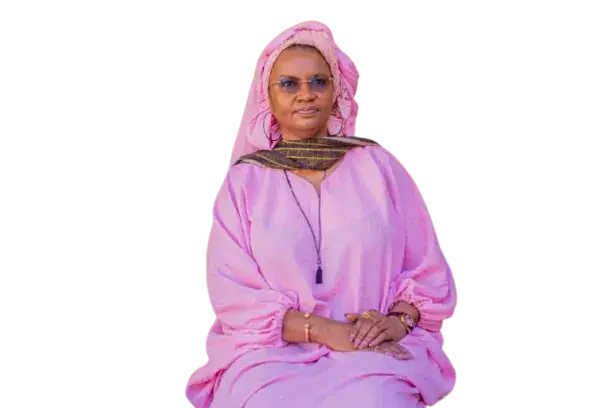
The 7th Cairo Dialogue meeting, held from September 6-8, 2026, in Egypt's capital city, brought together high-ranking officials and ministerial delegations from member countries of the Islamic Development Bank (IDB). Mali's Minister of Entrepreneurship, Employment and Vocational Training, Oumou Sall Seck, led her country's delegation to the meeting, where she presented Mali's approach to addressing security, climate, energy, food, and economic challenges.
During her intervention, Minister Oumou Sall Seck emphasized that sustainable development in nations can only be achieved through investment in their human capital, particularly in youth. She highlighted the importance of south-south cooperation, based on partnership and human capital development. The Minister also conveyed fraternal greetings from Mali's President of the Transition, General Assimi Goïta, and Prime Minister, General Abdoulaye Maïga.
Minister Oumou Sall Seck stressed that despite facing numerous challenges, Mali remains resilient and determined to rely on its own capacities. She called for more balanced partnerships, based on experience sharing, competency transfer, capacity building, and concrete project implementation. The Minister praised the IDB's growing focus on financing strategic sectors such as agriculture, water, infrastructure, electricity, health, and skills development.
In her presentation, Minister Oumou Sall Seck advocated for a cooperation approach where each country is both an expert, know-how provider, and solution provider. She emphasized the need to shift from assistance to partnership, based on reciprocity, innovation, human capital development, and projects with real impact on populations. This approach, she believes, will help build more resilient economic models and prioritize long-term investments.
During a panel discussion on "Partnerships and Best Practices," Minister Oumou Sall Seck outlined Mali's approach to addressing security, climate, energy, food, and economic challenges. She emphasized that resilience is built not only through emergency management but also through a country's ability to strengthen its human capital, develop productive capacities, and provide its population with the means to train, work, and create value.
The Minister highlighted Mali's efforts in vocational training, insertion, employment, and entrepreneurship, with a particular focus on youth, women, and artisans. She stressed the interdependence between training, energy, agriculture, local transformation, innovation, and job creation, emphasizing that infrastructure investments must be paired with developing the necessary skills for their valorization.
Minister Oumou Sall Seck concluded by stating that sovereignty does not imply isolation. Mali seeks to prioritize co-construction, based on competency and technology transfer, investment, enterprise development, and job creation.
Key points
- Mali's Minister Oumou Sall Seck advocates for south-south cooperation and human capital development at the Cairo Dialogue meeting.
- The Minister emphasizes the need for more balanced partnerships and long-term investments to address security, climate, energy, food, and economic challenges.
- Mali prioritizes co-construction and competency transfer in its international cooperation efforts.