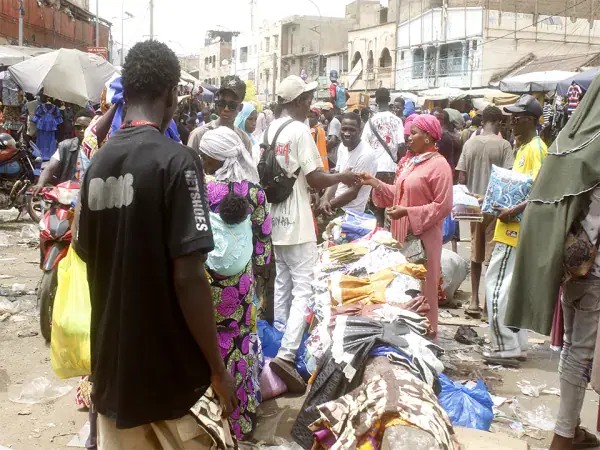
Mali's informal economy has become a significant sector, employing 95.9% of the workforce, which translates to 6,685,634 individuals aged 15 and above. The country's markets, such as those in Bamako, come alive early in the morning, with vendors setting up their stalls, mechanics opening their workshops, and small traders displaying their goods along the streets. This bustling economic activity supports thousands of families, yet a substantial portion of it operates outside the formal administrative and fiscal systems.
The Malian government's data, presented in July 2025, reveals that the informal sector comprises 272,330 economic units, representing 98% of all recorded units. These statistics demonstrate the deep-rooted presence of this economy within the national fabric. The informal sector encompasses various industries, including commerce, craftsmanship, transportation, catering, agro-food processing, and small services. It serves as a vital source of employment and income, particularly for young people and women.
The African Development Bank estimates that the informal economy contributes over 55% to Mali's GDP, while the World Bank puts this figure at around 60%. These estimates highlight the substantial size of the informal economy, which poses both challenges and opportunities for the country's development. With Mali facing significant needs in infrastructure, education, healthcare, security, and social protection, broadening the tax base has become a pressing concern.
However, it would be inaccurate to assume that the entire wealth generated in the informal sector is lost revenue for the state. The activities within this sector have varying income levels and capacities to contribute to the tax system. Therefore, it is crucial to accurately measure the fiscal potential and actual losses to public finances. The issue of fairness also arises, as formal enterprises, subject to fiscal, administrative, and social obligations, may find themselves competing with operators that do not bear the same burdens.
Several factors discourage informal operators from transitioning to the formal sector, including low incomes, bureaucratic hurdles, costs associated with formalization, complex tax systems, and limited access to financing. To encourage formalization, the Malian government, with the support of the International Labor Organization (ILO), has initiated discussions around the ILO's Recommendation No. 204 on transitioning from the informal to the formal economy.
In July 2025, the Ministry of National Entrepreneurship, Employment, and Vocational Training launched a national dialogue on this issue. On June 30, 2026, a national workshop validated the report of a diagnostic study on the informal economy, which will serve as the basis for developing a comprehensive national strategy and action plan. The success of this transition depends on building trust between the administration and operators, as well as providing incentives for those who formalize their businesses.
Several questions need to be addressed, including the actual size of the informal economy, its impact on public finances, and how to broaden the tax base without jeopardizing small operators. The Malian government and stakeholders must work together to find solutions to these challenges and develop reforms that can transform the informal economy into a significant driver of development.
Key points
- The informal economy in Mali employs 95.9% of the workforce, with 6.685 million people, and contributes significantly to the country's GDP.
- The Malian government is working to develop a national strategy to transition the informal economy to the formal sector, with support from the International Labor Organization (ILO).
- The transition to the formal sector requires a comprehensive approach, including adapted fiscal policies, simplified procedures, access to credit, and social protection.