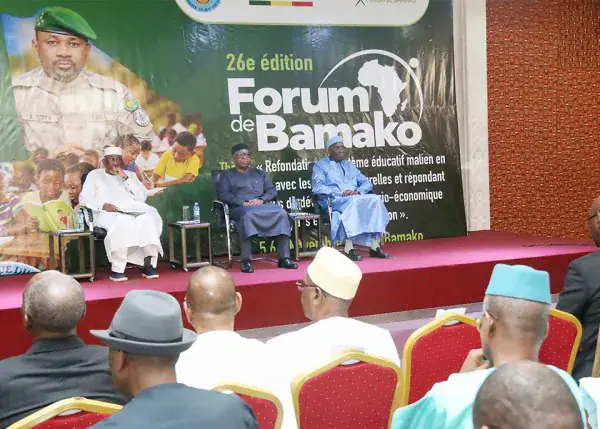
The 26th edition of the Bamako Forum, held under the patronage of Mali's Transitional President, General Assimi Goïta, kicked off on November 5. The three-day event brings together decision-makers, academics, experts, and civil society actors to discuss the country's education system. This year's theme, "Refounding Mali's Education System in Line with Cultural Values and Socio-Economic Development Needs," aims to create a system that balances cultural heritage with modern development requirements.
The forum is co-organized by the Malian government and the Bamako Forum Foundation, with the Ministry of Higher Education and Scientific Research taking a leading role. Foundation President Abdoullah Coulibaly emphasized the need for a comprehensive overhaul, stating that education is a national project that requires collective engagement. He called for a system that fosters well-rounded citizens who can think critically, produce innovative ideas, and build a better future.
Oumarou Sidibé, co-president of the scientific commission, highlighted the pragmatic approach taken this year, with panel discussions designed to produce actionable recommendations. The goal is to build on previous education reforms and create a system that addresses current challenges and strategic objectives. The forum features six panels that will examine various aspects of the education system, including its correlation with cultural values, diversification of training paths, and research and governance.
Minister of Higher Education and Scientific Research, Professor Bourema Kansaye, officially opened the forum, emphasizing the importance of education in shaping Mali's future. He cited the thoughts of Joseph Ki-Zerbo and Amadou Hampâté Bâ, stressing the need for a balanced approach that combines traditional knowledge with modern sciences and technology. The minister's vision aligns with the country's strategic development goals, including the MaliKura initiative and the national strategy for emergence and sustainable development.
The Bamako Forum provides a platform for stakeholders to share expertise and experiences. Participants include entrepreneurs, policymakers, academics, and civil society representatives from Africa and beyond. The event features panel discussions, debates, and daily summaries, aiming to produce concrete recommendations and a roadmap for education reform. The forum's outcomes are expected to have a significant impact on Mali's socio-economic development.
The Malian government has prioritized education, declaring 2026-2027 the "Year of Education and Culture." This focus on education reflects the country's recognition of its importance in driving growth and development. The Bamako Forum's discussions will inform the government's education policies and strategies, shaping the future of Mali's education system.
The forum's success will be measured by its ability to produce actionable recommendations and a clear roadmap for education reform. The outcomes will be closely watched by stakeholders, including educators, policymakers, and civil society actors. The event demonstrates Mali's commitment to improving its education system and addressing the challenges facing the country.
Key points
- The Bamako Forum aims to create a comprehensive education system that balances cultural heritage with modern development requirements.
- The event brings together stakeholders from Africa and beyond to share expertise and experiences.
- The forum's outcomes are expected to have a significant impact on Mali's socio-economic development.