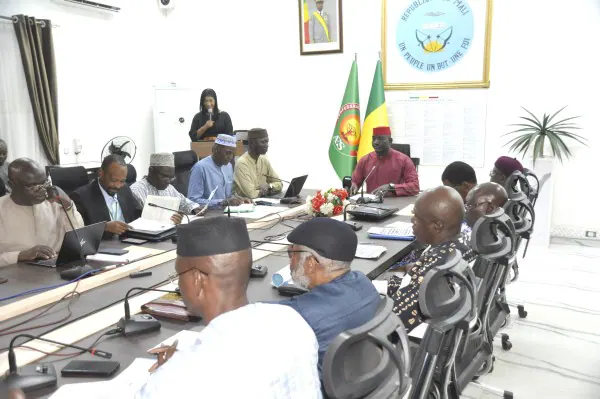
In a recent gathering presided over by Abdoulaye Mahamane, a technical advisor representing the Minister of Decentralization, Mali's committee on decentralization reviewed and validated the 2024 annual report on transferring state competencies to local authorities. The meeting brought together members of the ministry, representatives from various sectoral ministries, and the Association of Regions and Municipalities of Mali. The goal was to assess the current state, examine the report, and enhance the process of transferring competencies from the state to local authorities, now limited to communes and regions.
The transfer of state competencies to local authorities is a crucial aspect of Mali's decentralization process, serving as a primary lever for deconcentration and socio-economic development. According to Law No. 2023-004, local authorities' domains of competence have been defined and allocated financial resources, including local taxes, budgetary resources, and human resources. These competencies cover various development sectors such as education, health, environment, infrastructure, commerce, and industry, which are considered suitable for local management due to their proximity to the population.
The law stipulates that any transfer of competency to a local authority must be accompanied by the concomitant transfer of necessary resources and means. As of now, 21 out of 24 domains have been transferred to local authorities, according to Abdramane Cissé, Director General of Territorial Collectivities. The state has been providing financial support to decentralization, amounting to approximately 500 billion francs CFA, with 423 billion francs CFA transferred to local authorities in 2025, representing about 17% of the state's budgetary revenues.
In addition to these resources, local authorities receive non-conditioned resources worth around 20 billion francs CFA and 18 billion francs CFA from the mining development fund proposed by the state. To drive the dynamic of transfers, a ministerial commission for steering competency and resource transfers was established in 2005. This commission is responsible for monitoring, orienting, coordinating, and controlling the implementation of transfers.
The commission's tasks include following up on activity schedules, ensuring coherence in the operationalization of transfers, examining difficulties encountered, and providing guidance. A monitoring system has been put in place, relying on annual reports from Cells of Support to Decentralization-Deconcentration and their compilation by the Directorate General of Territorial Collectivities.
One of the recommendations from the 2013 General States of Decentralization aimed to allocate 30% of the state's budgetary revenues to local authorities. However, this objective has seen slow progress due to Mali's challenging security context. The meeting also aimed to strengthen the process, given that decentralization is key to socio-economic development.
As the decentralization process continues, stakeholders emphasize the importance of ensuring effective transfers of competencies and resources to local authorities. This process is expected to enhance local governance, improve service delivery, and foster development in various sectors. The committee's report and recommendations are seen as crucial steps towards achieving these goals.
Key points
- The Malian government has transferred 21 out of 24 domains of competence to local authorities.
- The state has allocated approximately 500 billion francs CFA to support decentralization.
- The goal is to allocate 30% of the state's budgetary revenues to local authorities.