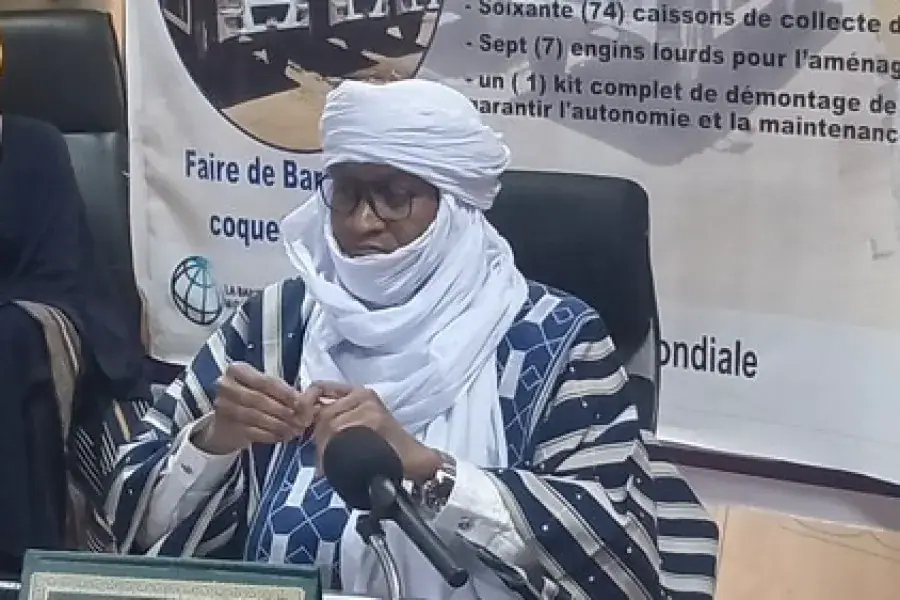
The Bamako Urban Resilience Project (PRUBA) recently held its sixth steering committee session, chaired by Mali's Minister of Urbanism, Housing, Domains, Territorial Planning, and Population, Imirane Abdoulaye Touré. The project aims to enhance the urban resilience of Bamako, with a total budget of 300 million US dollars. The project focuses on addressing the city's major challenges, including waste management, infrastructure development, and climate change mitigation.
The project's 2027 annual work plan and budget (PTBA) include 171 activities, valued at 44.76 billion FCFA. Out of this amount, 28.26 billion FCFA has been approved for contract activities. However, 121 activities, accounting for 71% of the total, have not yet commenced. These unstarted activities represent 33.87 billion FCFA, or 75.6% of the 2027 budget.
Minister Imirane Abdoulaye Touré expressed concern over the slow execution of the project, emphasizing the need for acceleration in 2027. He identified three key areas of focus: expediting investments in solid waste management, resolving administrative and contractual bottlenecks, and improving coordination among implementing structures.
The PRUBA project is crucial for Bamako's socio-economic development, aiming to create a more organized, resilient, and environmentally friendly city. The project will support the development of infrastructure, equipment, and services to address the city's rapid demographic and spatial growth.
Bamako faces significant challenges, including rapid population growth and spatial expansion, which have resulted in increased demand for basic social services. The PRUBA project seeks to address these challenges by improving urban planning, infrastructure development, and service delivery.
To achieve the project's objectives, Minister Touré urged stakeholders to prioritize the implementation of activities in 2027. He emphasized that the year 2027 must be a turning point for the project's acceleration and concrete implementation.
The PRUBA project's success is critical for Bamako's future development, and the government is committed to ensuring its effective implementation. The project's outcomes will be closely monitored, and stakeholders will be held accountable for their roles in its execution.
Key points
- The Bamako Urban Resilience Project has a budget of 44.76 billion FCFA for 171 activities in 2027.
- 71% of the project's activities have not yet commenced, representing 33.87 billion FCFA of the 2027 budget.
- The project's success depends on expediting investments in solid waste management, resolving administrative bottlenecks, and improving coordination among implementing structures.
Reporting sources
- Projet de Résilience urbaine de Bamako... · Maliweb.net