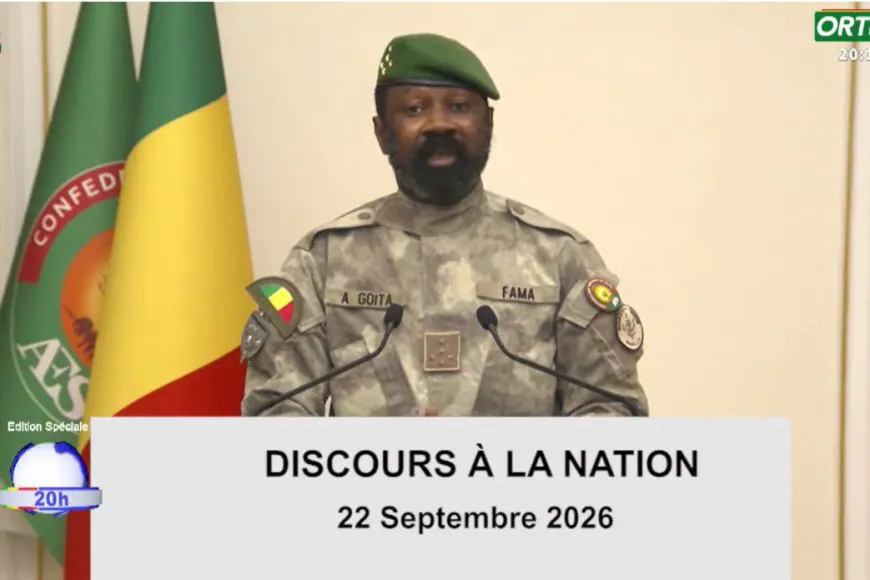
On October 5, 2026, Mali marked its 66th anniversary of independence, an occasion that prompted President of the Transition, General Assimi Goïta, to address the nation. In his speech, Goïta outlined a vision for Mali's future, emphasizing the need for consolidation and maturity. He noted that the country's transition has reached a critical phase, where the focus shifts from legitimation and sovereignty to implementation and accountability.
Goïta highlighted the government's efforts to promote transparency and accountability, revealing that members of the government have, for the first time, been subjected to public scrutiny and restitution sessions before the nation's key stakeholders. This move signifies a significant shift towards greater openness and responsibility in governance. The President also touched on the country's security situation, outlining a doctrine based on three pillars: military proactivity, institutional reforms, and strategic partnerships with regional and international allies.
The President emphasized the transformation of the Malian armed forces (FAMa) into a professional, well-equipped, and morally strong entity. He paid tribute to fallen soldiers and those injured in action, while also announcing plans to further strengthen the military's capabilities. Goïta also acknowledged the growing collaboration with other countries in the Alliance of Sahel States (AES), describing it as a trusted partnership that continues to evolve.
In the economic sphere, Goïta reported positive growth indicators, citing a 5.6% growth rate in 2025 and a projected 6.3% growth rate for 2026. These figures, if confirmed, would place Mali above the average growth rate of the West African Economic and Monetary Union (UEMOA). The President outlined the government's strategy to shift from a reliance on mining rents to investment in the mining sector, highlighting specific projects, including 18.435 billion allocated to the Local Development Fund and 109.142 billion for energy, water, and transportation infrastructure.
Goïta's address also focused on the need for inclusive growth, reduction of inequalities, and stabilization of essential commodity prices. He praised the patriotism of economic operators who have cooperated during the crisis and announced that 2026-2027 would be declared the "Year of Education and Culture." This declaration is part of a broader strategy to foster a well-educated and culturally anchored population, which Goïta sees as crucial for Mali's future.
The President's speech also addressed the issue of national reconciliation, recalling the Charter for Peace and National Reconciliation and the establishment of the Observatory on March 2, 2026. Goïta extended an invitation to Malians living abroad, urging them to participate in national construction efforts, not merely as observers but as active contributors. This overture is seen as an attempt to engage the diaspora in the country's development.
In conclusion, Goïta's address marked a significant moment in Mali's transition, signaling a shift from a defensive stance to a more assertive and forward-looking approach. The President emphasized the importance of sovereignty, promising that the country would continue to decide and act independently, preserving this autonomy at all costs. The speech has been interpreted as a threshold moment, setting the stage for Mali's future trajectory under the leadership of the Transition.
Key points
- Goïta outlines a vision for Mali's future, emphasizing consolidation, maturity, and a shift towards greater accountability and transparency in governance.
- The President announces positive economic indicators, including a projected 6.3% growth rate for 2026 and investments in infrastructure and mining.
- Goïta extends an invitation to Malians living abroad to participate in national construction efforts, promoting reconciliation and inclusive development.