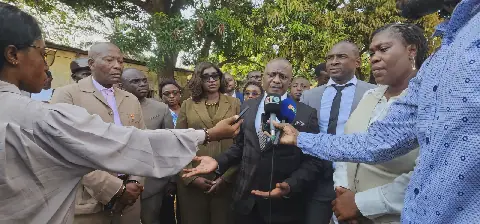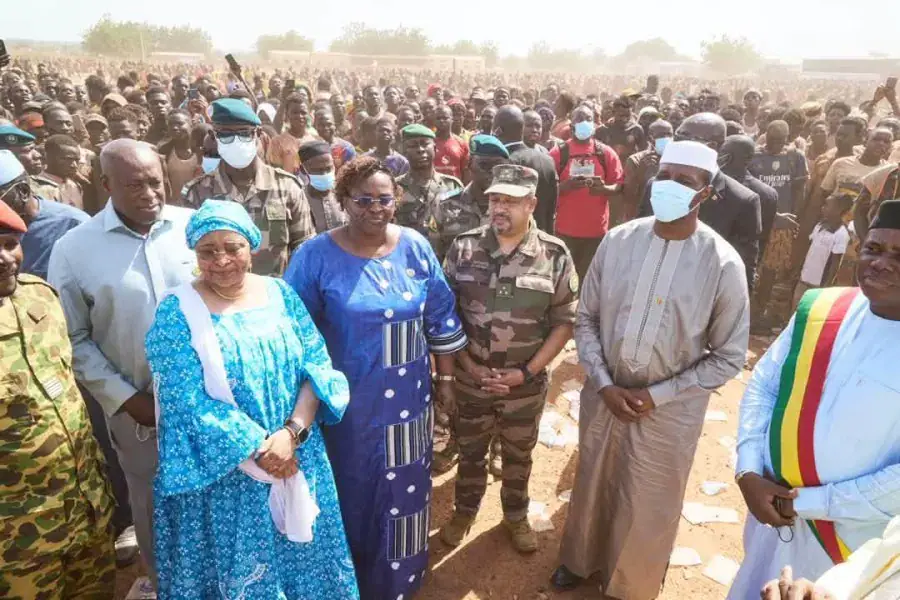
Mali's Prime Minister General Abdoulaye Maïga visited the sites of Mamarybougou and Ouenzenbougou, where thousands of gold miners repatriated from Guinea are currently residing. The visit came after a meeting of the Interministerial Committee for Crisis and Disaster Management. Upon arrival, Maïga was met with a dire humanitarian situation, with thousands of people, mostly young men, women, and children, living without access to basic necessities like water, food, and healthcare.
The repatriation of gold miners from Guinea began on November 2, following the Guinean government's decision to dismantle artisanal gold mining sites in Siguiri and Mandiana. Since then, over 40,000 people have been registered in Kourémalé, according to the Malian Civil Protection services. However, many more are still arriving in the capital, Bamako, and are settling in spontaneous sites on the outskirts of the city. The situation is putting a strain on local resources and infrastructure.
During his visit, Maïga met with the repatriated individuals, who shared their stories and struggles. He also met with local authorities, health workers, and relief teams, who are struggling to cope with the scale of the crisis. The Prime Minister acknowledged the urgent need for a coordinated response to address the humanitarian situation. He instructed the relevant authorities to prioritize the provision of basic necessities, including water, food, and healthcare.
In response to the crisis, the Malian government has decided to establish a single site, Ouenzenbougou, where all repatriated individuals will be relocated. The site will be equipped with basic infrastructure, including water points, latrines, temporary shelters, and a health post. The government has also called for international humanitarian assistance to support the response efforts.
The crisis has also raised diplomatic concerns, with the Malian government planning to engage with Guinean authorities to discuss the circumstances surrounding the mass repatriation. The government wants to ensure that the rights and dignity of the repatriated individuals are respected and that their property and equipment are protected.
The Prime Minister has emphasized the need for a proactive approach to anticipate and respond to the evolving crisis. With projections suggesting that the number of repatriated individuals could double in the coming days, the government is urging humanitarian partners to scale up their support. The crisis is now a top priority for the Malian government, which is committed to providing a dignified and humane response.
The situation remains critical, with thousands of people in need of urgent assistance. The Malian government is working to mobilize resources and support to address the crisis, but more needs to be done to prevent a further deterioration of the situation. The international community is urged to provide humanitarian assistance to support the response efforts.
Key points
- The Malian government has decided to establish a single site, Ouenzenbougou, to relocate all repatriated individuals.
- Over 40,000 people have been registered in Kourémalé, according to the Malian Civil Protection services.
- The crisis has raised diplomatic concerns, with the Malian government planning to engage with Guinean authorities to discuss the circumstances surrounding the mass repatriation.