The Malian government has taken a significant step towards exploring its rich natural resources by signing two contracts with a Russian company. The agreements, signed by Mines Minister Pr Amadou Keïta and the Russian representative, aim to map the country's subsoil and develop a national geological information system. This move is expected to help Mali better understand its mineral wealth and make informed decisions about resource extraction. The country's subsoil is considered one of the richest in West Africa, but it remains largely unexplored.
The first contract, valued at 24 months, focuses on creating geological maps at a 1/200,000 scale for two priority zones. Russian teams will conduct fieldwork, interpret satellite images, and analyze mineral potential to identify promising areas and provide recommendations for further exploration. This project also includes a training component, with sessions organized for agents from the National Directorate of Geology and Mines (DNGM) on modern satellite image interpretation techniques in geology. This will enable Malian experts to develop their skills and take ownership of the country's geological data.
The second contract, with a duration of eight months, is more digitally focused. It involves designing a national geological information system, dubbed "Gestion du sous-sol." The goal is to provide Mali with its own geological database, structured around two pillars: a spatial data storage subsystem and a visualization and analysis subsystem. This system will enable the country to store, analyze, and make informed decisions about its geological data. The development of this system is seen as a crucial step towards allowing Mali to take control of its resources.
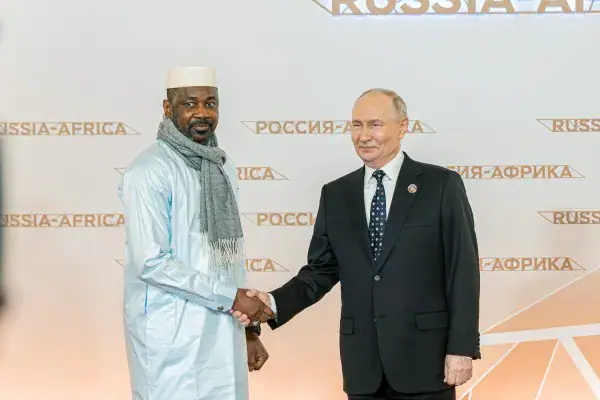
Mali's decision to partner with Russia on these projects comes as the country seeks to strengthen its relationships with new partners. The country's transition president, General Assimi Goïta, recently attended the Russia-Africa Economic and Humanitarian Forum in Moscow, where he met with Russian President Vladimir Putin and other African leaders. The forum provided a platform for discussions on economic cooperation, investment, and development.
The contracts signed with Russia are part of a broader effort to modernize Mali's mining sector. The country has significant mineral deposits, including copper, lithium, gold, and uranium. However, it remains largely dependent on outdated maps inherited from the colonial era. The new geological maps and information system are expected to provide a more accurate and comprehensive understanding of Mali's mineral wealth.
The development of a national geological information system will also enable Mali to better manage its resources and make informed decisions about mining activities. The system will provide a centralized platform for storing and analyzing geological data, which will help to identify areas of high mineral potential and reduce the risk of environmental damage.
The partnership with Russia is seen as a strategic move by Mali to develop its mining sector and take control of its resources. The country's authorities hope that the new geological maps and information system will help to attract investment and promote sustainable economic growth. The implementation of these projects will be closely watched by stakeholders, including local communities, mining companies, and international organizations.
Key points
- Mali signs two contracts with Russia to map its subsoil and develop a national geological information system.
- The projects aim to provide a more accurate understanding of Mali's mineral wealth and promote sustainable economic growth.
- The partnership with Russia is part of Mali's broader effort to strengthen its relationships with new partners and develop its mining sector.