A little over a week after Kenyans gathered in Bondo to mark the first anniversary of Raila Amollo Odinga's death, reflections have turned to the political lessons that emerged from the occasion. The anniversary on October 15, 2026, was an important moment for the Orange Democratic Movement and the wider political community, exposing tensions surrounding Raila's legacy and the contest over the future of a party he spent decades building.
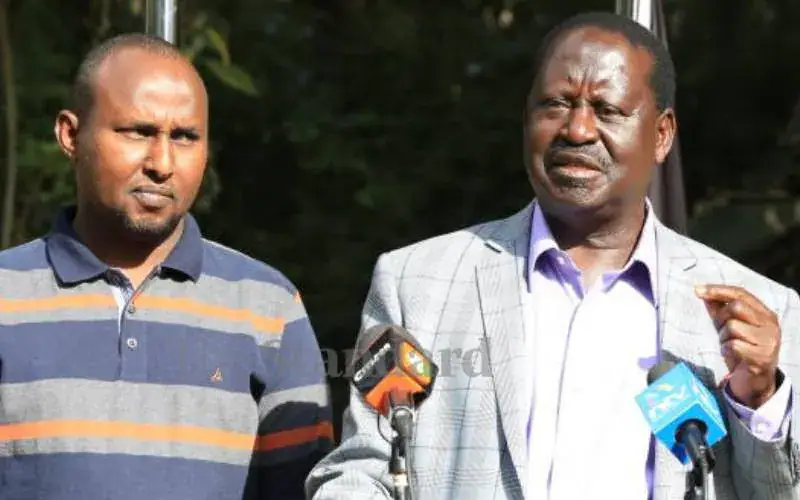
Junet Mohammed, a politician widely regarded as close to Raila and entrusted with important responsibilities within his political camp, was noticeably absent from the anniversary celebrations. His absence has raised questions about loyalty to a political mentor and the values that informed Raila's politics. Junet benefited politically from his association with Raila, and his standing within ODM and national politics was significantly enhanced by Raila's confidence in him.
The circumstances surrounding Junet's absence invite a legitimate question: What does loyalty to a political mentor mean when that mentor is no longer alive to demand it? Raila's own political history makes this question even more compelling, having endured detention, persecution, and personal pain, yet still finding the courage to work with former adversaries.
Raila's capacity to place national and political considerations above personal grievances was repeatedly demonstrated throughout his career. He worked with Daniel arap Moi, Mwai Kibaki, Uhuru Kenyatta, and William Ruto despite bitter political histories and disagreements. Against this record, it is difficult to understand why disagreements with another political figure, such as Rigathi Gachagua, should outweigh the obligation to honour the man who helped shape one's political journey.
Junet's absence has sparked concerns about whether some individuals who benefited most from Raila fully understood the values that informed his politics. This is not merely about Junet, but about the wider struggle for ODM and the political inheritance left behind by Raila. Some individuals who now speak loudly about the party's future were not necessarily at the forefront of the sacrifices through which it was built.
The events surrounding the anniversary also brought attention to Edwin Sifuna, ODM's secretary-general, whose political standing has increasingly become part of the debate about the party's future. Sifuna appeared to embody the spirit of a younger generation determined to defend the political identity associated with Raila, but questions about his leadership and the party's future must ultimately be settled through legitimate party processes and the judgment of voters.
Key points
- Junet Mohammed's absence from Raila Amollo Odinga's first anniversary memorial has sparked debate about loyalty and political legacy within Kenya's Orange Democratic Movement.