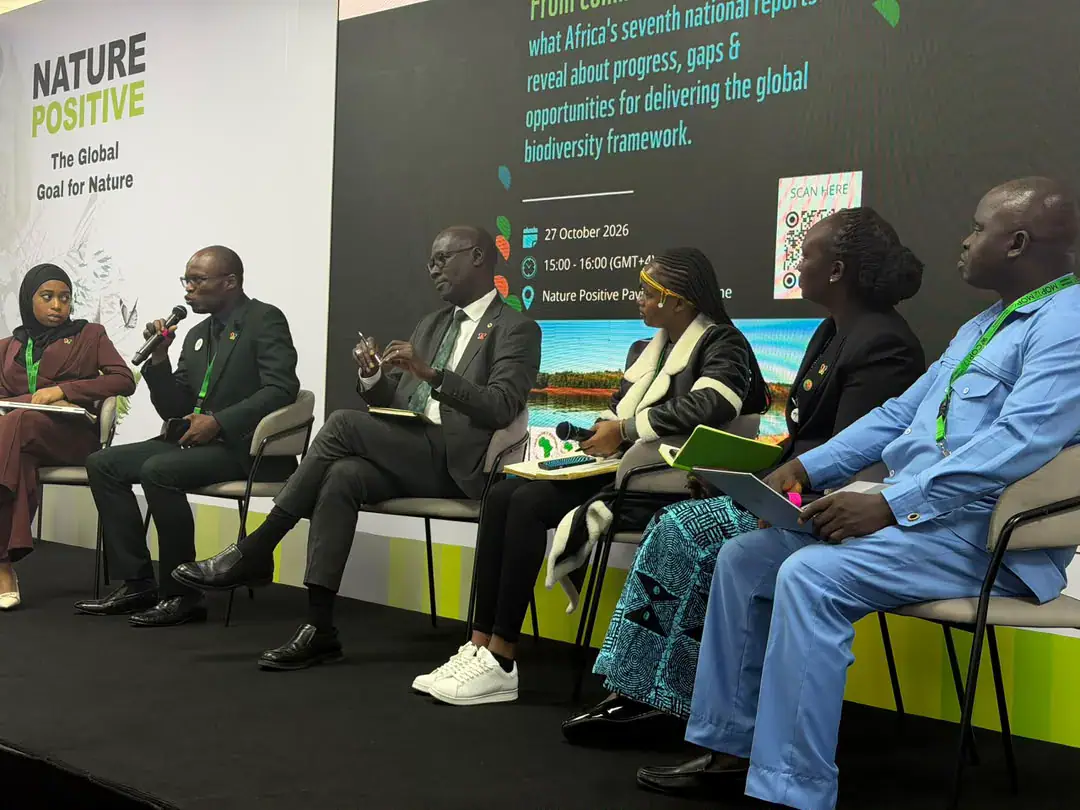
An official of the African Development Bank (AfDB) has called on African governments to demonstrate stronger commitment to biodiversity conservation. Arona Soumare, the bank's Chief Climate Change and Green Growth Officer, made the call during a panel discussion at the 17th Conference of the Parties to the Convention on Biological Diversity (CBD COP17) in Yerevan, Armenia. The discussion was themed "From Commitments to Action: What Africa's Seventh National Reports Reveal About Progress, Gaps and Opportunities for Delivering the Global Biodiversity Framework".
Mr Soumare said many African governments approach development financiers for other priorities, treating biodiversity as an additional consideration rather than a central investment objective. He stated that African countries must move beyond commitments under the Kunming-Montreal Global Biodiversity Framework (GBF) and demonstrate their resolve through concrete investment decisions. According to him, governments frequently approach the bank for other development priorities, with biodiversity incorporated as a secondary component.
Mr Soumare identified the fragmentation of funding across development sectors as one of the major obstacles to biodiversity financing in Africa. He explained that the bank works with countries through Country Strategy Papers, which guide discussions on national development priorities and determine the investments included in its portfolios. He said biodiversity conservation should be integrated into these priorities rather than treated separately from infrastructure development, food security, livelihoods and other national objectives.
Citing Madagascar as an example, Mr Soumare said country allocations could support private-sector initiatives for national parks and help attract additional financing. He also called for more flexible financing mechanisms to support both large-scale conservation programmes and smaller, community-led projects. Although the bank provides funding opportunities for grassroots organisations, he said available resources remain inadequate to meet demand.
Mr Soumare advocated blended finance, which combines domestic resources with international funding, alongside green banks, green lines of credit and other financial intermediaries to channel investments into biodiversity conservation. He also highlighted the potential of nature-related bonds to mobilise capital from financial markets, stressing the need for governments and development partners to strengthen the economic case for investing in ecosystems.
Daniel Mukubi of the Democratic Republic of Congo's Ministry of Environment and Sustainable Development said inadequate financing remained a major constraint to implementing biodiversity commitments. He noted that conservation efforts often competed with urgent national priorities, including food security, energy, infrastructure development and poverty reduction. Mr Mukubi said regional cooperation could help countries overcome some implementation challenges by pooling expertise and strengthening institutional capacity.
Mr Mukubi cited training involving technical experts from across the region to improve geographic information system (GIS) and biodiversity mapping capacities. These skills, he said, could support regional planning towards the global 30-by-30 conservation target, which seeks to conserve at least 30 per cent of the world's land, inland waters, and coastal and marine areas by 2030. The target is part of the Kunming-Montreal Global Biodiversity Framework.
Key points
- African governments must integrate biodiversity conservation into national investment priorities and allocate resources for implementation.
- Fragmentation of funding across development sectors is a major obstacle to biodiversity financing in Africa.
- Regional cooperation can help countries overcome implementation challenges by pooling expertise and strengthening institutional capacity.