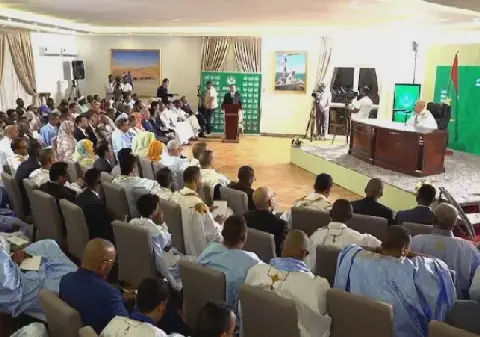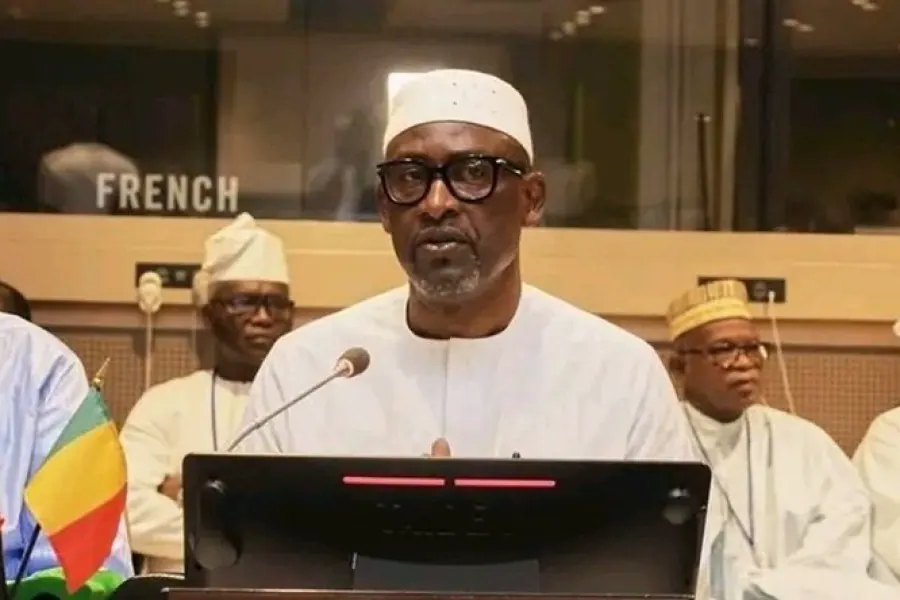
The 81st session of the United Nations General Assembly in New York hosted an initiative by Mali, Niger, and Burkina Faso on September 25. The event, titled "Security and Development in the Sahel: The Case of the Sahel Confederation," aimed to present the vision of the Alliance of Sahel States (AES) on peace, development, and sovereignty. The initiative brought together high-ranking diplomats from various countries, including Morocco, Togo, Algeria, Russia, the UK, the US, the African Union, and the Economic Community of West African States (ECOWAS).
The AES seeks to promote its own narrative, highlighting the Sahel region's strategic importance for global security. According to Malian Foreign Minister Abdoulaye Diop, the AES is not seeking recognition but rather asserting its existence as a geopolitical reality that must be reckoned with for regional stability, security, and development. The Sahel Confederation emphasized its openness to dialogue with partners, as evidenced by consultations with countries like Germany, Switzerland, and Italy on security, economic, and cooperation issues.
During the event, Abdoulaye Diop accused Ukraine of supporting terrorist groups operating in the AES region. He alleged that Ukraine provides financial, material, and drone support to these groups, posing a danger to the AES. Diop called on the international community to take responsibility for Ukraine's actions, stressing that the terrorist groups have operatives from almost every country present.
The Malian Foreign Minister emphasized the need for the African Union and the international community to address Ukraine's behavior. He argued that they cannot ignore the irresponsible actions of a UN member state. The AES initiative aims to challenge misinformation and promote a positive narrative about the region.
The event was part of the sidelines of the UN General Assembly, where countries and organizations engage in discussions and initiatives on various global issues. The AES's efforts to promote its vision and counter misinformation reflect the complex geopolitics of the Sahel region.
The Sahel region has been plagued by security challenges, including terrorism and banditry. The AES aims to address these challenges through cooperation and coordination among its member states. By promoting its narrative and engaging with partners, the AES seeks to assert its role in regional and global affairs.
The outcome of the AES initiative and its impact on the region's security and development landscape remain to be seen. However, the event demonstrates the efforts of Mali, Niger, and Burkina Faso to shape the narrative on the Sahel region and promote their vision for peace, development, and sovereignty.
Key points
- - The Alliance of Sahel States (AES) challenges misinformation on its activities and vision for the Sahel region at the UN General Assembly. - The AES promotes its narrative on peace, development, and sovereignty, highlighting the region's strategic importance for global security. - Malian Foreign Minister Abdoulaye Diop accuses Ukraine of supporting terrorist groups operating in the AES region.