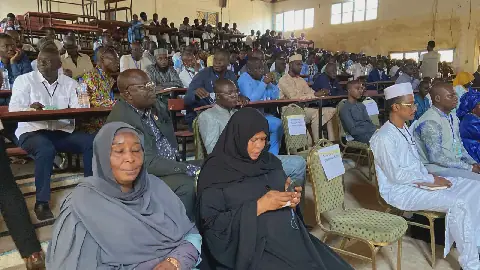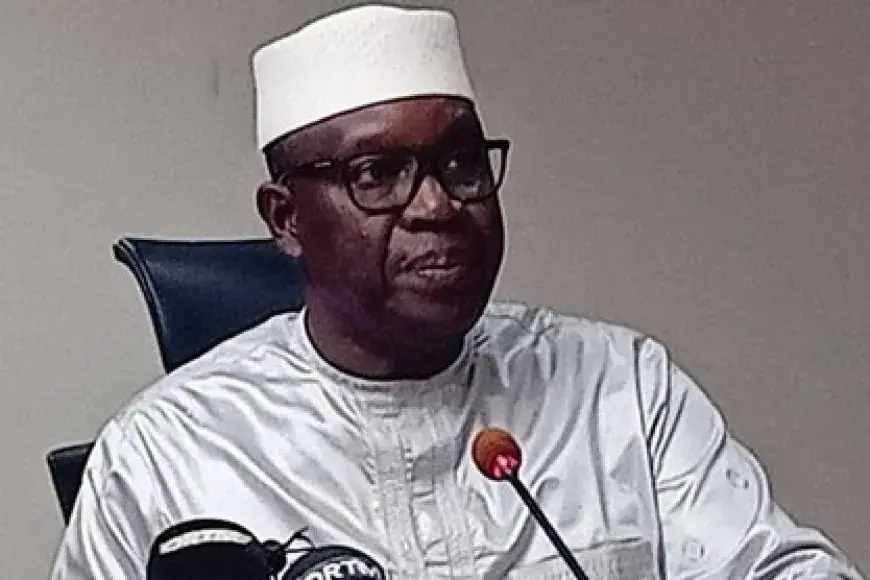
Mali's Minister of Mines, Professor Amadou Kéïta, held the first quarterly press conference on October 22, 2026, to discuss the country's mining sector reforms. The conference, held at the Ministry's headquarters in Bamako's Darsalam district, marked a new era of transparency and accountability in the sector. The reforms aim to ensure the sector contributes to Mali's economic sovereignty. Key stakeholders, including the National Directorate of Geology and Mines, ITIE-Mali, and the new Société de patrimoine minier du Mali (Sopamim), attended the conference.
The mining sector reforms are built on three constitutional pillars: sovereignty, transparency, and partnership. The government emphasizes that the sector's growth must benefit the Malian people. The reforms have led to the cancellation of 121 mining titles, including 100 research permits and 21 exploitation authorizations, due to non-compliance with regulations. The Minister warned that more cancellations will follow as the government verifies mining titles. The goal is to create a level playing field for investors while ensuring Mali's interests are protected.
A new mining cadastre, launched on April 17, 2026, is a crucial tool in regulating the sector. The digital cadastre records 631 titles, providing detailed information on each title, including ownership, surface area, and duration. This system aims to secure mining titles, prevent overlaps, and streamline dossier processing. The government has also renewed 24 research permits for gold and lithium exploration between August 21 and September 30, 2026, demonstrating its commitment to attracting responsible investors.
Despite a decline in gold production, the sector's revenue has increased. Industrial gold production in 2025 was 42.2 tonnes, down from 54.8 tonnes in 2024. The decline is attributed to the Loulo-Gounkoto complex's reduced output due to disputes between the state and the operator. However, the value of gold exports rose to 2750 billion CFA francs in 2025, up from 1610 billion CFA francs in 2024. The government's revenue from the sector reached a record 888.5 billion CFA francs in 2025, a 6.4% increase from 2024.
The mining sector's contribution to Mali's economy is significant, with the sector accounting for 9.5% of the country's GDP, 40.9% of fiscal revenues, and 78.8% of exports. The government has also recovered 761 billion CFA francs in arrears from mining companies following an audit. The lithium sector is emerging as a new pillar, with Mali becoming Africa's first lithium producer. The Goulamina and Bougouni sites are expected to produce 590,000 tonnes of concentrate in 2026.
The government is committed to ensuring that mining activities benefit local communities. The Fonds minier de développement local distributed 18.4 billion CFA francs to 819 communes in March 2026. Additionally, 109.14 billion CFA francs were mobilized for infrastructure development between January 2025 and June 2026. The government has also created a Brigade spéciale des mines to combat illegal mining and ensure the sector's activities are environmentally and socially responsible.
The Malian government is taking steps to formalize artisanal mining and improve the sector's governance. A new agency, the Agence pour la recherche et le développement des ressources minérales, and an organ dedicated to encadring artisanal mining will be established. The government aims to provide a pathway for artisanal miners to transition to small-scale mining, ensuring they adhere to safety and environmental standards. The creation of the Ecole des mines et du pétrole will also contribute to the sector's development.
Key points
- The Malian government has canceled 121 mining titles due to non-compliance with regulations.
- The country's mining sector is expected to be a key driver of economic growth, with a focus on sovereignty, transparency, and local participation.
- Mali has become Africa's first lithium producer, with the Goulamina and Bougouni sites expected to produce 590,000 tonnes of concentrate in 2026.