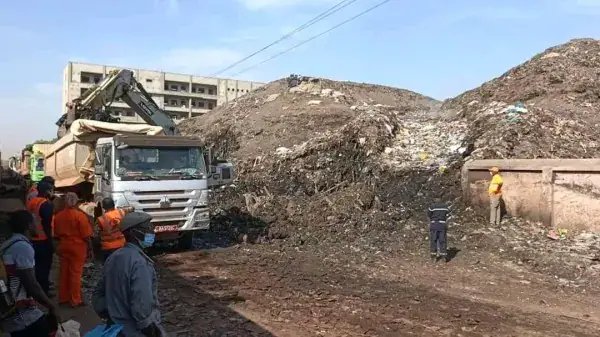
The evacuation operation of the Badalabougou waste deposit, located in a university area of Bamako, Mali, started on November 9, 2026. The site had become a significant environmental concern due to its proximity to several public and private universities. Over 100 trucks have been mobilized to carry out the task, which is expected to take two months to complete. The operation is being led by the Direction des services urbains de voirie et d’assainissement (Dsuva).
The waste deposit, estimated to be around 400,000 cubic meters, had been causing substantial disturbances for students, residents, and users of the area. The accumulation of waste had resulted in unpleasant odors, smoke, and environmental pollution, degrading the living conditions and learning environment. This situation had prompted previous interventions by sanitation services, but a larger-scale operation was required to address the issue effectively.
The collected solid waste will be transported to specialized companies for processing. Toguna Industries, a factory that produces organic fertilizers, is one of the companies involved in the waste management process. Other companies will also participate in transforming plastic waste. This approach allows for the potential valorization of a portion of the evacuated waste, contributing to sustainable waste management.
The launch of the evacuation operation has brought relief to students and local residents. They hope that the removal of the waste will lead to a healthier environment within the university area. The challenge, however, will be to ensure the sustainable management of the transit deposit to prevent future accumulation of waste and maintain the area's sanitation.
The operation to evacuate the Badalabougou waste deposit is a significant step towards improving the living conditions in the area. The involvement of multiple companies and the mobilization of substantial human and material resources demonstrate the effort being made to address the issue. The success of this operation will depend on the effective management of the waste deposit and the collaboration of all stakeholders.
The impact of the waste deposit on the environment and the health of the local community cannot be overstated. The pollution caused by the waste had become a major concern, and the evacuation operation is expected to have a positive impact on the area. The authorities have assured that the operation will be carried out efficiently and that measures will be put in place to prevent similar situations in the future.
The evacuation operation is part of a broader effort to improve sanitation and waste management in Mali. The authorities are working to ensure that waste management becomes more sustainable and effective, and that similar situations do not occur in the future. The success of this operation will be closely monitored, and its outcomes will inform future waste management strategies.
Key points
- The two-month operation aims to evacuate 400,000 cubic meters of waste from the Badalabougou area.
- The waste will be processed by specialized companies, including Toguna Industries.
- The operation is expected to improve living conditions for students and local residents.