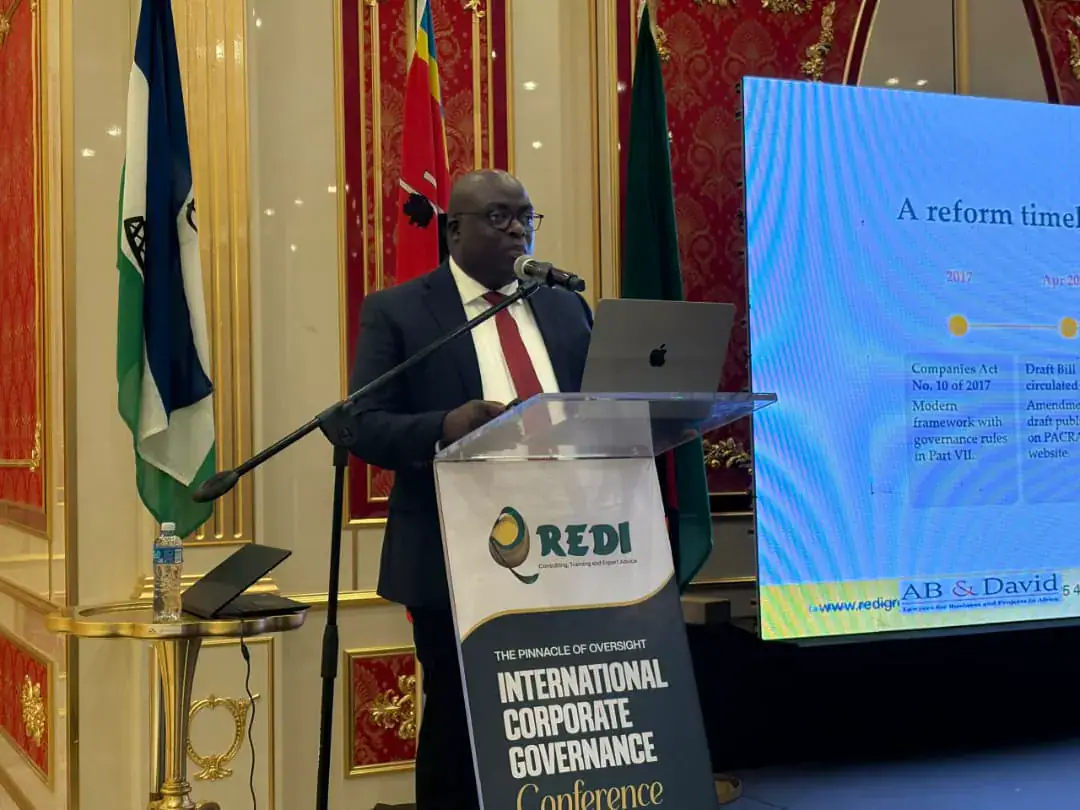
Zambia has made significant strides in enhancing corporate governance and transparency, leaving neighboring Eswatini to ponder its own progress. According to Advocate Dumisani Tembo, Senior Partner at AB & David Zambia, Zambia's eight-year reform effort has yielded tangible results. The turning point came in 2017 when Zambia revamped its company law and introduced governance rules for private and public companies. This overhaul has led to a safer investment environment, with a fully functional companies registration office and strengthened transparency in the mining sector.
A key aspect of Zambia's reforms is the emphasis on beneficial ownership disclosure. The Companies Act of 2017 and subsequent amendments require companies to declare their true owners and controllers. Bearer shares, which previously allowed owners to hide behind nominees, have been abolished. Now, any individual holding 5 percent or more of a company, directly or indirectly, must be disclosed by law. This shift towards full disclosure has significantly altered the dynamics of company ownership in Zambia.
The reforms have also raised the bar for directors and company secretaries. Directors are now expected to act in the best interest of the company, declare personal and commercial interests, and disclose connections to business arrangements. These changes have brought an end to informal agreements, with all transactions now required to undergo proper due diligence. Furthermore, the roles of board chairperson and chief executive have been separated, and only lawyers and accountants can serve as company secretaries.
In addition to these changes, Zambia's reforms have introduced stricter residency requirements for directors. At least half of a company's directors must now be resident in Zambia. These measures have contributed to a more transparent and accountable business environment, reducing risk and increasing confidence for investors, lenders, and partners. As Tembo noted, the reforms have shifted the dynamics from hiding behind fronts to full disclosure.
The implications of Zambia's reforms are far-reaching, with significant benefits for the country's economy and investment climate. By increasing transparency and accountability, Zambia has created a more attractive environment for investors and businesses. This raises questions about Eswatini's own progress in this area, and whether the country is falling behind its neighbor. As the business landscape in the region continues to evolve, Eswatini will need to consider its own corporate governance reforms.
Eswatini's lack of similar reforms may have significant consequences for its economy and investment climate. Without robust corporate governance rules, the country may struggle to attract investors and businesses, ultimately hindering its economic growth. Furthermore, Eswatini's companies may face challenges when operating in Zambia or other countries with stricter governance requirements.
In conclusion, Zambia's corporate governance reforms have set a new standard for transparency and accountability in the region. As Eswatini considers its own progress, it will need to weigh the benefits of implementing similar reforms. With a focus on beneficial ownership disclosure, stricter director requirements, and increased transparency, Eswatini can create a more attractive business environment and stay competitive in the region.
Key points
- Zambia's reforms have led to increased transparency and accountability, reducing risk and increasing confidence for investors, lenders, and partners.
Reporting sources
- Zambia just cleaned up, is Eswatini next or left behind? · swazidailynews.com