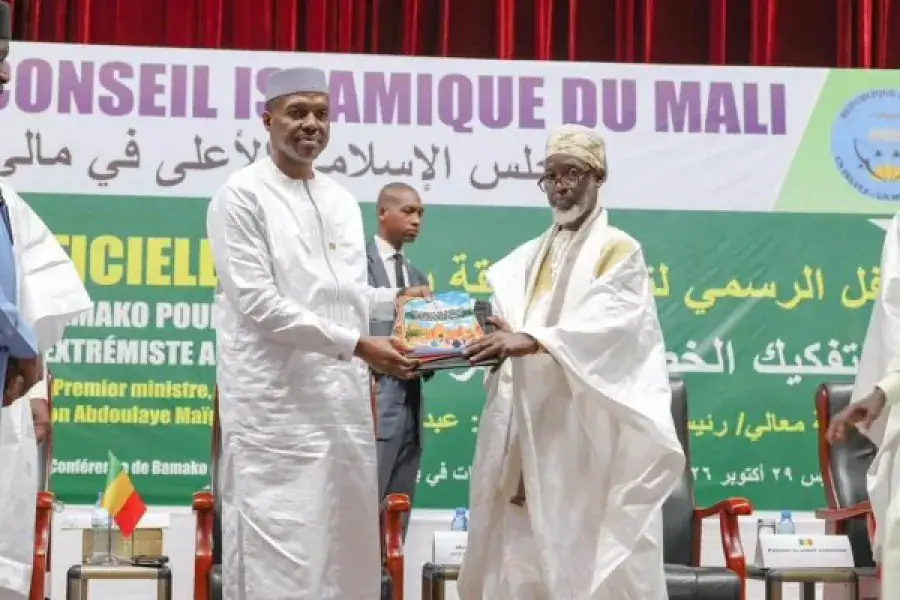
The Malian government, in collaboration with the Haut Conseil Islamique du Mali (HCIM) and various social and religious actors, has adopted a strategic document aimed at countering deviated religious discourse. This development marks a significant step in the country's efforts to address the consequences of extremist ideologies. The document, presented at the Centre international de conférences de Bamako, is the result of a lengthy process of collective reflection and elaboration.
The ceremony, attended by government representatives, eminent oulémas, customary dignitaries, and civil society members, was marked by strong speeches and a shared commitment to preserving national cohesion. The event's tone was set by the reading of Quranic verses and a welcome address by the mayor of Bamako's commune III. The document aims to protect Islam from violent instrumentalization, correct amalgamations, and promote an education rooted in moderation, tolerance, and peaceful coexistence.
The first vice-president of HCIM, Cheick Ibrahim Kontao, highlighted the spiritual and social significance of the event, emphasizing the need for the Muslim community and other social forces to adopt this methodological guide. This guide seeks to counter sectarian deviations and preserve the foundations of a peaceful, tolerant, and concordant Islam in Mali. Ismaël Diakité, speaking on behalf of oulémas and religious leaders, stressed the necessity of uniting efforts to eradicate hate speech.
The 73-page document has been officially handed over to the Malian Prime Minister, Général de division Abdoulaye Maïga, by the first vice-president of HCIM. The Prime Minister expressed satisfaction with the initiative, congratulating all parties involved in drafting the document. He emphasized that this collective mobilization is crucial in countering hate and extremist discourse that threatens peace and social cohesion.
Général Abdoulaye Maïga noted that Mali faces significant security and social challenges, including armed violence, disinformation, and the instrumentalization of religion. These factors divide families, oppose communities, and make youth vulnerable to extremist ideologies. He praised the Forces de Défense et de Sécurité for their dedication and sacrifices in defending territorial integrity and protecting citizens.
The Prime Minister stressed that a durable peace requires a genuine synergy of actions based on mutual trust among authorities, armed forces, religious leaders, and citizens. He recalled Mali's secular tradition of solidarity and respect among religious communities, emphasizing the need to preserve and transmit this heritage to future generations. The diversity of beliefs should not be a line of fracture but an opportunity for better understanding and promoting the common good.
The Prime Minister concluded by launching a vibrant appeal to religious organizations, republican institutions, and civil society to engage fully in disseminating, appropriating, and concretely applying the recommendations outlined in the document. He insisted that preserving peace is a shared responsibility requiring the rejection of prejudices and refusals of amalgamations.
Key points
- The Malian government and Islamic leaders have developed a 73-page document to counter extremist discourse and promote peaceful coexistence.