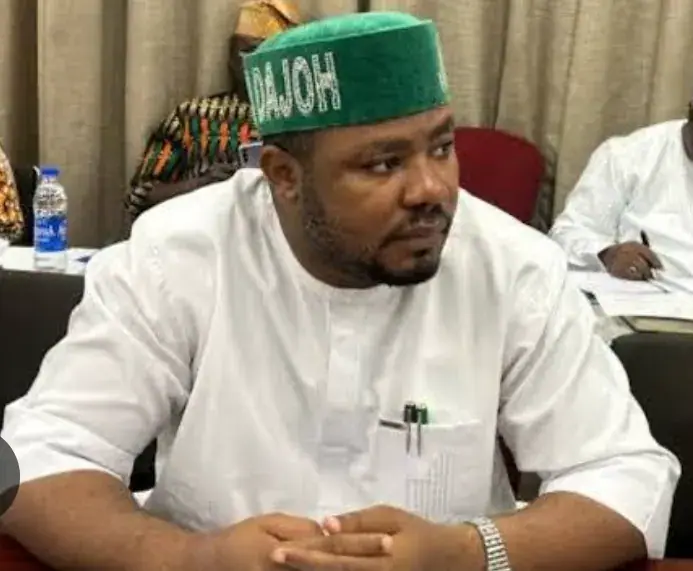
Hon. Philip Agbese, Labour Party leader in Benue State, has defended the Federal Government's proposed $21.7 billion external borrowing plan. He argues that investments in critical infrastructure and national security justify the financing. According to Agbese, the proposed borrowing is a strategic investment in productive national assets that will address Nigeria's infrastructure deficit, strengthen the security sector, and promote long-term economic growth.
Agbese cited allocations for transport infrastructure, including the Lagos-Calabar Coastal Highway, Sokoto-Badagry Super Highway, and major rail corridors, as evidence of the administration's commitment to developing assets capable of generating long-term economic value. He emphasized that investments in roads, railways, and power infrastructure will improve connectivity, stimulate economic activities, and create opportunities for businesses and communities across the country.
The lawmaker also defended the security component of the proposed borrowing, saying sustained funding is necessary to strengthen the capacity of the Armed Forces and other security agencies to tackle terrorism, banditry, and kidnapping. He noted that the Federal Government is providing additional resources to enable security personnel to consolidate operational gains, rescue abducted citizens, and restore peace in troubled communities.
Agbese highlighted the administration's infrastructure record, pointing to progress on sections of the Abuja-Kaduna-Zaria-Kano highway, the commissioning of initial segments of the Lagos-Calabar Coastal Highway, and other road projects across the country. He also cited approvals for the proposed East and West Super Grids as part of efforts to expand electricity transmission capacity and address longstanding challenges in the power sector.
According to Agbese, state governments and the Federal Capital Territory will benefit from the proposed financing, with a significant portion earmarked for subnational projects. He said the financing structure will help distribute the benefits across the federation rather than concentrate development spending at the federal level. Agbese added that residents of Ado, Okpokwu, and Ogbadibo, like other Nigerians, need better roads, reliable electricity, and safer communities.
On the terms of the proposed borrowing, Agbese said a substantial portion will come from multilateral and bilateral partners at concessional rates, while commercial financing will be secured on competitive terms. He urged critics to look beyond the headline borrowing figure and consider the nature of the projects, the financing conditions, and the potential returns on the investments.
Agbese called on lawmakers across party lines to prioritize national interest when the proposal comes before the National Assembly. He emphasized that every progressive country borrows to build and that what matters is whether the money creates lasting assets and strengthens national security.
Key points
- The proposed $21.7 billion external borrowing plan is a strategic investment in critical infrastructure and national security.
- The plan will address Nigeria's infrastructure deficit, strengthen the security sector, and promote long-term economic growth.
- A substantial portion of the borrowing will come from multilateral and bilateral partners at concessional rates.