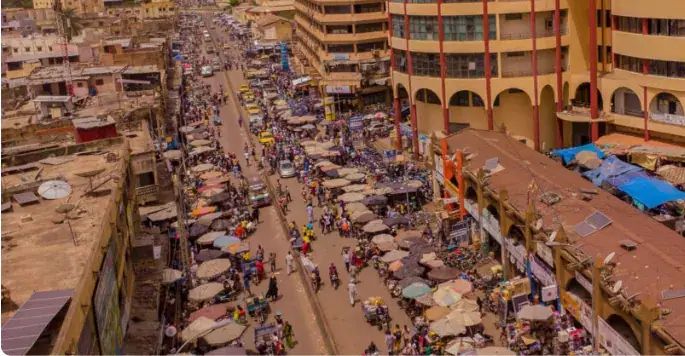
The Malian government has launched an initiative to reclaim public spaces in urban areas, which have been increasingly occupied by informal businesses and vendors. This move is aimed at improving traffic flow, enhancing public safety, and restoring the aesthetic appeal of cities. According to the authorities, the situation had become unbearable, with pedestrians forced to walk on the roads, emergency services blocked by makeshift barriers, and the overall image of urban centers tarnished.
The operation, which is set to begin soon, has been necessitated by the failure of administrative tolerance to address the issue. Over time, the lack of effective regulation had created a "Far West" situation in urban areas, where the strongest or most entrenched occupants held sway over the common good. As a result, the government has decided to take decisive action to restore order and assert its authority.
The Governor of Bamako District, Abdoulaye Coulibaly, has highlighted the gravity of the situation, citing concerns about public safety, urban mobility, and the organization of urban spaces. He emphasized that public spaces are intended for the free movement of people and goods, and that their occupation by informal businesses and vendors creates difficulties for users, technical services, and emergency responders.
According to Coulibaly, the implementation of the government's instructions requires a coordinated and methodical approach. The authorities will work with technical services and security agencies to identify areas of illegal occupation, notify occupants, and then proceed with the removal of unauthorized structures. The operation will be followed by ongoing monitoring to prevent new installations.
The Governor has announced that the operation will be launched soon in the capital city, Bamako. While some stakeholders have welcomed the move, others have expressed concerns about the potential impact on small-scale traders and vendors. The success of the operation, they argue, will depend on the government's ability to provide alternative solutions and support to those affected.
Some union representatives have suggested that while firm action is necessary, the operation's success will also depend on the approach taken and the support provided to those displaced. They argue that simply removing vendors and traders without offering alternative solutions may only displace the problem rather than resolving it.
The Malian government's decision to reclaim public spaces reflects a broader effort to restore order and improve living conditions in urban areas. The operation is expected to have a significant impact on the daily lives of urban residents, and its success will depend on effective coordination and implementation.
Key points
- The Malian government has launched an operation to remove illegal occupations of public spaces in urban areas.
- The operation aims to improve traffic flow, public safety, and the aesthetic appeal of cities.
- The success of the operation will depend on the government's ability to provide alternative solutions and support to those affected.