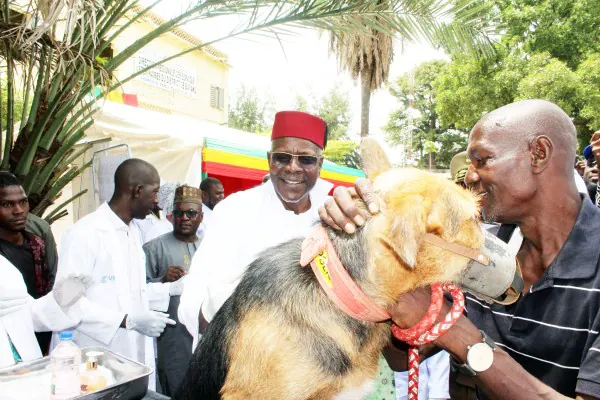
The 20th edition of World Rabies Day was celebrated in Bamako, Mali, under the theme "Stronger Together." The Minister of Livestock and Fisheries, Youba Ba, launched a vaccination campaign for pets, administering the first dose of vaccine to a dog at the regional veterinary services headquarters. The ceremony was attended by several high-ranking officials, including the Minister of Agriculture and the Minister of Environment, Sanitation, and Sustainable Development. The event aimed to raise awareness and mobilize stakeholders to eliminate rabies.
According to the World Health Organization (WHO), rabies causes approximately 59,000 deaths worldwide each year. In Mali, the disease remains a significant threat to human and animal health, with 10 deaths reported in 2022, 14 in 2023, 18 in 2024, 25 in 2025, and 23 deaths recorded between January and September 2026. Minister Youba Ba emphasized that 99% of human rabies cases are caused by bites from infected dogs, with Africa and Asia accounting for 95% of rabies-related deaths.
The Minister of Livestock and Fisheries highlighted the importance of a concerted effort to combat rabies, including mass vaccination of dogs, strengthening epidemiological surveillance, controlling stray dog populations, and educating communities. He also stressed the need for rapid post-exposure prophylaxis and a "One Health" approach, which involves collaboration between human, animal, and environmental health sectors. Mali has committed to the global program to eliminate human rabies transmitted by dog bites by 2030.
As part of the program, several actions are being implemented, including free dog vaccination, training for concerned service agents, and public awareness campaigns. Minister Youba Ba urged pet owners to regularly vaccinate their dogs, emphasizing that vaccination is mandatory under current regulations. The representative of the National Platform "One Health," Adama Diamouténé, noted that rabies is a preventable and eliminable disease if all stakeholders are involved.
Adama Diamouténé explained that rabies prevention relies on three essential elements: animal vaccination, rapid post-exposure care, and community awareness. He reported that 23 suspected rabies cases, all resulting in deaths, were recorded in Mali from January to September 2026. Despite efforts, challenges persist, including access to vaccines, surveillance, diagnosis, stray animal management, and public awareness.
The representative encouraged dog owners to understand that vaccinating their pets is a collective protection act. He advised people bitten or scratched by a suspect animal to quickly consult a health structure and not wait for symptoms to appear. The fight against rabies requires a joint effort from veterinary services and citizens, as vaccinating one dog can save a human life.
World Rabies Day serves as a reminder of the importance of continued efforts to eliminate rabies. The Malian government, along with its partners, is committed to achieving this goal through sustained awareness and vaccination campaigns. By working together, Mali aims to reduce the number of rabies cases and ultimately eliminate the disease.
Key points
- The Malian government has launched a mass vaccination campaign for pets to combat rabies.
- Rabies causes approximately 59,000 deaths worldwide each year, with Africa and Asia accounting for 95% of rabies-related deaths.
- Mali has committed to eliminating human rabies transmitted by dog bites by 2030 through a "One Health" approach.