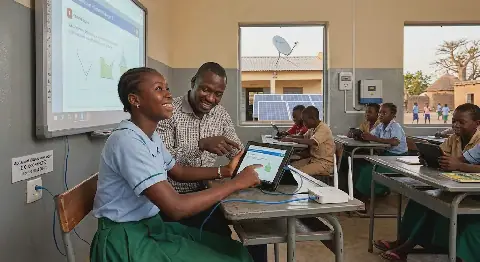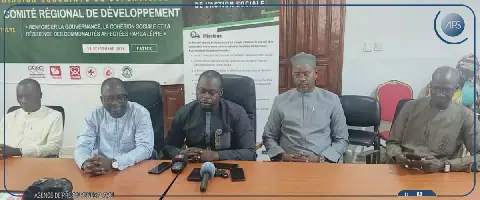
The Malian government recently celebrated International Literacy Day with a ceremony in Kambila, a rural commune. The event was attended by several high-ranking officials, including Boubacar Dembélé, Secretary General of the Ministry of National Education. The ceremony featured a performance by a group of women from Kambila, who sang the national anthem in the Bambara language. A Ciwara, a traditional Malian trophy, was also awarded to the Kambila mayor's office for its achievements in literacy.
The ceremony included various activities, such as a slam performance and a sketch on the importance of literacy. A parade featuring women from three training centers in Kambila, specializing in makeup, food processing, and sewing, also took place. Boubacar Dembélé praised the mobilization of authorities, partners, and literacy actors, stating that their engagement demonstrates that the right to education is not limited to school age. He emphasized that knowledge is an instrument of emancipation and development at any age.
Dembélé highlighted the significance of literacy as a lever for social, economic, cultural, and civic transformation. He stated that an literate person is better equipped to access information, understand their rights, and make informed decisions. The Secretary General also emphasized the importance of promoting literacy in Mali's official languages to valorize national culture and transmit knowledge to future generations.
The government has reiterated its commitment to promoting national languages in education and literacy. Dembélé called on all actors to increase literacy and non-formal education offerings, improve learning quality, and develop programs adapted to population needs. He also invited partners and literacy actors to strengthen their engagement alongside the state through concrete actions.
Doussou Mory Keita, Secretary General of the Kambila commune, emphasized that literacy is crucial for the commune's development. He stated that reading, writing, and counting are essential skills that go beyond basic competencies, providing a key to knowledge, freedom, and autonomy. Keita also deplored the persistence of illiteracy in rural areas and called for intensified actions in favor of non-formal education.
Soryba Koné, Director of the Kati Academic Academy, advocated for better integration of literacy into education and culture policies. He stressed that literacy plays a vital role in empowerment, citizenship, inequality reduction, and cultural heritage preservation. Koné also highlighted the importance of national languages as vectors of history, values, and community identity.
The International Literacy Day celebration in Kambila underscores the Malian government's commitment to promoting literacy and education. The event demonstrated the importance of collaboration between authorities, partners, and literacy actors to address the challenges of illiteracy and promote local development. Key stakeholders have been urged to redouble their efforts to make literacy a reality for all Malians.
Key points
- The Malian government has emphasized its commitment to promoting literacy and education, particularly in rural areas.
- The celebration highlighted the importance of literacy as a lever for social, economic, cultural, and civic transformation.
- The government has called on partners and literacy actors to strengthen their engagement alongside the state through concrete actions.