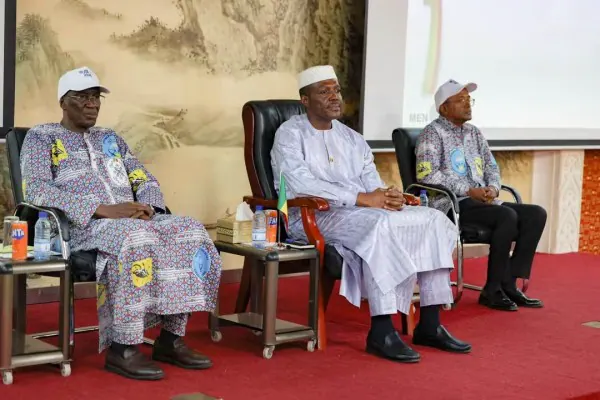
Mali celebrated International Literacy Day on September 8, 2026, at the Bamako International Conference Center. The event was presided over by Prime Minister General of Division Abdoulaye Maïga, in the presence of government members and other dignitaries. The day's theme was "Literacy in the Service of a Successful Year of Education and Culture." The Prime Minister emphasized the importance of literacy in achieving peace, reconnecting with history, accessing public services, and benefiting from digital innovations.
According to the Minister of National Education, Dr. Amadou Sy Savané, literacy goes beyond basic reading, writing, and arithmetic skills. It is an act of emancipation, a lever for autonomy, and the foundation of a sovereign society. The Ministry has made significant efforts in establishing centers dedicated to literacy and non-formal education. There are 426 Community Development Education Centers (CED) with 6,333 learners, including 2,649 girls and 3,684 boys.
The Minister of National Education highlighted the various activities offered in these centers, including theoretical courses and income-generating activities such as market gardening, small livestock farming, and commerce. The centers also provide training in skills like carpentry, mechanics, and soap making. Additionally, the government has introduced initiatives to promote the use of local languages as a fundamental support for functional literacy.
Prime Minister Maïga stressed that the government's ambition is to reduce illiteracy and enable every Malian to contribute fully to the country's development. He praised President of the Transition, General of the Army Assimi Goïta, for making education a strategic priority. The Prime Minister also acknowledged the support of international partners, including UNESCO, in promoting literacy and education in Mali.
The representative of UNESCO in Mali, Ali-Mohamed Sinane, commended the government's efforts in promoting local languages and reiterated the organization's commitment to supporting Mali in strengthening capacities, mobilizing resources, and implementing solutions adapted to national realities.
As part of the celebrations, various activities were organized, including a national literacy campaign and the launch of new education programs. The government has also announced plans to increase funding for education and to improve infrastructure in schools and literacy centers.
The International Literacy Day celebrations in Mali concluded with a renewed commitment from the government and stakeholders to prioritize education and literacy. The event highlighted the importance of collaboration between government, civil society, and international partners to achieve the goal of a literate and educated society.
Key points
- The Malian government has made significant efforts to promote literacy, including establishing 426 Community Development Education Centers (CED) with 6,333 learners.
- The government has introduced initiatives to promote the use of local languages as a fundamental support for functional literacy.
- The Prime Minister emphasized the importance of literacy in achieving peace, reconnecting with history, accessing public services, and benefiting from digital innovations.