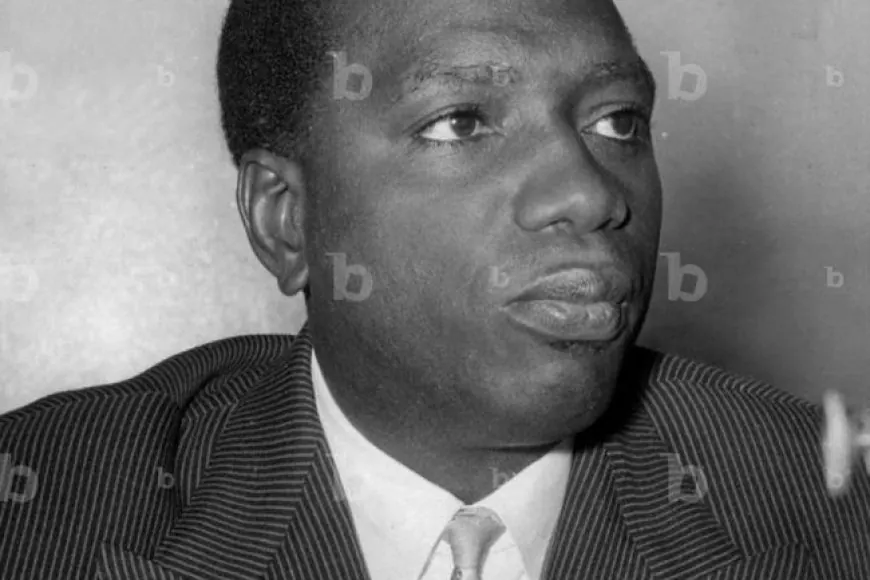
Mali is celebrating its 66th anniversary of independence, a milestone that marks the country's accession to national and international sovereignty. The occasion is an opportunity to pay tribute to the heroes who fought for the country's independence, including Mamadou Konaté and Modibo Keïta, who played a crucial role in the country's struggle for independence. These leaders helped shape the country's history and paved the way for future generations.
The country's journey to independence began in 1946, when Mamadou Konaté co-founded the Rassemblement Démocratique Africain (RDA) in Bamako. Konaté, an educator, was a key figure in the country's anticolonial movement and helped raise awareness about the need for independence. His legacy continued to inspire future leaders, including Modibo Keïta, who took over the fight for independence after Konaté's death in 1956.
Modibo Keïta, who became the country's first president, played a pivotal role in achieving independence. On September 22, 1960, he proclaimed the independence of the Republic of Mali, following the country's withdrawal from the French-led Federation of Mali. Keïta's leadership helped shape the country's early years, and his vision for a sovereign and economically independent Mali continues to influence the country's development.
The country's early years were marked by significant challenges, including economic difficulties and tensions with international partners. Despite these challenges, Keïta's government made significant progress, including the creation of a national currency, the franc malien, and the establishment of key industries such as SOMIEX and COMATEX. However, the country's stability was short-lived, and a coup d'état in 1968 led to a period of military rule.
In recent years, Mali has faced significant security challenges, including a crisis in the Sahel region and the rise of extremist groups. However, the country has also made significant progress, including the transition to democracy in 1991 and the election of a new government. In 2020, a group of military officers, led by General Assimi Goïta, seized power and began a transition to a new government.
General Goïta's leadership has been marked by a commitment to sovereignty and independence. In 2023, he ordered the withdrawal of French and European forces from the country, a move that echoed Keïta's decision to expel French troops in 1961. The country's new government has also implemented significant reforms, including a new constitution and the creation of a confederation with other Sahel countries.
As Mali celebrates its 66th anniversary of independence, the country looks to the future with a renewed sense of purpose and determination. Despite the challenges it has faced, Mali has consistently demonstrated its resilience and ability to adapt to changing circumstances. The country's leaders, past and present, have played a significant role in shaping its history and will continue to inspire future generations.
Key points
- The country's struggle for independence was led by key figures such as Mamadou Konaté and Modibo Keïta.
- Mali's independence was proclaimed on September 22, 1960, by Modibo Keïta.
- The country continues to face significant security challenges, but has made progress in recent years, including a transition to democracy and significant reforms.