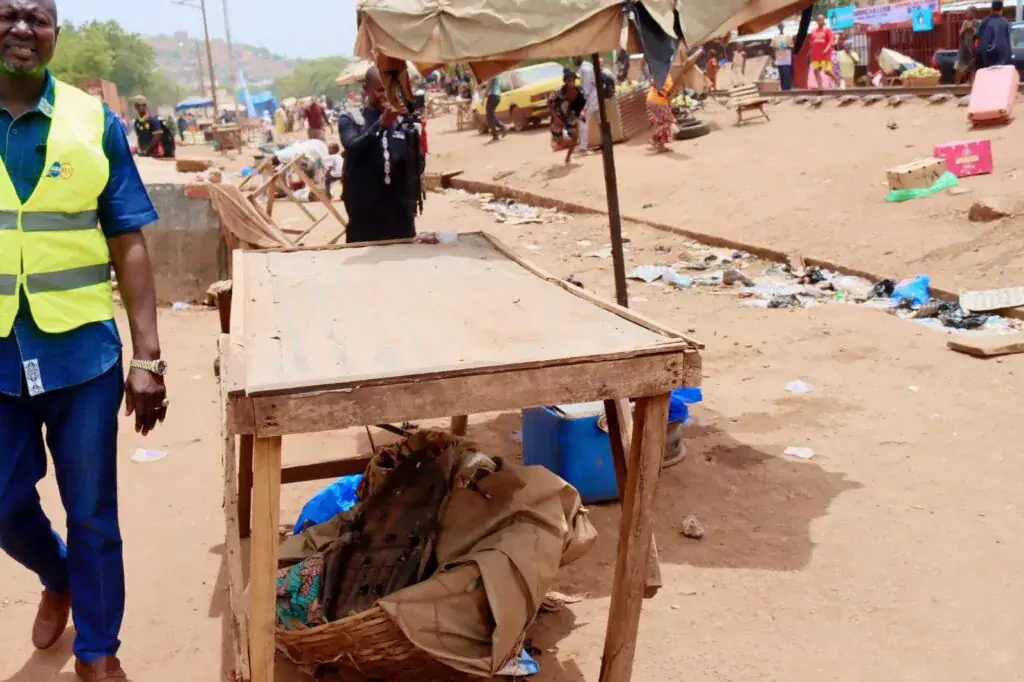
The Malian government has initiated the demolition process for properties and installations along the Route de Samé, a crucial transportation artery connecting Bamako to Kati. This development marks a significant step towards upgrading the 9.3-kilometer stretch into a dual carriageway, aiming to ease traffic congestion and reduce accident risks. The project, part of a larger scheme approved in 2024, involves not only the Route de Samé but also the upgrade of the Bamako–Koulouba–Kati road and additional infrastructure in Kati.
The Route de Samé is a vital route that daily accommodates commuters between the capital Bamako and Kati, along with substantial goods transport and commercial activities in adjacent neighborhoods. The area also experiences heavy two-wheeled vehicle traffic. By liberating the land along this route, the government aims to facilitate the construction of a dual carriageway that will improve travel fluidity and safety. This project is part of broader efforts to enhance transportation infrastructure in the region.
The construction project, awarded to COVEC-Mali, is valued at 92.661 billion CFA francs, including all taxes. The contract stipulates a 36-month completion period. Additionally, a separate contract worth approximately 1.81 billion CFA francs has been awarded for a 38-month control and surveillance mission. The project was officially launched in February 2024, with an update in February 2026 indicating a 10% completion rate, despite concerns over delays.
The recent announcement focuses on the commencement of demolitions between the GMS roundabout and Kati. This phase may necessitate temporary relocations of commercial activities, adjustments to traffic flow, and potential access difficulties for local residents. The government has not provided detailed information on the number of constructions affected, provisional routes, or specifics on expropriation cases, which are crucial for those directly impacted.
The project's success will also be evaluated based on its ability to maintain access to essential services such as schools, health centers, and businesses during the construction period. The upgrade of the Route de Samé and surrounding infrastructure is expected to significantly enhance transportation efficiency and safety in the region. Continuous updates on the project's progress will be essential for stakeholders and the general public.
The land liberation and subsequent construction are critical components of Mali's efforts to improve its transportation network. By upgrading key routes like the Route de Samé, the government aims to boost economic activity, reduce travel times, and enhance road safety. These improvements are also expected to have a positive impact on the quality of life for residents in Bamako and Kati.
As the project progresses, effective communication and management will be vital to address the concerns of affected communities and ensure minimal disruptions. The involvement of local stakeholders and transparent reporting on the project's status will be essential for its successful completion. The Malian government's commitment to enhancing its infrastructure highlights the importance of such projects for the country's development.
Key points
- The project aims to upgrade the 9.3km Route de Samé into a dual carriageway to improve traffic flow and safety.
- The construction project is valued at 92.661 billion CFA francs and has a contract duration of 36 months.
- The upgrade is part of a larger 2024-approved scheme to improve transportation infrastructure in the Bamako-Kati corridor.
Reporting sources
- Route de Samé : les autorités lancent la libération des emprises · Le Journal du Mali