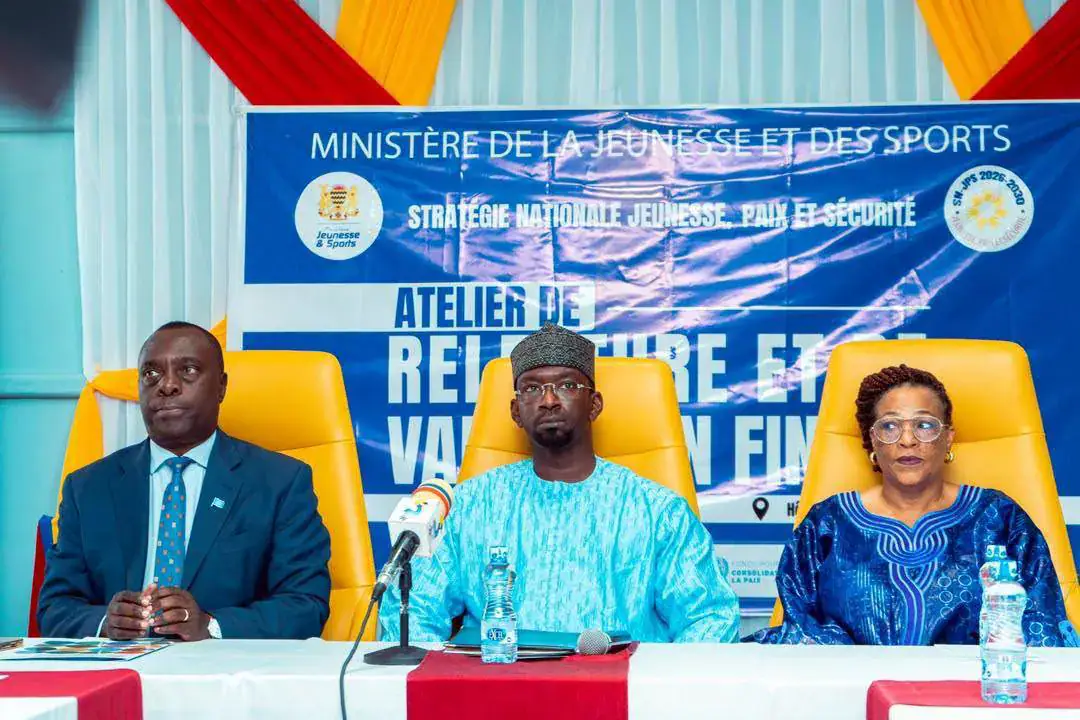
The Chadian government has taken a significant step towards empowering its youth in peacebuilding efforts. An workshop was held on November 17, 2026, in N'Djamena to review and validate the National Youth and Peace Strategy. The two-day event was launched by Minister of Youth and Sports, Naïr Abakar. This initiative comes at a critical time, with the region facing numerous challenges including conflicts, forced displacements, intercommunal tensions, and economic uncertainties.
The strategy aims to position the Chadian youth as a key stakeholder in peace consolidation. The youth are seen as both vulnerable to various risks and as a force capable of contributing to conflict prevention and peacebuilding. According to François Batalingaya, the UN representative in Chad, peace and security are essential conditions for human, economic, and social development. He emphasized that peacebuilding is a collective responsibility, requiring the involvement of all stakeholders.
Minister Naïr Abakar reiterated his department's commitment to placing youth at the forefront of peace, security, and national cohesion issues. He stressed the need to encourage active youth participation in conflict prevention, peace consolidation, and social transformation. The strategy was developed following consultations with young people from different provinces, using platforms like U-Report. It focuses on six strategic axes, including strengthening youth leadership in conflict prevention and promoting social protection and economic autonomy.
The National Youth and Peace Strategy aims to develop a culture of peace and citizenship, enhance community resilience, and support vulnerable young people affected by conflicts. Minister Abakar emphasized that the goal is to have a coherent instrument for action, aligned with the National Youth Policy and the "Tchad Connexion 2030" National Development Plan. This strategy is expected to produce concrete results within communities.
The minister outlined his vision for the youth, stating that "a listened-to youth is an engaged youth; a protected and empowered youth is a force for stability; a youth fully involved in decisions is a guarantee for durable peace." This vision underscores the government's commitment to supporting youth empowerment and peacebuilding efforts.
The strategy's development involved extensive consultations with young people from various provinces, ensuring that their voices and concerns are addressed. By engaging youth in peacebuilding, the government hopes to harness their potential as agents of change and promote sustainable peace.
The launch of the National Youth and Peace Strategy marks a significant milestone in Chad's efforts to promote peace and stability. With the government's commitment to empowering youth, there is hope that this initiative will yield positive results and contribute to the country's overall development.
Key points
- The strategy focuses on six strategic axes, including strengthening youth leadership in conflict prevention and promoting social protection and economic autonomy.