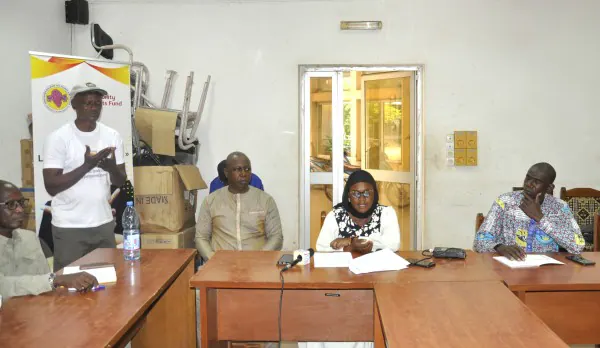
The Association malienne des sourds (Amasours) recently convened a press conference at the Union malienne des associations de personnes handicapées (UMAPH) to mark the International Week of Deaf People. The event, themed "Inclusive Education and the Importance of Sign Language in the Deaf Community," brought together key stakeholders, including Amasours President Famory Konaté, founder Mohamed Dibassy, and speaker Barthélémy Sangala. The conference aimed to highlight the challenges faced by deaf individuals in accessing quality education and to advocate for greater recognition of sign language.
According to Famory Konaté, despite progress made in Mali towards inclusion of people with disabilities, significant challenges persist, particularly in education. Konaté noted that many deaf children struggle to access quality education due to a shortage of teachers proficient in sign language, inadequate teaching materials, and limited educational opportunities. He called for increased action to support vocational training and employment of deaf individuals, urging government, private sector, and technical partners to collaborate in creating better opportunities for their professional integration.
The importance of sign language in the lives of deaf individuals was underscored by both Konaté and Sangala. Konaté emphasized that sign language is not only a means of communication but also a vital tool for learning, expression, and social participation. He advocated for greater recognition and utilization of sign language across various sectors, including education, healthcare, justice, administration, employment, and communication. Sangala defined sign language as a critical means of communication among deaf individuals and between deaf and non-deaf people, essential for their full participation in society.
Barthélémy Sangala highlighted that the Convention on the Rights of Persons with Disabilities acknowledges the deaf community as a distinct entity, entitled to recognition of their communication language. He explained that the Association and its partners have been advocating for the recognition of sign language in Mali as a full-fledged language, enabling deaf individuals to access fundamental rights, including education, healthcare, and public services. Sangala stressed that promoting sign language is crucial for fostering inclusive education and social participation within the framework of sustainable development.
Sangala also pointed out that one of the main obstacles faced by deaf individuals is accessing certain fundamental rights due to communication barriers. He noted that collaboration between the Ministry of National Education and relevant associations has been underway to identify and address the needs of disabled children. This includes efforts to provide appropriate educational support and resources to ensure their successful integration into the education system.
The press conference was part of a broader effort to promote awareness and understanding of the challenges faced by deaf individuals in Mali. By advocating for the recognition of sign language and inclusive education, the Association malienne des sourds aims to contribute to a more equitable society where deaf individuals can fully participate and realize their potential. The event demonstrated the commitment of civil society organizations to addressing the needs of people with disabilities and promoting their rights.
The recognition of sign language as a legitimate means of communication is seen as a crucial step towards achieving inclusive education and social participation for deaf individuals in Mali. As the Association and its partners continue their advocacy efforts, they hope to bring about positive change and create a more inclusive environment that values diversity and promotes equal opportunities for all.
Key points
- The Association malienne des sourds calls for the recognition of sign language to enhance education and social participation for deaf individuals in Mali.