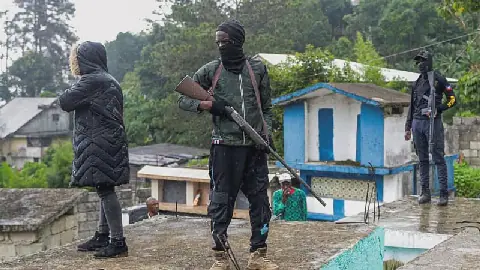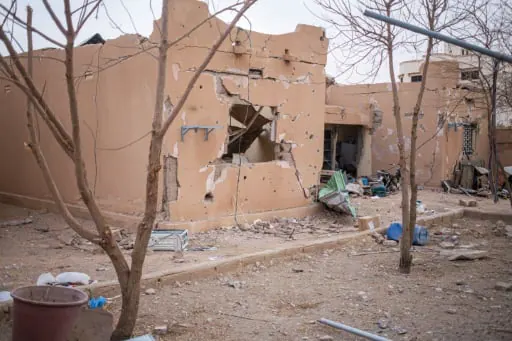
The Malian army announced on Tuesday, October 6, 2026, that it had entered the strategic northern city of Kidal, which was captured by Tuareg separatists around five months ago. The rebels, from the Azawad Liberation Front (FLA), announced their withdrawal from the city earlier that day as the military advanced. This development comes amid a series of attacks launched by jihadists from Al-Qaeda-linked JNIM and their Tuareg separatist allies in late April, aimed at weakening Mali's junta rulers.
The FLA stated that their decision to withdraw from Kidal was due to the "disproportionate use of aerial assets by Russian mercenaries from Africa Corps and the terrorist forces of the Bamako military junta," in order to "preserve human lives." The group emphasized that their measures were temporary and intended to keep their human and logistical capabilities intact. Meanwhile, Mali's armed forces announced "large-scale air-ground operations" with their paramilitary allies from Russia's Africa Corps in the larger Kidal region.
Two Malian officers confirmed to AFP that the armed forces had arrived in Kidal by mid-afternoon. A convoy left the town of Anefis on Tuesday morning and entered Kidal shortly before 1:00 pm (local and GMT), with no resistance encountered. The other officer reported that the armed forces had arrived in Kidal ahead of schedule. An officer in Gao, speaking on condition of anonymity, stated that troops had been moving in the Kidal region over the past few days, aiming to secure the Malian population, Kidal, and fight against terrorism.
A man who left Kidal on Monday with six family members told AFP that they were among the last to depart the city, which had not had "even a hundred civilians left" for some time. The ongoing conflict in Mali has resulted in a serious security crisis since 2012, fueled by violence from jihadists allied to Al-Qaeda or the Islamic State group, along with criminal gangs and armed separatists.
Mali's ruling junta, which came to power in two successive coups in 2020 and 2021, has turned away from former colonial power France and moved closer to Russia, both militarily and politically. The junta has partnered with Russia's mercenary Wagner Group, which was replaced in June 2025 by Africa Corps, falling under the direct control of the Russian defence ministry.
The violence since April, as JNIM and the FLA battle the Malian army and its Russian allies, has included a number of deadly assaults. A large-scale jihadist attack on the Dioura military camp in central Mali in September killed at least 100 Malian soldiers. In mid-July, at least 50 other soldiers lost their lives in northern Mali when a coalition of Tuareg separatists and jihadists ambushed an army convoy.
Human rights organisations have repeatedly accused the Malian army and Russian paramilitaries of killing civilians during operations, and all sides of committing war crimes. The situation in Mali remains volatile, with ongoing efforts to address the security crisis and shifting alliances between the junta, Russia, and various armed groups.
Key points
- The Malian army has entered the strategic city of Kidal, which was abandoned by Tuareg separatist rebels amid ongoing conflict and shifting alliances.
- The rebels cited the "disproportionate use of aerial assets" by Russian mercenaries as the reason for their withdrawal from Kidal.
- The conflict in Mali has resulted in a serious security crisis, with ongoing violence and human rights abuses reported.