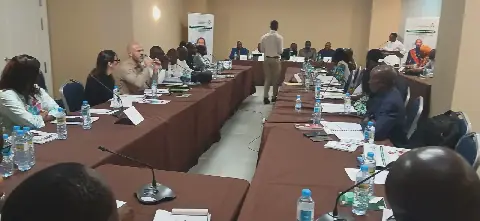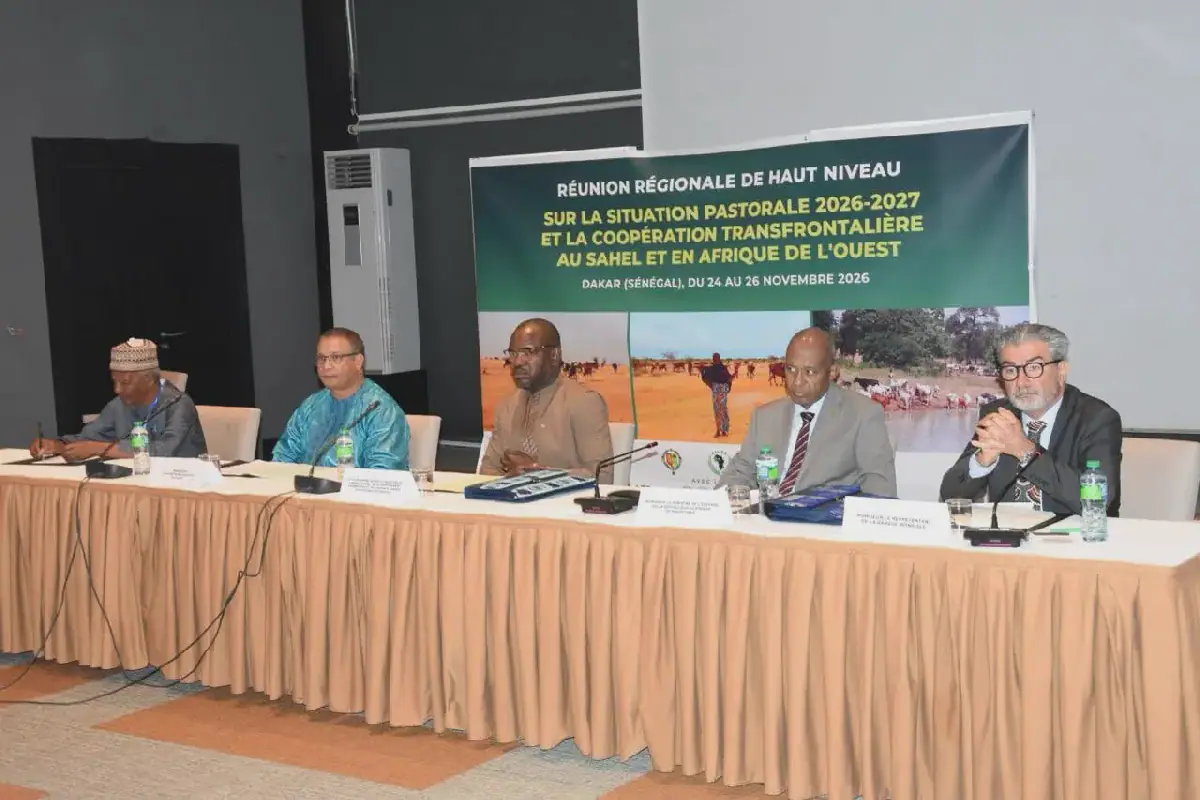
A high-level meeting on the pastoral situation and transboundary cooperation in the Sahel and West Africa concluded on November 26, 2026, with the launch of the Dakar Appeal. The meeting, organized by the Permanent Inter-State Committee for Drought Control in the Sahel (CILSS) and the Billital Maroobé Network, brought together ministers from the region, national technical service officials in charge of livestock, representatives of pastoral organizations and regional institutions, and technical and financial partners.
The meeting's analyses revealed a worrying situation, with fodder and water deficits affecting over 60% of the Sahelian zone. The ongoing security crisis has further exacerbated the situation. The restriction of pastoral mobility in the West Basin (Mali, Mauritania, and Senegal) since August 2025 has severely disrupted traditional transhumance circuits, affecting around three million heads of cattle and nearly 40,000 herders.
The blockage has led to an unusual concentration of herds in Mauritania and a massive redirection of flows towards eastern Senegal, increasing the risk of community conflicts and food insecurity. In response to the crisis, some Sahelian states have already mobilized $68.057 million for their emergency plans. However, the uncovered funding need is estimated at $156.090 million.
Through the Dakar Appeal on the pastoral situation and transboundary cooperation, governments and their partners have committed to bridging this deficit to prioritize funding for livestock feed supply, pastoral hydraulics, animal health, and destocking. Beyond the emergency, participants aim to institutionalize early warning mechanisms, deploy sustainable structuring investments, and launch pilot programs for transboundary cooperation integrating youth and women.
To implement these commitments, a roadmap has been defined. The meeting's outcome is expected to accelerate the response to the pastoral crisis in the Sahel and West Africa. The Dakar Appeal is a call to action for governments, international organizations, and other stakeholders to support the region in addressing the crisis.
The crisis has significant implications for the region, including the risk of food insecurity and community conflicts. The Dakar Appeal seeks to address these challenges by mobilizing resources and support for the affected communities. The situation requires a coordinated response from governments, international organizations, and other stakeholders.
The high-level meeting has provided a platform for stakeholders to discuss the crisis and commit to action. The implementation of the Dakar Appeal will require continued collaboration and coordination among governments, international organizations, and other stakeholders. The outcome of the meeting is expected to have a positive impact on the lives of herders and communities affected by the crisis.
Key points
- The Dakar Appeal aims to address the pastoral crisis in the Sahel and West Africa by mobilizing resources and support for the affected communities.