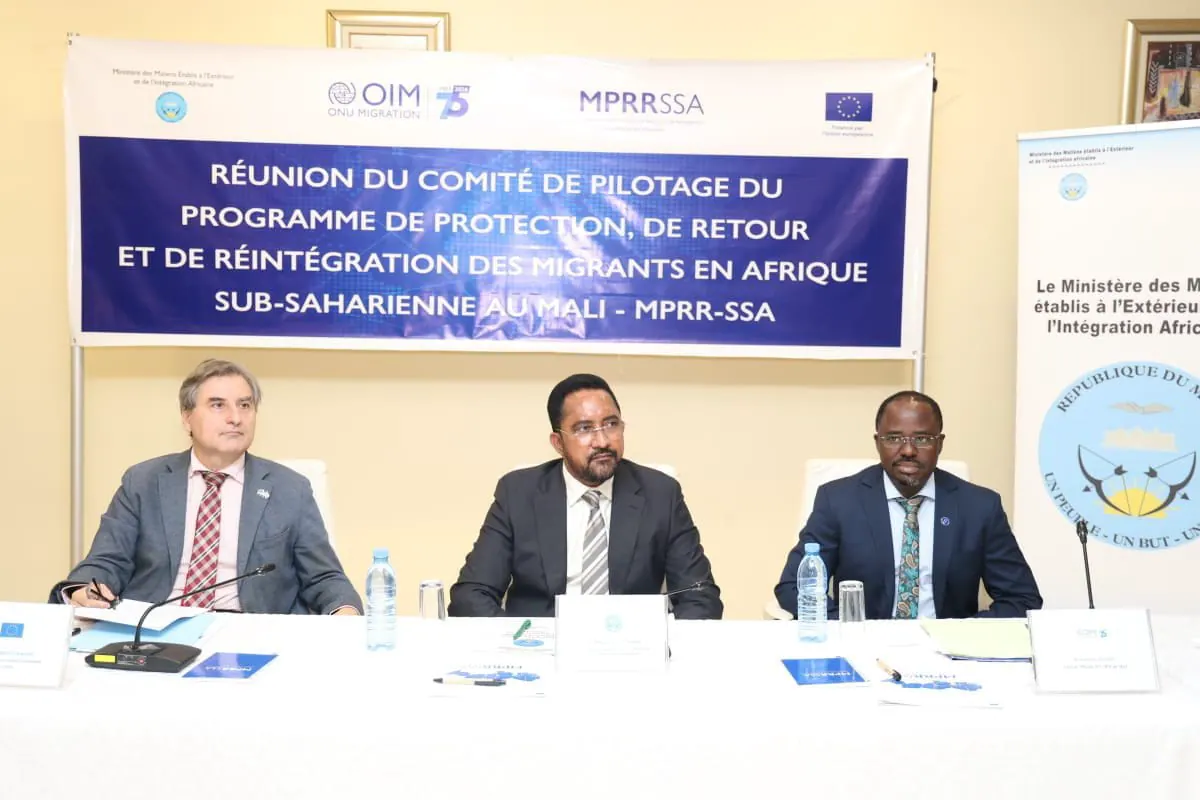
On October 1, Bamako hosted the third meeting of the steering committee for the Migration, Protection, Return, and Reintegration in Sub-Saharan Africa (MPRR-SSA) program. Under the chairmanship of Mossa AG ATTAHER, Minister for Malians Living Abroad and African Integration, the session brought together high-level partners to assess the program's progress. The meeting evaluated the current state of migration management in the region and discussed future strategies for sustainable reconstruction.
The MPRR-SSA program has made significant strides since 2022, providing personalized support to 1,518 migrants in transit in Mali. Additionally, over 27,800 Malian citizens have benefited from voluntary repatriation. The program goes beyond mere repatriation, focusing on the economic and psychological stabilization of beneficiaries. More than 14,000 economic reintegration projects have been implemented, accompanied by 10,000 vocational training sessions.
The program's comprehensive approach also includes psycho-social support, with nearly 19,000 individuals receiving essential assistance to overcome trauma related to their migratory journey. According to authorities, these encouraging results necessitate increased efforts to ensure sustainable reconstruction and genuine autonomy for each migrant. Minister AG ATTAHER emphasized that physical return is not an end in itself.
To consolidate these achievements, Bamako is calling for strengthened post-return monitoring. Future priorities will focus on adapting vocational training to the economic realities of different territories and optimizing coordination between the state, local authorities, and international organizations. This approach aims to create a more effective and sustainable migration management system.
The MPRR-SSA program is a collaborative effort between the Malian government and international partners, including the European Union and the International Organization for Migration (IOM). The program's success relies on the active participation of various stakeholders, including civil society organizations and technical and financial partners.
As the program moves forward, it is expected to have a lasting impact on migration management in the region. By prioritizing sustainable reconstruction and autonomy, the MPRR-SSA aims to create a more stable and prosperous future for migrants and local communities alike. The program's achievements serve as a model for effective migration management.
The Malian government's commitment to sustainable reconstruction is reflected in its call for strengthened post-return monitoring and adapted vocational training. By working together with international partners, Mali is taking a proactive approach to addressing the complexities of migration and promoting a more stable and prosperous future.
Key points
- The MPRR-SSA program has provided support to over 27,800 Malian citizens through voluntary repatriation and 1,518 migrants in transit with personalized assistance.