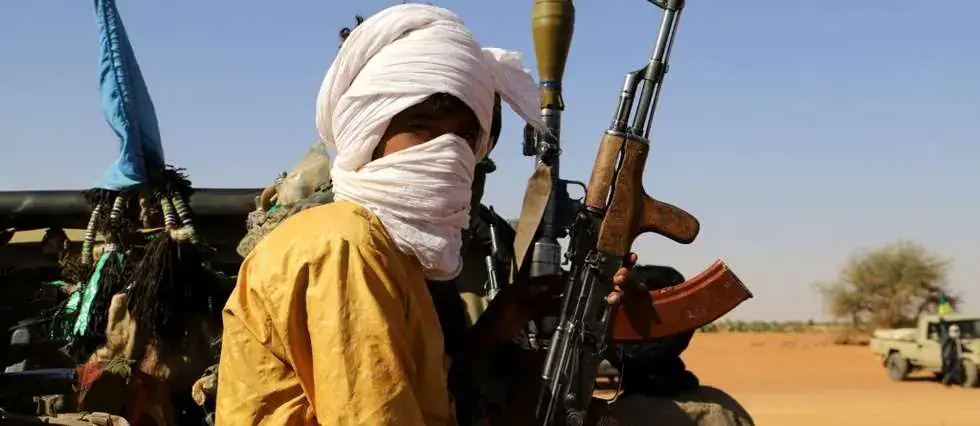
The Malian army has announced the discovery of 54 lifeless bodies in a camp located in Tagadeyat, approximately 35 kilometers southeast of Ménaka. This grim finding was made by a joint patrol of Malian forces and their Russian partners, based on intelligence suggesting a terrorist attack on civilians in the area. The victims were buried on site, while nine survivors were found and evacuated to the city of Ménaka.
According to the Malian General Staff's communiqué, the initial testimonies collected point to the Islamic State in the Greater Sahara (EIGS) as responsible for the killings. However, further details about the circumstances of the attack and the identity of the victims have not been disclosed. The Malian army has condemned the massacre in the strongest terms, offering condolences to the bereaved families and solidarity to the affected communities.
The Malian army has pledged to pursue those responsible for the crime, ensuring they face justice in accordance with the law. The army's operations aim to secure the national territory, protecting people and their property. In response to the tragedy, the Malian forces have reinforced protection measures for the most exposed populations, facilitating the relocation of inhabitants from threatened camps to the city of Ménaka.
The security situation in the Sahel region remains volatile, with terrorist groups posing a significant threat to civilians. Mali, along with neighboring countries such as Burkina Faso and Niger, has been struggling to contain the spread of extremist violence. The international community has expressed concern over the deteriorating situation, with some countries, like Algeria, taking steps to enhance military cooperation to combat terrorism.
The Malian government's efforts to secure the region have been hampered by criticism that it often withholds information about attacks and casualties. Local communities and international media have raised concerns about the delayed release of information, which can hinder an effective response to crises. The Malian authorities have faced accusations of manipulating or withholding information from the public.
The recent massacre in Ménaka highlights the urgent need for enhanced security measures and improved communication between local communities and the authorities. Initiatives to strengthen the protection of vulnerable populations and facilitate the exchange of information are crucial in preventing similar tragedies. The Malian army's commitment to pursuing perpetrators and securing the territory is essential in restoring stability to the region.
The international community has called for increased cooperation and support to help Mali and its neighbors address the growing threat of terrorism. The situation in the Sahel region demands a concerted effort from governments, international organizations, and local communities to ensure the security and well-being of civilians.
Key points
- The Malian army discovered 54 bodies in a camp in the Ménaka region, with initial testimonies pointing to the Islamic State in the Greater Sahara (EIGS) as responsible.