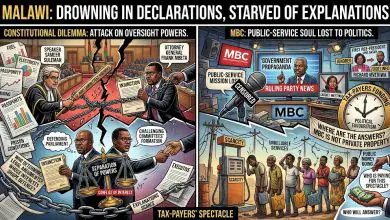
Malawians are set to take to the streets in Lilongwe, Blantyre, Zomba and Mzuzu on November 17 to protest against a growing catalogue of economic frustrations. The demonstrations are a public expression of anger over fuel shortages, electricity blackouts and foreign exchange scarcity. These economic issues have significantly impacted daily life, with motorists spending hours queuing at filling stations and public transport operators struggling to keep their vehicles moving.
The fuel crisis has been ongoing for 10 weeks, causing businesses to face rising costs and ordinary citizens to bear the consequences through higher fares and commodity prices. The unreliable power supply also affects businesses, which cannot operate efficiently, leading to interrupted production, affected equipment and rising operating costs. Small enterprises struggle to survive in such conditions, making it challenging for Malawi to achieve its ambitions of industrialisation, investment and economic growth.
Foreign exchange scarcity is another significant challenge, with importers struggling to access dollars and manufacturers unable to reliably obtain raw materials. This leads to shortages, higher prices and fewer economic opportunities for consumers. The economic grievances are legitimate, and citizens are entitled to demand answers when basic conditions necessary for economic activity remain unreliable.
The November 17 demonstrations offer the government an opportunity to listen to the public rather than lecture them. The government should respect the constitutional right to peaceful demonstrations and not treat public criticism as an act of hostility. Even if political interests are involved, it does not automatically invalidate the economic grievances being raised.
Demonstrations alone will not bring fuel to filling stations, restore reliable electricity or replenish foreign exchange reserves. However, dismissing public anger, issuing press statements or promising interventions will also not address the issues. Citizens need to know what the government is doing, what has gone wrong and when they can reasonably expect improvements.
The protests reflect a growing loss of confidence in the government's ability to manage the economy. The government needs to provide leadership, urgency, honesty and a credible plan that produces visible results. A government is not judged by how eloquently it explains a crisis but by how effectively it addresses it.
The Malawian government should take the November 17 demonstrations as a warning, not merely a date on the political calendar. The protests are a reminder that patience, like fuel and foreign currency, is running dangerously low. The government needs to address the economic issues urgently, rather than relying on excuses and assurances that have not led to tangible solutions.
Key points
- Citizens are protesting against fuel shortages, electricity blackouts and foreign exchange scarcity.
- The protests reflect a growing loss of confidence in the government's ability to manage the economy.
- The government needs to provide leadership, urgency, honesty and a credible plan to address the economic issues.
Reporting sources
- A nation running on excuses · The Nation