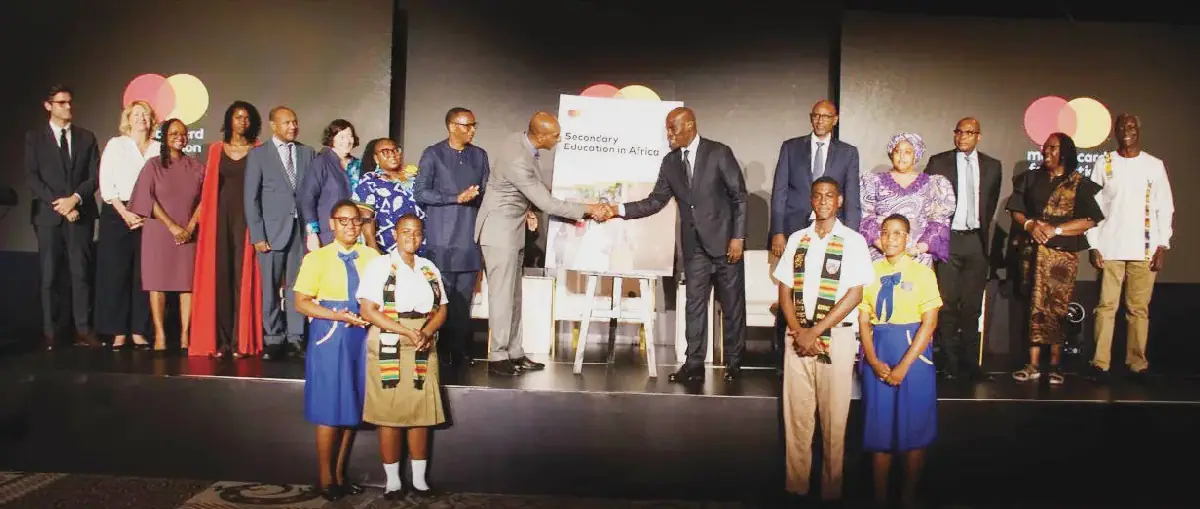
A recent report titled ‘Secondary Education in Africa: Expanding Pathways to Work, Livelihoods, and Lifelong Learning’ has called on Malawi and other African countries to explore new sources of funding to sustain free public secondary education. The report, launched in Accra, Ghana, notes that while removing school fees is crucial for expanding access to education, governments must establish sustainable financing mechanisms to maintain the gains. Malawi, along with six other African countries, was studied in-depth for the report.
The report estimates that achieving Sustainable Development Goal 4 targets on secondary education in Africa would require approximately $82 billion annually. This breaks down into $44 billion for lower secondary education and $38 billion for upper secondary education. Furthermore, the report reveals that only 22 of 42 African countries with available data invest the recommended share of their gross domestic product (GDP) in education. Malawi is among the countries spending below the recommended level.
The report also highlights that 28 African countries are either in debt distress or at high risk of it, while 18 have spent more on debt servicing than education since 2020. In light of these challenges, the report recommends that governments like Malawi consider alternative financing options. These include debt-for-development agreements, results-based financing, employer levies, national training funds, and climate financing. Increased private-sector participation through direct co-financing of education programs is also suggested.
The report stresses that financing mechanisms should complement, rather than replace, government spending. These mechanisms should be guided by national priorities and transparent accountability systems. On the use of available resources, the report advises governments to direct more funding towards schools serving disadvantaged communities. This can be achieved through targeted grants, school meals, and other support for vulnerable learners.
Mastercard Foundation Director of Evidence and Learning Insights Eunice Muthengi presented the findings, emphasizing that progress will require stronger domestic financing, more equitable allocation, and carefully designed complementary resources. She noted that while governments need to improve efficiency and ensure equitable allocation of resources, this alone will not address the funding gap.
The report also underscores the importance of secondary education in sub-Saharan Africa, where only 9 percent of young people enroll in tertiary education. This makes secondary school the last opportunity for many to acquire skills for employment. Improving access to secondary education could help an additional 15 million women enter the workforce, generating about $172 billion in economic activity across Africa.
In Malawi, the government introduced free tuition in public secondary schools in 2018 and abolished the School Development Fund and Malawi National Examinations Board examination fees in January 2026. However, the policy does not cover boarding fees. The government and stakeholders must now consider the report's recommendations to ensure the sustainability of free secondary education and equip young people with skills for decent employment and sustainable livelihoods.
Key points
- The report estimates that achieving Sustainable Development Goal 4 targets on secondary education in Africa would require about $82 billion annually.
- Only 22 of 42 African countries with available data invest the recommended share of their gross domestic product (GDP) in education.
- The report recommends exploring alternative financing options, including debt-for-development agreements and results-based financing.
Reporting sources
- Report spells out free sec education remedies · The Daily Times