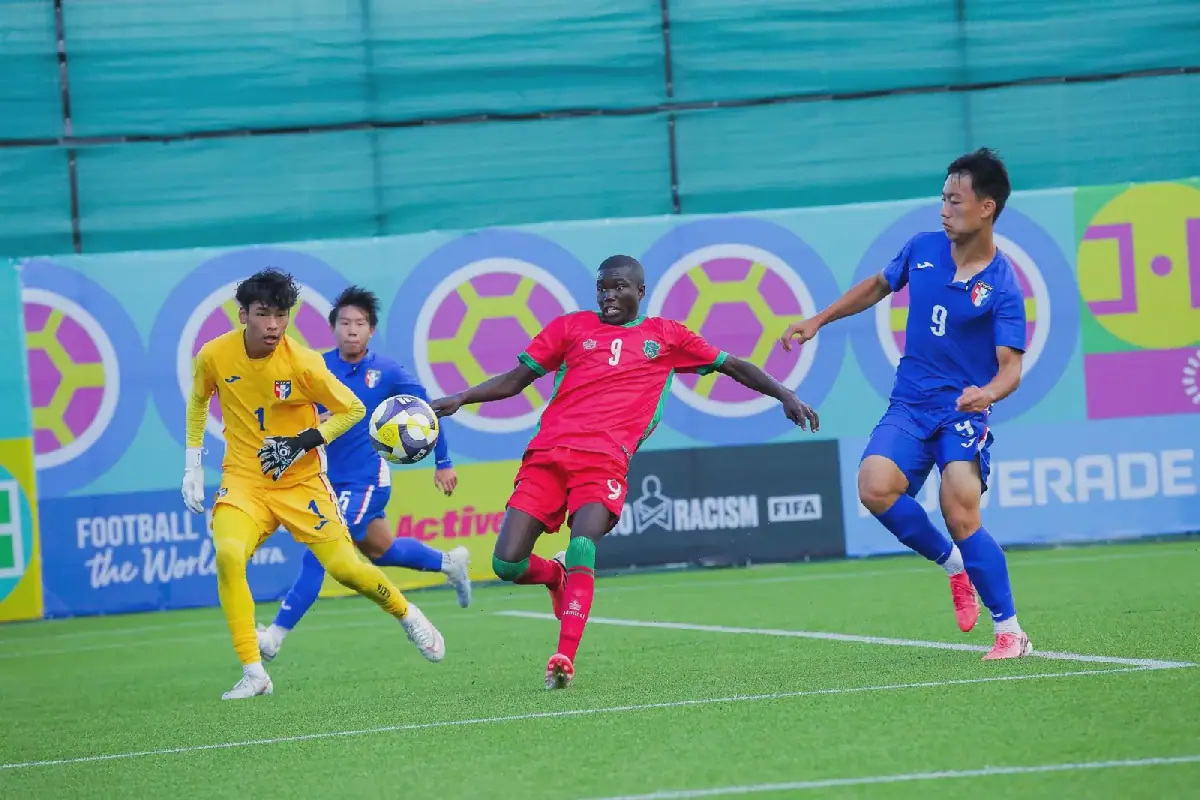
Malawi's national Under-15 football team concluded their inaugural Fifa Under-15 World Cup and Festival in Baku, Azerbaijan, with a 79th-place finish overall out of 189 participating countries. They finished 15th in Tier C, registering five victories over Chinese Taipei, Oman, Suriname, Hungary, and Rwanda. The team's performance demonstrated both potential and areas requiring significant improvement in Malawi's youth football development programmes. Takutzwa Maluwe emerged as Malawi's leading scorer with eight goals.
The team's performance, particularly Maluwe's goals against Oman, Suriname, Argentina, Luxembourg, and Rwanda, showcased the attacking potential within Malawi's youth ranks. However, defeats against Algeria, Argentina, Luxembourg, Panama, and Thailand exposed weaknesses that need to be addressed. The tournament highlighted the importance of investment in coaching, facilities, nutrition, education, and competitive opportunities in building international competitiveness. Several players at the tournament came from renowned football development institutions, such as Santos Academy, Marseille, Liverpool, and Real Madrid's academy.
Malawi has some promising foundations, including Ascent Soccer Academy in Lilongwe and Football Association of Malawi-owned Luwinga Inclusive Academy in Mzuzu, which contributed six players each to the national squad. Mpira M’mudzi Mwathu, owned by FAM executive member Chimango Munthali, has also made significant strides. However, the country needs more residential, organised, and adequately funded academies to support the development of young players. Wesley Namasala, owner of Namasala Academy, proposes establishing at least 10 residential academies across Malawi.
Namasala highlighted the differences in physical development between Malawian players and their European counterparts, noting that most 14-year-olds from developed countries were more physically developed and stronger than their Malawian counterparts. He stressed that a short training camp before an international tournament cannot replace a strong foundation built throughout childhood. His observations underline the importance of sustained coaching, nutrition, strength, and conditioning in youth football development.
Zambia's experience in the tournament offers an alternative approach to talent development. Zambia, which won Tier B after defeating Portugal 5-2, assembled its squad from 11 schools rather than relying exclusively on academies. This demonstrates the potential of schools football as a talent development pathway for Malawi. A properly organised schools sports programme could identify talent from rural and urban communities, with promising players progressing into regional development centres and specialised academies.
Chimango Munthali believes the Fifa festival offered important lessons on how youth competitions should be structured, with development taking precedence over winning trophies. He praised small-sided eight-a-side football for providing more touches on the ball, one-on-one situations, and opportunities to make decisions under pressure. Munthali urged FAM and the National Youth Football Association to consider incorporating these principles into domestic youth competitions.
Football analyst George Chiusiwa encouraged stakeholders to build on the experience, praising the youngsters' performances as evidence of good technical preparation. FAM president Fleetwood Haiya expressed satisfaction with the exposure gained by the youngsters, describing their five victories in 10 matches as an encouraging achievement. The real test will be what happens after Azerbaijan, with FAM needing to work with government, academies, schools, and corporate organisations to expand youth football investment and improve coaching standards.
Key points
- Malawi's Under-15 team finished 79th overall in the inaugural Fifa Under-15 World Cup.
- The team's performance highlighted the need for investment in coaching, facilities, and nutrition.
- Renowned football development institutions played a significant role in the tournament, showcasing the importance of structured programmes in youth football development.