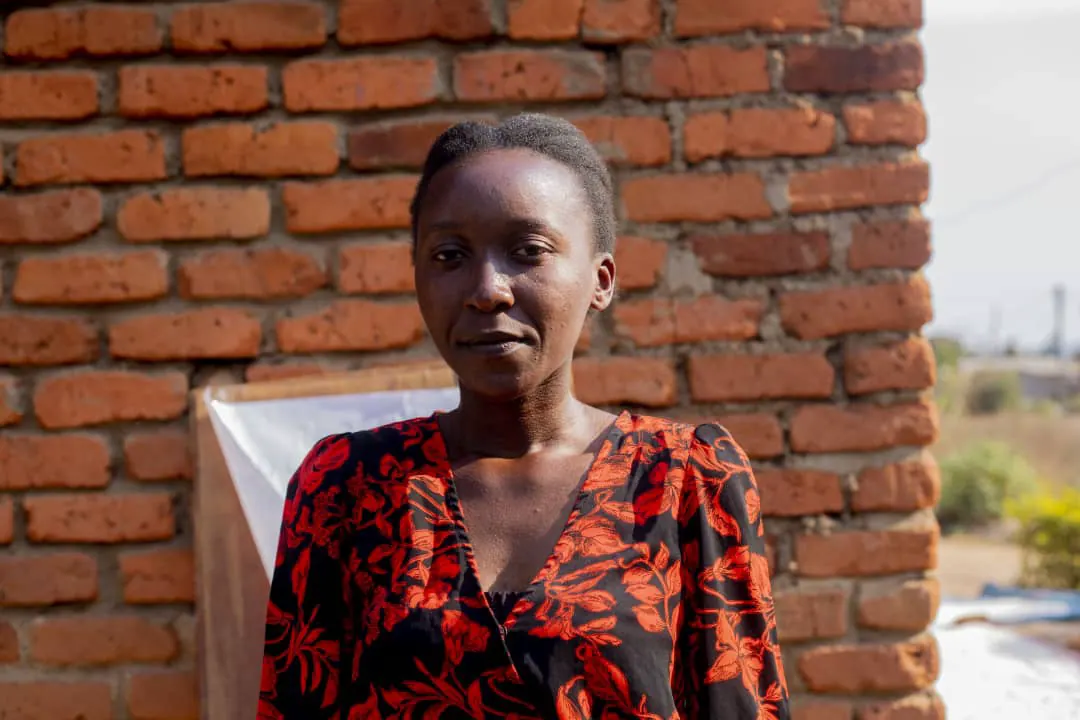
In a small house in Chimaliro, Mzuzu District, a greenish basin of water has become a symbol of hope for 10 vulnerable families in Zolozolo Township. The basin, home to tiny dark shadows of fish, is the brainchild of 23-year-old Tchiyiwe Nhlema, who has taken it upon herself to empower these families through fish farming. With a background of struggling to make ends meet, Tchiyiwe knows firsthand the daily negotiations of finding food, school fees, and money to fix a leaking house.
Tchiyiwe's journey into fish farming began in 2021 when her life took a painful turn. Her mother was retrenched from work, and with no income at home, Tchiyiwe was forced to drop out of school. She then began looking for a job to survive, moving from office to office in Mzuzu until she met a fisheries officer, Mr. Mbamba, who listened to her story and offered her a spot in a GIZ-supported aquaculture training program. The program, which ran from September 2023 to January 2024, not only taught her how to farm fish but also gave her the skills to farm hope.
With the training and subsequent employment with the district fisheries office, Tchiyiwe gained valuable experience in fish farming and developed a conviction to help others have a better life. This led to the birth of the Tchiyiwe Fish Farming Project, which aims to train 10 women from Zolozolo Township in fish farming. The project, supported by a GoFundMe campaign managed by Chiukepo Lungu from the UK, will provide the women with hands-on training, tanks, fingerlings, and fish feed to start their own businesses.
The project's approach is different from traditional charity handouts, as it seeks to empower the women with sustainable skills to fight hunger and poverty. Tchiyiwe believes that fish farming is a practical solution to these challenges, as it provides a source of food and income that can be managed by the women themselves. For Mafunase Moyo, one of the beneficiaries, the project represents a chance to change her life and support her family, as she has school-going children and a husband with no stable job.
The project has four clear steps: training, start-up support, mentorship, and replication. The women will be trained in setting up and managing fish tanks, feeding, water quality management, and harvesting. They will then receive tanks, fingerlings, and feed to start their own businesses, and Tchiyiwe will provide personal mentorship to ensure their success. The goal is to help these women become successful in business, enabling them to feed themselves, improve their homes, and afford school fees.
Despite the challenges, including a lack of funds, Tchiyiwe remains optimistic about the project's potential. The production target for the group is ambitious, with a goal of 2.4 tonnes of locally farmed fish per year. This not only provides food but also represents a resilient business opportunity in a country where wild fish catches from Lake Malawi are declining and demand is rising.
For the women in Zolozolo, the project represents something bigger than just a chance to earn income; it is a chance to own an asset, support their husbands, put food on the table, and pay school fees. Tchiyiwe's story serves as an inspiration, demonstrating that sustainable development can start with small, community-driven initiatives like hers. With the support of well-wishers and the success of this project, Tchiyiwe may be able to replicate her model in other parts of Mzuzu, empowering more families to take control of their lives.
Key points
- Tchiyiwe Nhlema's fish farming project aims to empower 10 vulnerable families in Zolozolo Township with sustainable skills to fight hunger and poverty.
- The project provides hands-on training, tanks, fingerlings, and fish feed to the women, enabling them to start their own businesses and become self-sufficient.
- The initiative has the potential to make a significant impact in Malawi, where wild fish catches are declining and demand is rising, and could be replicated in other parts of the country.