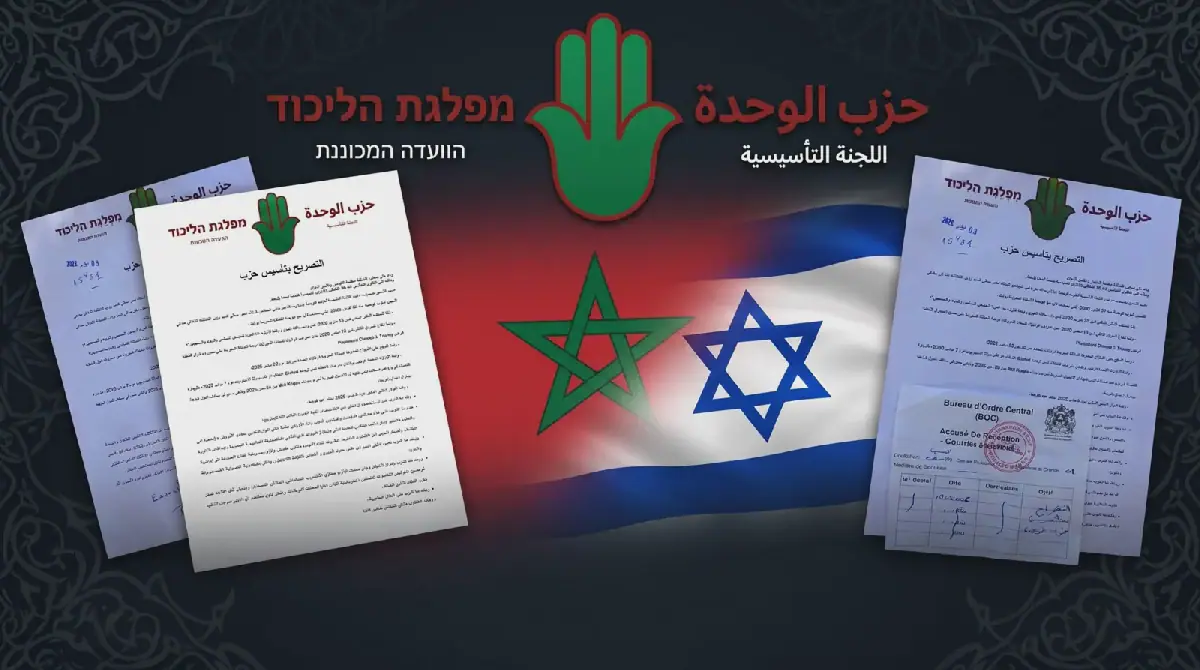
A recent development in Morocco has raised questions about the country's political landscape and its relationship with Israel. A document dated October 31, 2026, reveals that Lahcen Benmassoud has submitted an application to establish a new political party called Parti de l'Unité aux Fondements Démocratiques et à la Référence Juive. The party's name is inspired by the Hebrew name "Likud," which is also the name of the ruling party in Israel.
The proposed party's founders claim to be guided by the Moroccan Constitution and the organic law related to political parties. However, the document does not mention any official authorization to date. The party's platform appears to be linked to the normalization of relations between Morocco and Israel, which has been ongoing since 2020. This has sparked concerns about the implications for Morocco's national identity and sovereignty.
The party's text references several key events, including a royal cabinet communiqué from December 10, 2020, which followed the US recognition of Moroccan sovereignty over Western Sahara. It also mentions a trilateral agreement between Morocco, the US, and Israel on December 22, 2020. Additionally, the party cites visits to Morocco in 2023 by Israeli officials of Moroccan origin, Miri Regev and Amir Ohana.
The proposed party's goals include strengthening national unity, mobilizing the diaspora, particularly Moroccan Jews, and consolidating external ties. However, the choice of the name "Likud" has sparked controversy, given the Israeli party's well-known stance on the Palestinian issue. This has raised questions about the connection between the Moroccan party's reference to Jewish heritage and the Israeli party's policies.
The initiative has been seen as a reflection of the deepening ties between Morocco and Israel, which have been expanding beyond diplomatic, economic, and security agreements. The development has sparked debate about the limits of Morocco's openness to Israel and the potential implications for the country's politics and identity.
The proposed party's relationship with the Moroccan monarchy is also noteworthy, as it declares its allegiance to the King as Commander of the Faithful. This has raised questions about the potential role of the party in Moroccan politics and its relationship with the royal institution.
The controversy surrounding the party's name and platform highlights the complexities of Morocco's relationships with Israel and the potential implications for the country's politics and identity.
Key points
- The proposed party's name is inspired by Israel's Likud party, which has a well-known stance on the Palestinian issue.
- The party's platform is linked to the normalization of relations between Morocco and Israel.
- The initiative has sparked debate about the limits of Morocco's openness to Israel and the potential implications for the country's politics and identity.