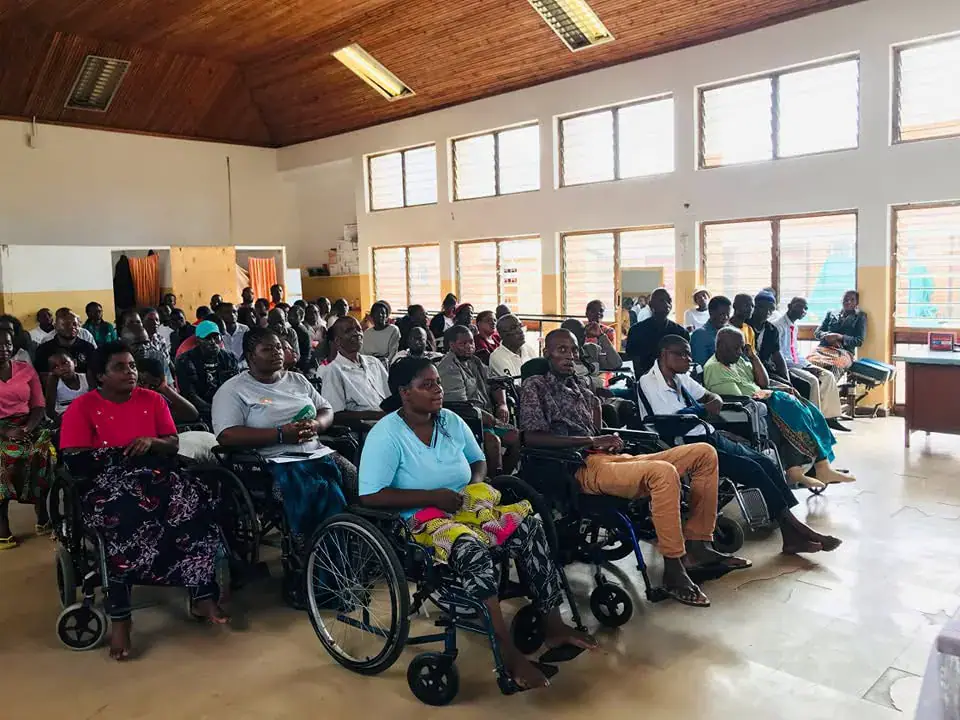
Malawi's revised Constituency Development Fund (CDF) guidelines have sparked concerns over the exclusion of persons with disabilities from decision-making and funding. Despite the country's progress in enacting laws to promote inclusion, the new guidelines have been criticized for failing to allocate funds or provide representation for persons with disabilities. The CDF guidelines, unveiled by the Ministry of Local Government earlier this year, allocate K100 million for youth entrepreneurship and another K100 million for women's empowerment in each of the 229 constituencies.
The guidelines have been welcomed by some for their focus on youth and women's empowerment, but disability rights campaigners have expressed disappointment and concern. They argue that the exclusion of persons with disabilities from the CDF guidelines is a step backwards for the country's inclusion agenda. The Federation of Disability Organisations in Malawi (Fedoma) has warned that the guidelines violate the country's laws and international commitments to promote inclusion and equality.
The Persons with Disabilities Act, enacted in 2024, aims to promote the rights of persons with disabilities and make the African Disability Protocol work. However, the CDF guidelines have been criticized for failing to provide a clear plan for the inclusion of persons with disabilities. Fedoma executive director Simon Munde has questioned how a government that has ratified the African Disability Protocol and enacted the Persons with Disabilities Act can produce a development blueprint that erases about 11 percent of its population.
The CDF guidelines require each of the 229 constituencies to allocate funds for various projects, but not a single tambala is explicitly mentioned or reserved for persons with disabilities. Additionally, persons with disabilities have no guaranteed representation in the Constituency Development Committees (CDCs) that decide which projects are funded and how the money is used. This omission has been criticized for making persons with disabilities invisible in local development decision-making.
Disability rights experts have argued that the exclusion of persons with disabilities from the CDF guidelines is symptomatic of a broader pattern of inclusion. Despite robust laws and policies, persons with disabilities continue to face barriers in employment, education, and access to social protection. The CDF guidelines have been criticized for perpetuating this pattern of exclusion and discrimination.
Some authorities have suggested that the government contribution to the Disability Trust Fund created by the Persons with Disabilities Act will cover the gap. However, Fedoma has argued that the Trust Fund money is not enough to justify sidelining persons with disabilities in CDF management. The organization has urged the Ministry of Local Government and Rural Development to swiftly revise the CDF guidelines and ensure persons with disabilities have representation in all CDCs.
The exclusion of persons with disabilities from the CDF guidelines has raised concerns about Malawi's ability to achieve its development goals. With 24 years to the Malawi 2063 deadline, the country aims to become an inclusive, industrialized upper-middle-income economy. However, disability rights experts have questioned whether this goal can be achieved if persons with disabilities continue to be systematically excluded from development opportunities.
Key points
- The CDF guidelines have been criticized for excluding persons with disabilities from decision-making and funding.
- The guidelines have been welcomed for their focus on youth and women's empowerment but criticized for failing to allocate funds or provide representation for persons with disabilities.
- Disability rights experts have argued that the exclusion of persons with disabilities from the CDF guidelines is symptomatic of a broader pattern of inclusion.
Reporting sources
- Left behind by design · The Nation