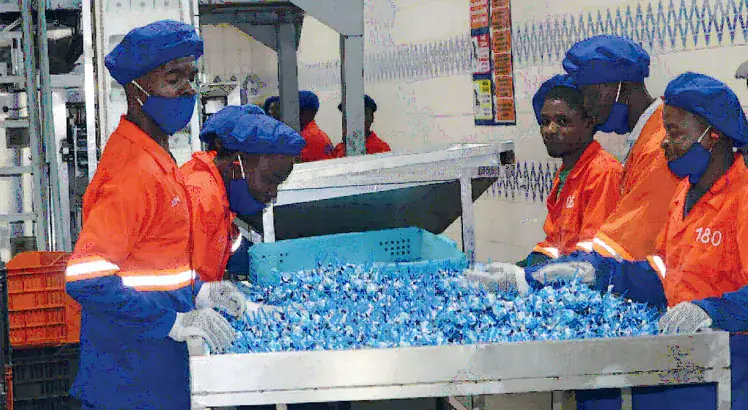
A recent study by University of Malawi economics lecturer Farai Chigaru has found that Malawi's industrialisation strategy under Malawi 2063 (MW2063) is not fully aligned with the country's production capabilities. The study, titled 'Development Agenda Gone wrong? Evidence from comparative advantage misalignment in Malawi', reveals that nearly half of the products prioritised under the blueprint defy Malawi's comparative advantages. This misalignment raises concerns about the country's capacity to build on existing strengths while pursuing industrial diversification.
According to the study, 48 percent of the prioritised products are not naturally competitive, while 26 percent are both unviable and lack potential. The study also found that 67 percent of products which Malawi has comparative advantages are experiencing declining competitiveness. This is a worrying trend, especially given that some of the priority products, including tobacco, tea, sugar, cotton, and pigeon peas, are already facing declining competitiveness.
MW2063 is built on three pillars: agricultural productivity and commercialisation, industrialisation, and urbanisation. The industrialisation pillar identifies priority products as drivers of economic growth, which were adopted from the Second Malawi National Export Strategy (NES II, 2021–2026). The strategy aims to transform Malawi into a productive, export-oriented, and self-reliant economy by 2030. However, the study's findings suggest that the prioritisation of products may not be aligned with Malawi's comparative advantages.
The study's author, Farai Chigaru, noted that prior studies have not assessed how prioritised products in this agenda align with country-specific comparative advantages. Chigaru also emphasised that no study has empirically examined Malawi's development agenda via a comparative advantage alignment analysis. This study aims to fill this knowledge gap and provide insights into the alignment of Malawi's development agenda with its production capabilities.
A progress report in the 2026 Economic and Fiscal Policy Statement showed that the government has rolled out 87 percent of planned First 10-Year Implementation Plan (MIP-1) interventions, but only 40 percent are on track. This is happening at a time when Malawi remains trapped among African economies struggling with deep structural weaknesses. According to the 2025 Real Economic Development Index published by the Business Council of Africa, policy inconsistencies continue to slow economic transformation.
National Planning Commission director general Frederick Changaya said the paper reinforces the need for Malawi to prioritise high-value agricultural production, value addition, and measurable outcomes to accelerate implementation of Malawi 2063. He emphasised that the theory of change is simple: let every acre pay, every mine build, and every factory add value. Changaya also highlighted the need for intentionality in selecting national priorities, citing the example of growing crops that earn farmers K1.8 million per hectare when the same land can generate K15 million.
The industrialisation pillar in MW2063 seeks to transform Malawi into a productive, export-oriented, and self-reliant economy by 2030. To achieve this, Malawi needs to focus on high-value agricultural production, value addition, and measurable outcomes. The study's findings and recommendations will inform policy decisions and ensure that Malawi's development agenda is aligned with its production capabilities.
Key points
- Malawi's industrial strategy is misaligned with its production capabilities, with 48 percent of prioritised products not naturally competitive.
- 67 percent of products with comparative advantages are experiencing declining competitiveness.
- The study recommends prioritising high-value agricultural production, value addition, and measurable outcomes to accelerate implementation of Malawi 2063.