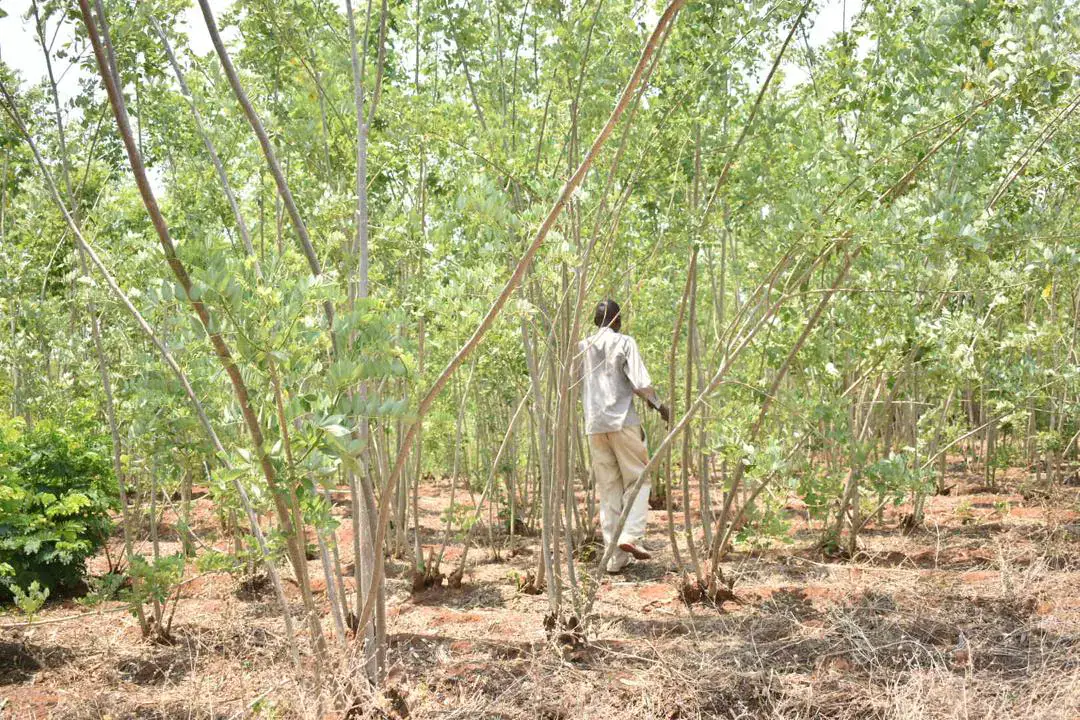
In Traditional Authority Kapeni, Blantyre, Boston Chipinda has planted trees around his house, fields, and idle spaces to have a steady supply of fruits. He is among 44 households in group village head Kumponda that adopted the idea of having fruit trees in 2023 through the Promoting Equitable Access to Clean Energy project implemented by Centre for Environmental Policy and Advocacy (Cepa) and Oxfam in Malawi. The project, funded by the European Union (EU), aims to promote clean energy solutions and sustainable use of alternatives to firewood and charcoal.
The project has encouraged communities to own fruit and nitrogen-fixing trees by distributing free seedlings through Village Natural Resources Management Committees (VNMRCs). Chipinda's efforts have resulted in acres of forest, with 460 trees surviving, including pawpaw, mango, orange, cacia, msangu, and gliricidia. He has diversified his sources of income with three orchards and one area of gliricidia trees. Blantyre District Council land resources conservation officer Charles Mthyoka attributes the thriving forest cover in the area to the emphasis on the benefits of owning fruit-bearing trees.
The project has not only promoted forest restoration but also encouraged an eco-conscious mindset among communities. Mthyoka notes that people see the value in conserving the environment, from saving money and business opportunities to long-term access to fruits and improved health. Chipinda's intervention has accelerated the restoration of vegetative cover, enhancing the community's resilience to the effects of climate change. He explains that the cutting down of trees for charcoal production and negligence on reforestation drove environmental degradation, worsening hot weather conditions and prolonged dry spells.
Apart from fruits, the community has realized the need to plant trees whose leaves replenish soil fertility to enhance crop production for food and nutrition security. Village development committee chairperson Ronald Namamba says they are planting trees strategically to contribute to their well-being, either for fruits or soil health. The thriving forests in the village also save women and children from the burden of walking long distances to get firewood for cooking and heating.
To strengthen the sustainable use of biomass, the project promoted communities' access and adoption of cleaner cooking technologies, such as energy-efficient cookstoves (Chitetezo Mbaula) and gas stoves. Harriet Banda, a user of Chitetezo Mbaula, says the switch from a three-stone open fireplace to the stove saved her life and resources. She no longer walks long distances to search for firewood and spends less on fuel wood.
Thokozani Chanza, a gas stove user, says the initiative transformed her cooking experience. She appreciates the speed and cleanliness of gas cooking, with no smoke at all. The project has made it easy for communities to appreciate the importance of preserving the ecosystem, contributing to achieving Sustainable Development Goals to end poverty and hunger by 2030.
The efforts have contributed to effective water and land management, with the thriving trees along Lunzu River ensuring water flow throughout the year. Taoloka Irrigation Scheme chairperson Saidi Chitwanga says the community is motivated to upscale restoration efforts, such as tree planting and natural forest regeneration, manure-making, and crop diversification, including agroforestry. Cepa programme officer Haswell Mollande says they are pleased with the strides communities have registered in forest conservation, with a 60.39 percent survival rate of 72,500 trees planted in the area.
Key points
- The project has promoted clean energy solutions, sustainable use of alternatives to firewood and charcoal, and encouraged communities to own fruit and nitrogen-fixing trees.
- The initiative has contributed to forest restoration, improved livelihoods, and enhanced resilience to climate change.
- The project's adoption of cleaner cooking technologies has reduced the burden of walking long distances for firewood and mitigated the risks associated with hazardous fumes.
Reporting sources
- Restoring forests with fruits of clean cooking · The Nation