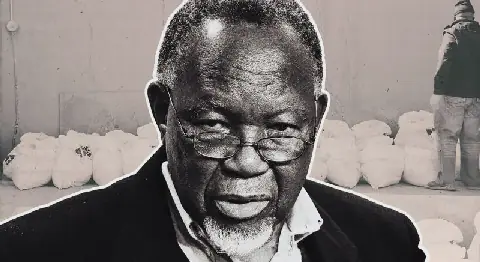
Malawi's Minister of Homeland Security, Peter Mukhito, has emphasized the need for a coordinated transnational fight against networks exploiting cross-border links with neighboring countries to traffic people and drugs, launder money, and facilitate illicit trade. Speaking at a multi-stakeholder workshop in Lilongwe, Mukhito highlighted that criminals are using the same cross-border connections that facilitate legitimate trade, investment, and regional integration.
The workshop aims to develop Malawi's National Strategy to Prevent and Combat Transnational Organised Crime, with participants from government departments, security agencies, development partners, and regional and international organisations. Mukhito noted that fragmented institutions and poor intelligence sharing are undermining efforts to tackle interconnected criminal networks. He singled out human trafficking as a particularly disturbing threat, with unsuspecting people, especially women and children, being lured by false promises of employment and better opportunities.
Inspector General of Police Richard Luhanga warned that the threat extends beyond human and drug trafficking to include migrant smuggling, illicit financial flows, money laundering, cybercrime, firearms trafficking, wildlife and environmental crimes, and corruption. These activities, Luhanga said, threaten national security, undermine economic development, and weaken public institutions. The coordinated efforts, Mukhito stressed, are crucial in countering the increasingly sophisticated operations of criminal networks, facilitated by technological advancements.
The cross-border connections with Mozambique, Tanzania, and Zambia are gateways to trade, opportunity, and regional integration, but are also exploited by criminal networks for human trafficking, illicit trade, drug trafficking, financial crime, and other unlawful activities. The workshop has brought together stakeholders to develop a framework for tackling transnational organised crime, with the aim of enhancing cooperation and intelligence sharing among security agencies.
Key to the coordinated fight against transnational crimes is the adoption of intelligence-led approaches, given the increasingly sophisticated nature of criminal operations. The involvement of regional and international organisations, including the Southern African Development Community Secretariat, Interpol Regional Bureau Harare, and the Institute for Security Studies, is seen as critical in providing the necessary support and expertise.
The threat of transnational organised crime is a complex and multifaceted issue that requires a comprehensive and coordinated response. By working together, stakeholders can share intelligence, best practices, and resources to effectively combat the networks exploiting cross-border links for illicit activities. The development of Malawi's National Strategy to Prevent and Combat Transnational Organised Crime is a significant step towards addressing this threat.
The fight against transnational organised crime in Malawi and the region requires sustained efforts and cooperation among all stakeholders. With the country's borders being gateways to both legitimate trade and illicit activities, a coordinated approach is essential in ensuring that the threats posed by transnational crimes are effectively mitigated.
Key points
- Malawi calls for a coordinated transnational fight against networks exploiting cross-border links with Mozambique, Tanzania, and Zambia.