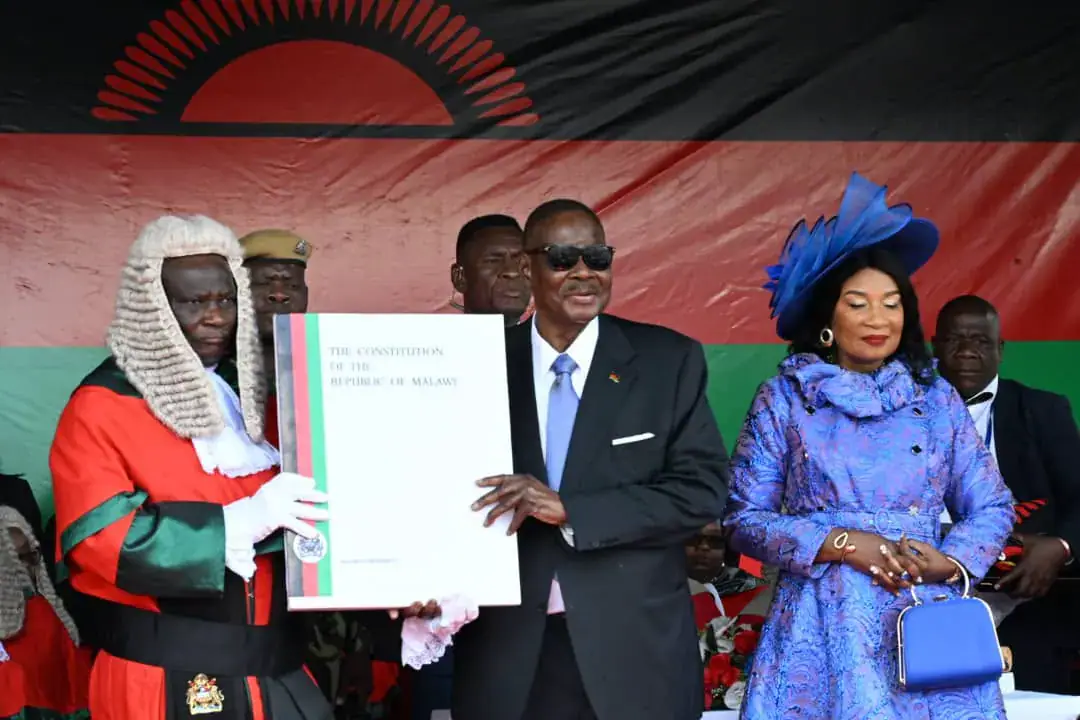
President Peter Mutharika of Malawi has marked one year in office since his remarkable comeback to power on October 4, 2025. At 85, Mutharika reclaimed the presidency through the ballot box, five years after losing power. His victory offered hope to millions of Malawians struggling with soaring prices, food insecurity, fuel shortages, and economic uncertainty. Mutharika's administration has made efforts to address these challenges.
Mutharika's government can point to several achievements, including falling maize prices, improved food availability, expanded access to secondary education, renewed road construction, and efforts to restore fiscal discipline. The administration's National Economic Recovery Plan has been introduced to address economic challenges. Despite these efforts, persistent foreign-exchange shortages, electricity blackouts, fuel disruptions, and questions about presidential transparency have complicated the government's record.
The International Monetary Fund's October 6, 2026, assessment offered cautious encouragement, recognising progress in fiscal management, revenue mobilisation, and reforms intended to improve market conditions. The IMF mission led by Justin Tyson stated that the authorities have made progress on major reforms to restore macroeconomic stability under the National Economic Recovery Plan. However, the IMF cautioned that Malawi's economy is navigating a challenging environment, citing climate shocks, weakening demand for tobacco, and external economic pressures.
Mutharika's administration has targeted economic growth of 3.8 percent in 2026 and 4.9 percent in 2027. However, the IMF projected growth of approximately 2.2 percent and inflation of 24.4 percent for 2026. For ordinary Malawians, economic recovery remains largely a question of purchasing power. Slower inflation does not necessarily mean lower prices, particularly for households whose incomes have failed to keep pace with the cost of living.
Improved food availability has been among the administration's more visible achievements, particularly regarding maize, Malawi's principal staple. Government interventions in maize procurement and agricultural inputs have helped ease supply pressures and moderate prices. Mutharika has defended these developments as significant achievements, arguing that food security deserves recognition in a country where hunger and rising food prices helped shape the 2025 election.
Mutharika has maintained that borrowing should be carefully managed and directed towards productive investment rather than consumption. The administration hopes that tighter financial management will restore confidence and create room for growth. However, the benefits of those reforms have yet to reach many households and businesses. Opposition parties, civil society organisations, and religious institutions argue that recovery must be measured by improvements in living standards, public services, and accountability.
Mutharika acknowledges that Malawi's problems cannot disappear overnight. In a televised anniversary interview with the Malawi Broadcasting Corporation on October 4, 2026, he defended his administration's achievements while appealing for patience. “The economy cannot be repaired with a magic hand, it’s a process,” he said, emphasising that recovery would take longer than a single year.
Key points
- Mutharika's administration has made progress in food security and education, but challenges persist in fuel and foreign exchange.
Reporting sources
- Malawi: Mutharika’s Comeback – A Year of Challenges and Expectations · Pan African Visions