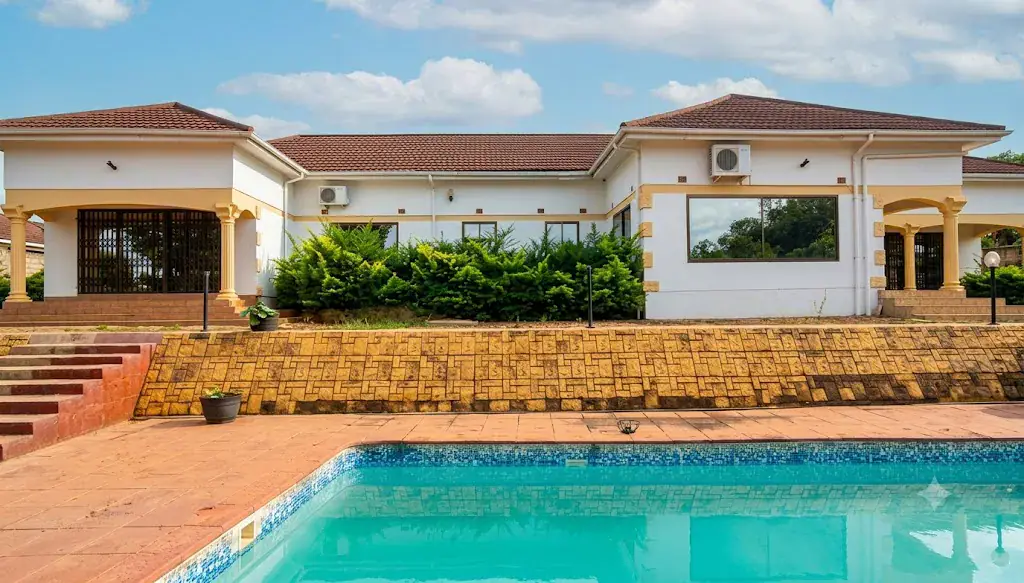
The Malawian parliament is considering a public inquiry into the management and disposal of confiscated assets, following concerns over the deterioration of properties forfeited to the state. A notable example is the K690 million house of former budget director Paul Mphwiyo, which was forfeited in March 2024 but remains dilapidated and deserted in Area 43, Lilongwe. The house's condition raises questions about the government's capacity to preserve and derive value from assets recovered through financial crime proceedings.
The Legal Affairs Committee of Parliament, led by chairperson Gilbert Khonyongwa, is considering the inquiry to hold law enforcement agencies and other institutions accountable for managing the assets. The committee intends to engage with the Financial Intelligence Authority, Anti-Corruption Bureau, and Director of Public Prosecutions to establish the status of confiscated properties, reasons for delays in disposal, and whether the government has incurred financial losses. Khonyongwa emphasized that the management, preservation, and disposal of confiscated assets is a critical public accountability issue.
The continued deterioration of properties recovered through proceeds of crime proceedings is concerning, as it could reduce their value, increase maintenance costs, and expose the government and taxpayers to financial losses. Khonyongwa noted that recovering proceeds of crime should not end with obtaining court orders but should be followed by effective mechanisms to preserve the assets and ensure the public benefits from them. In July 2025, the DPP said the disposal of Mphwiyo's property was underway and expected to be completed by August that year.
However, about 15 months later, the house remains in a state of disrepair. Ministry of Justice and Constitutional Affairs deputy director of Communications Joyful Paliani said the DPP would convene a high-level meeting involving law enforcement agencies and the Ministry of Finance to discuss the disposal of assets held by different institutions. The meeting will consider options beyond selling the properties, including assigning them to government institutions for public use.
The disposal process will not necessarily be limited to selling the property, as consideration will also be given to assigning it for public use by a state institution. The process is expected to be completed by January 2027, according to Paliani. Knight Frank managing director Desmond Namangale noted that vacant properties generally lose value when they are not routinely maintained, meaning prolonged delays in disposal could result in financial losses for the government.
Namangale proposed a legal framework setting clear timelines for disposing of forfeited properties or assigning the Ministry of Lands responsibility for taking possession and ensuring their upkeep. Centre for Social Accountability and Transparency executive director Willy Kambwandira said the deterioration of recovered assets reflected poor stewardship, particularly when the government was struggling to mobilize resources for public services. He emphasized that failure to establish effective mechanisms for managing the assets risked undermining the work of investigators and prosecutors.
The concerns come as the government has introduced the Financial Crimes (Confiscation Fund) Regulations, 2026, to provide a framework for managing billions of kwacha recovered from criminal activities. The regulations provide for procedures governing access to the fund, allocation of resources, and accountability for their use. However, questions remain about the management of non-cash assets, including houses, plots, and motor vehicles, particularly those held for prolonged periods before disposal.
Key points
- The Malawian parliament is considering a public inquiry into the management and disposal of confiscated assets.
- The deterioration of forfeited properties, such as Paul Mphwiyo's K690 million house, raises concerns about the government's capacity to preserve and derive value from assets recovered through financial crime proceedings.
- The government has introduced the Financial Crimes (Confiscation Fund) Regulations, 2026, to provide a framework for managing billions of kwacha recovered from criminal activities.
Reporting sources
- Parliament probes forfeited assets · The Nation