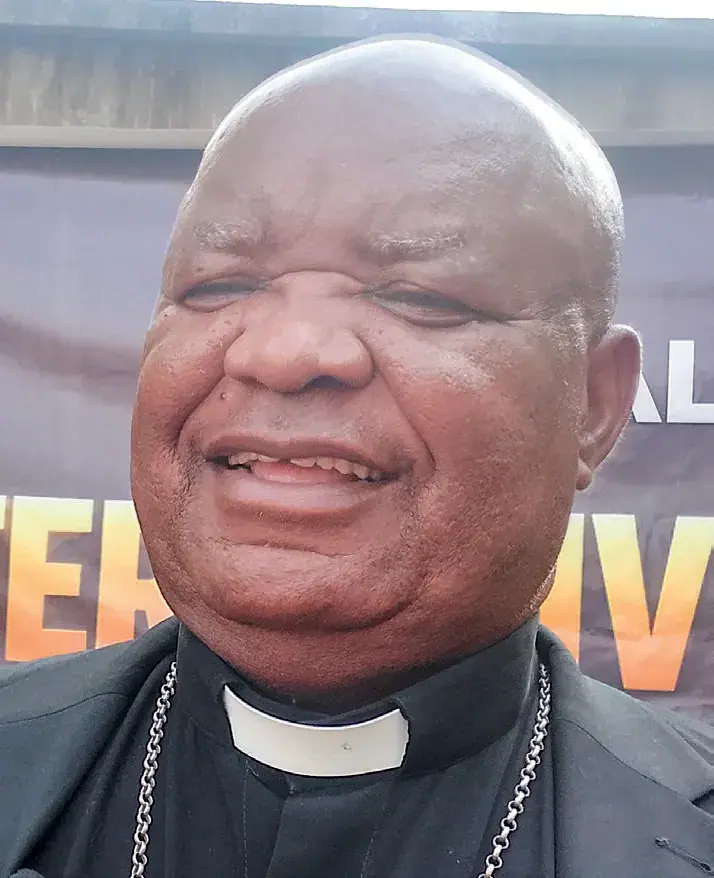
Malawi is facing a severe economic crisis, with rising public debt, fuel and foreign exchange shortages, and a high cost of living making life unbearable for many citizens. Bishop Martin Mtumbuka, Chairperson of the Malawi Economic Justice Network (Mejn), described the situation as a country on fire, calling for collective efforts to address the crisis. He made these remarks at the fifth National Conference on Public Debt, Taxation and Climate Finance in Lilongwe City.
The government's debt interest payments are expected to reach K2.79 trillion in the 2026-27 financial year, leaving limited resources for essential public services and development programmes. Mtumbuka demanded to know who had benefited from the country's growing public debt, while ordinary citizens struggle to access basic necessities like food and medicine. He emphasized that debt is not free money, but rather money borrowed in advance from future generations.
Mtumbuka appealed to the government to prioritize ambulances in the distribution of scarce fuel and protect vulnerable households from the effects of economic recovery measures. He also questioned whether the country was borrowing to build productive infrastructure or for consumption that would leave future generations with a significant debt burden. The Bishop's comments reflect the growing concern about the country's debt situation and its impact on citizens.
According to Bertha Chikadza, President of the Economics Association of Malawi (Ecama), Malawi's public debt stood at K23.9 trillion as of December 2025, representing 90.9 percent of gross domestic product (GDP). She noted that the growing cost of debt servicing had significantly reduced the government's capacity to finance essential public services. Chikadza also highlighted that for every K100 collected in domestic revenue, only K21 remains for other expenditures after accounting for interest payments, salaries, pensions, and other statutory obligations.
Chikadza called for the restructuring of both domestic and external debt, broadening of the tax base, addressing revenue leakages, and strengthening transparency in public borrowing. She emphasized that external debt servicing competes directly with essential imports like fuel, fertilizers, and medicine, which require foreign exchange. The Economics Association of Malawi is advocating for a comprehensive approach to address the country's debt crisis and promote sustainable development.
Local Government Minister Ben Phiri acknowledged that the country's challenges have accumulated over many years and require collective responsibility. He emphasized that economic growth requires deliberate planning, discipline, and sacrifice. Phiri also called for increased domestic production, industrialization, value addition, and exports to address the country's persistent foreign exchange shortages. The government is prepared to take tough decisions to restore economic stability.
The two-day conference, organized by Mejn in collaboration with Norwegian Church Aid, Danish Church Aid, and other partners, aims to develop practical solutions to Malawi's debt crisis while promoting fiscal accountability, tax justice, and sustainable development. The conference brings together stakeholders from government, civil society, and the private sector to discuss the country's economic challenges and develop a collective response. Key recommendations from the conference are expected to inform policy decisions and promote economic recovery.
Key points
- Malawi's public debt stands at K23.9 trillion, representing 90.9 percent of GDP.
- The country's debt interest payments are expected to reach K2.79 trillion in the 2026-27 financial year.
- Stakeholders are calling for collective efforts to address the economic crisis, including debt restructuring, tax reforms, and increased domestic production.
Reporting sources
- Malawi needs collective solutions – Bishop Martin Mtumbuka · The Daily Times